









(Brace yourself. This is what all our total geekdom references have been building towards.)
There’s a phrase I learned a long time ago in law school, in a mock trial class about arguing in front of a jury. I’ll never forget what my instructor said: always assume the jurors are the smartest people in the room. Don’t talk down to them. Talk to them—not at them. And for God’s sake, don’t patronize them.
In other words: know your audience.
I bring that up because that’s exactly why we don’t live in a world where the Target at 38th and Eagle Creek sits in the same congressional district as New Albany. The people who needed to hear the message got it, heard it, and took it to heart. And some folks… well, there’s that song by The Paradox: Get the Message.
Because here’s what actually happened.
We all watched the chain of events unfold. The idea of mid-decade redistricting surfaced. The House passed the maps. Hoosiers noticed. Then they protested. Then more Hoosiers protested. Phone calls. Emails. Meetings. Quiet conversations—and not-so-quiet ones.
This wasn’t a flash mob. It wasn’t manufactured outrage. It wasn’t astroturf. It was organic, sustained, and statewide.
And no—before anyone tries to blur the lines—this was not the Micah Beckwith–Turning Point USA crowd. That was less a grassroots uprising and more a Capitol Christmas tour group with opinions. Loud opinions. Very loud opinions.
But when 21 Republicans joined 10 Democrats this week to shut down mid-decade redistricting, they were speaking for their audiences—their constituents—and the verdict was a unanimous Gladiator thumbs down. No translation required.
And unlike RFRA, Right to Work, or even daylight saving time—where Indiana argued with itself—this time there was no real split. The message from voters was unified, clear, and unmistakable.
It was the political equivalent of my late, lovely mother saying, “Don’t make me come back there.” Not yelled. Not debated. Just stated—with the universal understanding that the next step would be unpleasant, public, and entirely self-inflicted. Let me say that again: self-inflicted.
(And no, not that scene from Blazing Saddles. Never mind.)
As lawmakers met with and heard from their constituents, any public opposition that managed to reach Team Braun landed squarely in the tone-deaf category. Lectures. Threats. Warnings about “consequences.” All of it carried the same message: we know better than you.
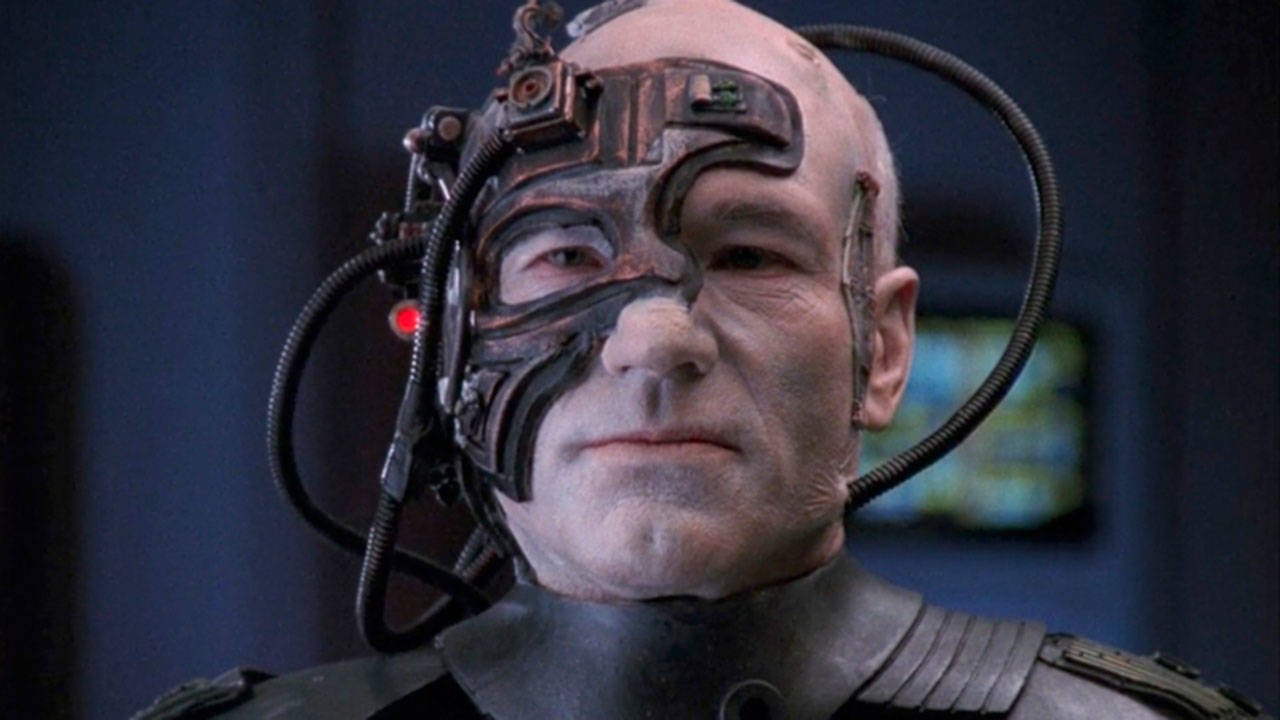
We all know the storyline by now. When the House passed the maps, the governor and his allies had their carpe diem moment. And then they turned toward the Senate with a shrill certainty that would make the Borg from Star Trek swell with pride—essentially telling Senate Pro Tem Rod Bray and his colleagues, “Resistance is futile. You will be assimilated.”
And Bray—if you’ll allow one more Star Trek reference—responded like Captain Jean-Luc Picard: “The line must be drawn here. This far. No further.”
What the political Borg discovered, too late, is that the Senate had already been assimilated—by its constituents. And that bond only grew stronger with every lecture, every threat, every swatting incident, and every implied consequence.
Then came the hordes of internet warriors. They poured in from the farthest reaches of the digital galaxy like a massive swarm of Imperial TIE Fighters—loud, plentiful, and convinced that sheer volume could substitute for persuasion. Easily shot down, yes. But relentless. And completely missing the point.
Because senators, like jurors, don’t respond to intimidation or patronizing nonsense. They respond to respect. And when they feel disrespected, they don’t fold.
They dig in. They draw a line. And this week, they held it. Ding dong, the Bill Is Dead.
So What’s Next?
The Force is fairly clear on this one.
Todd Rokita is already filing this moment away for 2028. This vote fits neatly into a future primary narrative where he casts himself as the true conservative who fought the “establishment” while Governor Braun failed to deliver. Whether that argument holds water is almost beside the point. Rokita doesn’t need airtight logic—he needs a story.
Which brings us to 2026.
On the GOP side, this episode may finally concentrate some minds. Moderate Republicans and non-crazy conservatives—yes, they still exist—are being reminded why primaries and civic engagement actually matter. Sit them out, and the loudest voices win by default. Show up, organize, and vote, and the temperature of the party changes. What this vote proved is that the “inevitable wave” of chaos isn’t inevitable when adults participate.
Then there’s Diego Morales.
The Secretary of State has spent much of his term tip-toeing from one controversy to the next, surviving less on strength than on distraction. A serious race against Knox County Clerk Dave Shelton suddenly looks very real—and far less forgiving. When voters start valuing competence, restraint, and credibility again, Morales’ margin for error shrinks fast—faster than when he goes from tip-toe to regular height.
And if you’re Beau Bayh?
You just hit a grand slam.
Democrats were energized. Bipartisanship was demonstrated. The “out of control” narrative lost its punch. And voters were reminded that governance can still involve adults working across party lines without everything catching fire.
And this correction wasn’t abstract. It wasn’t theoretical. It was felt.
From Gary to New Albany. From Fort Wayne to Evansville. In suburbs, in small towns, and in rural Indiana. By lifelong Hoosiers and by people new to the state. Across ideology, geography, and party labels, people felt the same thing happen at the same time: someone finally hit the brakes.
Not because of pressure. Not because of threats. But because voters spoke—and were heard.
The Force corrected the imbalance.
And for the first time in a while, just about everyone in Indiana felt it.
Oh, yeah.
You’re welcome.
This is why I’m here—and this is why I pay attention.