




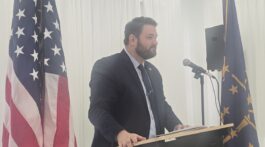




In an end of the year interview with Indy Politics, Indiana Governor Mike Braun closed out 2025 pointing to education gains, government restructuring, and property tax relief as defining accomplishments of his first year in office, while largely downplaying internal Republican tensions that surfaced over redistricting and other high-profile issues.
In a wide-ranging end-of-year interview, Braun repeatedly returned to what he described as an “enterprising” approach to governing, arguing that policy outcomes — not political disputes — should define his administration.
Restructuring as Cornerstone Achievement
Braun said reorganizing the executive branch was his most significant and least recognized accomplishment, saying decades of agency sprawl limited accountability and efficiency.
“We had 60 to 70 agencies with no real structure,” Braun said. “Now we have policy cabinets led by people accountable for results.”
He credited the changes with progress in education, including a $5,000 increase in base teacher pay, the largest percentage increase in IREAD literacy scores on record, and a tuition and fee freeze across Indiana’s public colleges and universities.
Property Taxes and Legislative Friction
While Braun highlighted policy wins, he acknowledged property tax reform dominated the 2025 session and exposed divisions within the Republican supermajority. Senate Bill 1, initially passed early, was later pared back before being rebuilt in the House and approved by a narrow margin.
Braun said the final plan phases in relief over five years and will eventually exempt 66 percent of Indiana homes from property taxes, framing the remaining opposition as resistance from local governments facing new fiscal accountability.
Redistricting Dispute Downplayed
Braun also addressed the contentious redistricting debate that placed him at odds with Senate leadership, though he stopped short of escalating the conflict. He rejected claims that Republican voters broadly opposed map changes, arguing instead that resistance came largely from Democrats and independents.
“Republicans tend to be the silent majority,” Braun said, while emphasizing that disagreements over redistricting should not overshadow broader governing priorities.
Avoiding Calls for Primaries
Asked about strained relationships with Senate leaders, Braun declined to suggest primary challenges or retaliatory political action, instead pointing to his own electoral victories as evidence that voters reward results over infighting.
“That doesn’t determine what happens the next three to seven years,” Braun said, signaling a desire to move past the dispute rather than extend it.
Lieutenant Governor’s Role Minimized
Braun also minimized controversy surrounding Lt. Gov. Micah Beckwith, declining to address specific remarks or incidents. Instead, he described his relationship with Beckwith as “good” and characterized public disagreements as driven largely by media attention rather than governance.
“My connection with grassroots in this state is strong,” Braun said, pivoting quickly to accomplishments and restructuring efforts rather than internal dynamics.
Looking Ahead to 2026
Looking forward, Braun said education, health care, infrastructure, and economic development will dominate his agenda, while acknowledging unfinished work on health care reform after encountering resistance in the Senate.
He also highlighted data centers and artificial intelligence as emerging economic opportunities, emphasizing that large energy users should bear infrastructure costs to protect ratepayers.
Measuring the First Year
Braun said placing private-sector leaders over major policy areas has already changed how state government operates, calling 2025 a foundational year for the rest of his term.
“We’re just getting started,” Braun said, adding that while more progress was possible in some areas, particularly health care, the administration has laid the groundwork for long-term reforms.
You can hear Braun in the audio above, it runs for about 15 minutes.