










by Abdul-Hakim Shabazz, Esq.
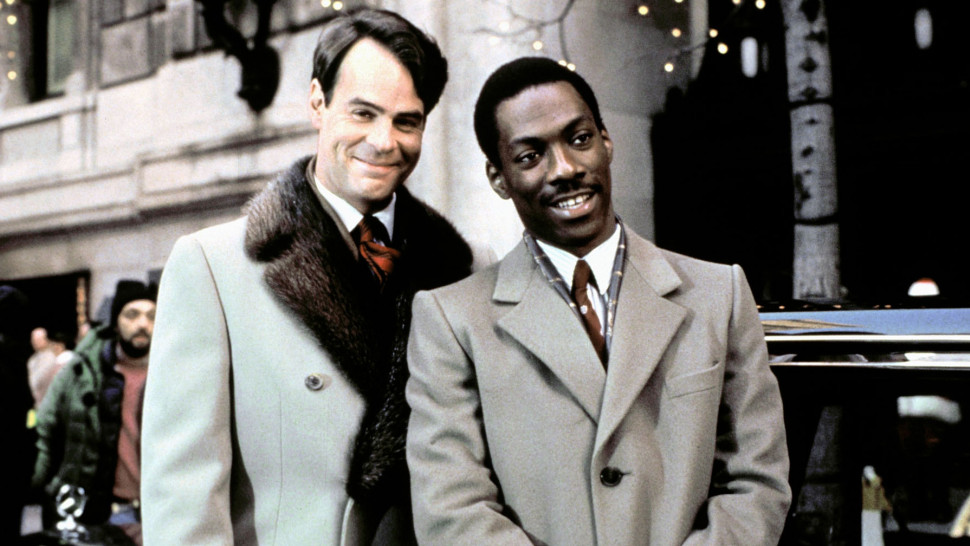
One film I started watching over this Martin Luther King Jr. weekend was Trading Places.
Say what?
Yes. Trading Places. Relax. Stay with me.
Because while we spend this weekend recycling the same four MLK quotes—usually stripped of context—Eddie Murphy and Dan Aykroyd are quietly delivering a far more honest and frank lesson about power, opportunity, and why symbolism without capital is basically a Hallmark card with better intentions.
In Trading Places, Randolph and Mortimer Duke—two very wealthy men who treat the global economy like a parlor game—settle a bet (one whole dollar) by swapping the lives of Dan Aykroyd, the rich commodities broker and Eddie Murphy, the broke hustler. Same intelligence. Same ambition. Same raw potential. Completely different outcomes—until access changes.
Once capital, information, and proximity to power are introduced, everything shifts. And once Murphy’s character gets inside, he doesn’t just say thank you and mind his manners—he learns the rooms, learns the rules, and figures out who actually matters. Funny how fast the system makes sense once you can figure out how it works.
The lesson is simple: talent is everywhere. Opportunity is not.
That feels especially relevant on a holiday weekend where we celebrate “the dream” in a way that is heartfelt, sincere—and often incomplete. Dr. King didn’t just talk about brotherhood and moral courage. Toward the end of his life, he talked a lot about economic justice, wealth concentration, and structural barriers. In other words, he was talking about power.
Somewhere along the way, we turned “empowerment” into a participation trophy. Show up. Chant correctly. Use the approved vocabulary. Take the photo. Congratulations—you’ve been “empowered.”
Translation: you’ve been acknowledged. That’s nice, but acknowledgment ain’t power. Being invited into the room isn’t victory if you still can’t touch the agenda, the budget, or the decisions. That’s not a seat at the table—it’s a folding chair in the hallway with a clear view of other people running your life.
Modern politics loves this confusion. We constantly mistake tactics for outcomes. A new slogan becomes a substitute for a solution. A renamed program gets treated like reform. A press conference becomes “progress” because everyone clapped and the podium had good lighting. It’s easy to confuse motion for movement—especially when the motion comes with a hashtag and a promise to “continue the conversation.”
Meanwhile, the real decisions get made somewhere else, by people who already know one another, already speak the shorthand, and already understand which rooms matter—and which ones are just for show.
Protests are fine. Voter registration is fine. Marches and rallies are fine. Necessary, even. But if that’s where the strategy ends, we’re basically trying to win a high-stakes chess match by flipping the board and declaring moral victory. Real empowerment is less poetic and far more effective. It’s the ability to force outcomes. It’s options. It’s staying power. It’s being able to push back without your entire life imploding the moment you do. And leverage—whether we like it or not—comes from capital.
Capital doesn’t just buy you things. It buys you time, stamina, and access. It buys you entry into the real rooms—and the ability to stay long enough to learn how they work.
Which matters, because we have the best political system money can buy. Money funds campaigns. Money sustains institutions. Money hires lawyers, consultants, and communications professionals who can turn a “good idea” into an unavoidable one. Money buys time, and time is power. That doesn’t make the system admirable—it just makes pretending otherwise unserious.
So maybe the next phase of realizing the dream isn’t about asking for a seat at the table. Maybe it’s about building your own table. Or better yet, building so many tables that the “important room” loses its monopoly on relevance.
If this argument makes people uncomfortable anywhere, it’s education. School choice still sends some folks into rhetorical free fall. But education is economic infrastructure. Period. Families choose schools because outcomes matter—safety, culture, expectations, and networks. Schools don’t just teach math and reading; they teach social capital. Dr. King didn’t fight so people could be grateful for what they were assigned. He fought for freedom, including the freedom to choose better for your kids.
Here’s the part we still whisper: when you build something, you create capital. A business. A nonprofit. A media platform. An institution that lasts longer than a news cycle. Capital creates political relevance. It forms PACs. It hires serious lawyers. It forces negotiations.
Trading Places understood this perfectly. The moment Murphy’s character gains access—to capital, information, and the right rooms—the entire game changes. Not because he changed, but because the system finally let him play—and he knew the rules.
So what’s the best way to beat a billionaire?
With a lot of thousandnaires.
This MLK weekend, honor the words. Teach the history. Respect the sacrifice. But if we really want to realize the dream, stop pretending economics is a side issue. Build something. Create capital. Pool it wisely. And then—calmly, deliberately—go buy the table.
And when you’re done? Sit back and enjoy a nice glass of frozen concentrated orange juice.