







by Abdul-Hakim Shabazz, Esq.
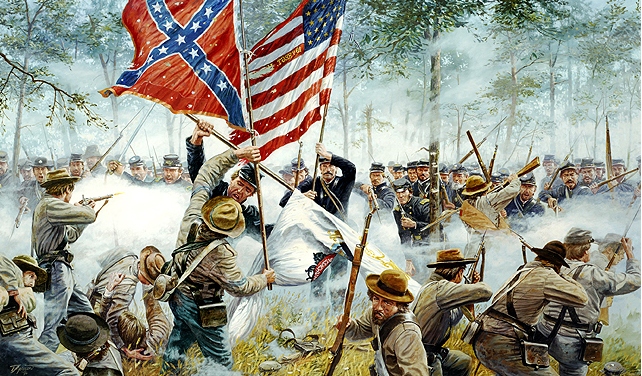
Call it what it is: The Uncivil War. Hoosier edition.
Not left vs. right. Not red vs. blue.
This is establishment vs. insurgents—each convinced they are the Resistance and everyone else is the Empire, complete with spreadsheets or hashtags.
Let’s start with the Democrats, because their internal food fight is the loudest and—thanks to Facebook—fully livestreamed for public entertainment.
The Indiana Secretary of State primary between Blythe Potter and Beau Bayh is no longer about election administration, cybersecurity, or who can pronounce “Help America Vote Act” without Googling it. It’s a proxy battle for the soul of the Indiana Democratic Party.
Potter is running the outsider script with discipline: Army vet, small business owner, anti–“Wall Street money,” pro–“people-powered politics.” Her attack on Bayh over a $25,000 donation from Trump-linked billionaire Marc Rowan wasn’t just opposition research. It was a bat signal to progressive activists: I am not one of them. Translation: I am not the spreadsheet Democrats. I am the vibes Democrats.
Bayh, meanwhile, is running the classic Bayh-Ballot Line strategy: famous name, national donors, serious money, and the implied electability argument. Translation: You want to win in November? You need me. It’s the political equivalent of showing up with a PowerPoint deck and a family brand.
The comment section promptly turned into a cage match. Indianapolis Democratic City-County Councilor Jesse Brown called Bayh’s donor choice “unbelievable.” Terre Haute Mayor Brandon Sakbun accused Potter of spinning finance reports to avoid explaining how you win statewide with $130K. Others debated donor purity, yoga studios as political credentials, and whether Bayh will share his “non-MAGA war chest” if he loses (LOL—but also a fair question).
This isn’t really about ethics. It’s about control.
Donor class with spreadsheets vs. activist class with hashtags.
The Uncivil War is here. And it’s being moderated by an algorithm that rewards chaos.
Meanwhile, while Democrats are reenacting Lord of the Flies on Facebook, Indiana Republicans are quietly staring at their calendars and asking a simpler question: Who’s filing against me?
Three Senate names keep popping up in activist chatter and consultant whisper networks: Greg Goode, Travis Holdman, and Ron Alting. None are weak incumbents. All are establishment-adjacent. And in 2026, that’s a political vulnerability.
The MAGA-era primary model is brutally simple: You don’t beat an incumbent with policy papers. You beat them with a Facebook page, a PAC, and a narrative that they’re insufficiently conservative, insufficiently Trumpy, or insufficiently mad online.
Goode, Holdman, and Alting occupy the dangerous space where you actually govern—budgets, negotiations, legislation that requires math. That makes you a target for the activist-industrial complex that believes compromise is heresy and nuance is treason.
A primary challenger doesn’t need Marion County or Lake County. They need a low-turnout GOP primary dominated by highly motivated activists, talk radio listeners, and grievance-funded Facebook groups. Add national PAC money and small-dollar outrage donations, and suddenly your “safe” seat looks like a contested battlefield.
Behind the scenes, incumbents are gaming it out:
Do you tack right? Stay quiet? Preemptively burn bridges with leadership? Or hope the pitchforks find someone else?
Translation: Republicans fear the same thing Democrats are fighting over—control of the party brand. The difference is Republicans have watched colleagues lose careers over it. Democrats are just now discovering that internal wars have consequences.
Now, here’s the part nobody on social media is obsessing over: The real civil war isn’t in primaries. It’s in state conventions.
Forget press releases. Ignore Facebook threads. The real Indiana political battlefield is happening in county meetings, coffee shops, and late-night group texts over one question:
Who gets to be a delegate?
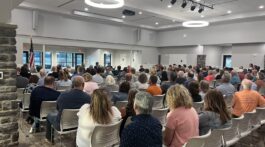
Delegates don’t just clap and eat rubber chicken. Delegates nominate the Secretary of State. And in 2026, both parties have contested SOS races, which makes the convention floor the most valuable real estate in Indiana politics.
On the Democratic side, Potter vs. Bayh isn’t just about donors—it’s about who controls the delegate pipeline. Activists are recruiting delegates to build a convention majority. The donor class is quietly doing the same, just with consultants, spreadsheets, and hotel room blocks.
On the Republican side, it’s déjà vu with sharper knives. Conservatives, MAGA activists, and institutional GOP players are stacking delegate slates for contested races. Whoever controls the delegate list controls the ballot.
This is the invisible primary—no voters, no ads, no debates. Just precinct chairs, county caucuses, and the quiet art of turning out your people on a Saturday in June.
Campaigns are already running two operations:
• Candidate campaign for voters
• Delegate campaign for the convention
One is public. The other is where power actually gets decided.
The convention floor isn’t ceremony. It’s combat. And the people who understand that will pick the nominees.
The civil war isn’t coming. It’s already here. And it’s being credentialed at the registration desk.