






One day after Indy Politics raised questions about who was handling candidate oaths at the filing counter, the Indiana Secretary of State’s office moved quickly — and quietly — to fill in some of the blanks.
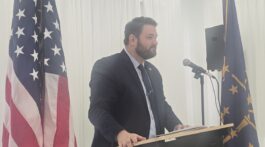
On Tuesday afternoon, the office of Secretary of State Diego Morales issued a press release accusing Indy Politics of publishing a “false, uninformed” story and insisting that candidate filings had been handled properly “for decades.”
But buried in that response was something more significant than the rhetoric: the Secretary of State’s office attached a packet of previously undisclosed certificates showing that nine individuals had been formally appointed as “Special Deputy Secretary of State” for the sole purpose of authenticating candidate filings for the 2026 primary.
Those documents, provided only after Indy Politics published its story, confirm that the office did in fact rely on special deputies — appointed under Indiana Code 4-2-4 — to authenticate candidate filings and perform the statutory functions associated with the oath during filing.
Who the special deputies are
The certificates show that, effective January 7 through the noon filing deadline on February 6, the following individuals were appointed as special deputies for candidate filings:
Jack Adams
Lindsey Eaton
Roksana Garcia
Elina Kupce
Sarah Lehman
Edison Perry
Kegan Prentice
Dustin Renner
Mary Grace Ross
Each certificate specifies that the appointment was limited to “authenticating candidate filing documents” for the 2026 primary — which includes the legal authority to receive, certify, and act upon the candidate’s oath, even if the oath itself is spoken by the candidate.
The certificates list an effective date range (January 7 through February 6 at noon), but the forms Morales released are not time-stamped.
That is not cosmetic. In Indiana government, a time stamp is the official, contemporaneous proof of when a document was actually filed and accepted by the office. Without it, there is no reliable record showing when each special deputy’s oath was received, filed, and therefore legally operative.
As a result, the certificates establish only what the office now says should have been in place — not what actually was in place at the moment candidates were sworn.
Those appointments still satisfy a key legal requirement Indy Politics flagged in its original story: under IC 4-2-4, special deputies must be formally appointed and have certificates on file in order to exercise their authority. The remaining question is when that authority actually attached in real time.
Why this matters
Indy Politics’ original reporting did not allege that filings were illegal. It asked a basic, threshold question that any court would ask first: who had legal authority to receive and authenticate candidate oaths and filings — and when did that authority attach?
At the time, the Election Division had provided only two Deputy Secretary of State oaths on file — for Rachel Hoffmeyer and Brandon Clifton. That left an obvious gap between the people acting at the filing counter and the paperwork publicly available to support that authority.
The new documents purport to fill that gap by naming nine additional special deputies. But they do so retroactively on paper, not prospectively in the record.
Because the certificates lack time stamps, they do not establish that each special deputy was legally empowered at the precise moment any particular candidate was sworn. If even one candidate was processed before that deputy’s own oath and certificate were actually filed and effective, the legality of that filing could be called into question.
Compounding that concern, sources familiar with the process have told Indy Politics that the Secretary of State’s office may have attempted to “back-file” some of these documents after questions were raised — rather than producing records that were already on file at the time candidates were sworn. The office has not denied, explained, or rebutted that allegation.
Back-filing, if it occurred, would not cure a timing defect — it would merely disguise one.
The problem is compounded by the office’s own recordkeeping: the handwritten sign-in sheets identify staff only by initials, not names or titles. Those sheets therefore cannot independently verify who was legally authorized to receive and authenticate any given candidate’s oath and filing, much less whether that authority was in place at that moment.
Diego’s full statement — and why it doesn’t fly
Here is the core of Secretary Morales’ statement:
“In response to a recent article published by ‘IndyPolitics.Org,’ the Secretary of State’s Office affirms its commitment to transparent and lawful administration of Indiana’s election process… The Secretary of State would like to assure Hoosiers and candidates that the candidate filing process has, and is, being administered according to statutory requirements…
The bi-partisan Indiana Election Division provides clear legal guidance and trained staff to assist candidates and the Secretary of State’s office with compliant filing and certification. This is the same candidate filing process that has been conducted in the Secretary of State’s Office for decades…
‘Once again, my office is combatting irresponsible information. This article is a “gotcha” attempt… Candidates should be assured that the Indiana Secretary of State’s Office takes every precaution necessary to guarantee candidate filing paperwork is completed according to Indiana law.’”
Why that defense falls short
Morales’ statement fails in three concrete, legally relevant ways:
1. It answers a different question.
The press release insists that filings were handled “according to statutory requirements.” But Indy Politics did not ask whether filings were generally reviewed — it asked who specifically had authority to receive and authenticate oaths, and when that authority attached. The statement never addresses that.
2. It relies on process, not proof.
Saying the Election Division is “bi-partisan” and “trained” does not establish that every person acting at the counter actually had lawful authority at that moment. Authority turns on filed, time-stamped appointments — not on good intentions or institutional reputation.
3. It ignores the recordkeeping problem.
The office’s own sign-in sheets list only initials, not names or titles. Morales’ statement does nothing to explain how those initials correspond to actual, lawfully appointed officials — or why that system was acceptable in the first place.
Most importantly, the press release never explains why the nine special deputy certificates were not disclosed earlier, why they are not time-stamped, or whether any documents were back-filed after Indy Politics raised questions. Silence on those points is, in itself, telling.
The Secretary of State’s response (in practice)
Beyond the rhetoric, the only concrete action the office took was to attach the special deputy certificates — after the story ran.
The release did not explain who handled specific filings, how staff initials on the sign-in sheets correspond to actual names, or why the special deputy appointments were not readily available when Indy Politics first asked.
In effect, the office conceded the core point of the story by producing records it had not previously provided.
What Indy Politics has requested
Indy Politics has filed an Access to Public Records Act (APRA) request seeking:
-
Copies of every Declaration of Candidacy filed for U.S. House, Indiana House, Indiana Senate, and county prosecutor races;
-
A spreadsheet of all candidates filed, including filing dates and whether filings were amended or cured; and
-
Any guidance, memos, or training materials provided to staff about administering oaths for candidate filings.
Indy Politics has also asked the Election Division to identify the full names and legal authority behind the staff initials appearing on the sign-in sheets.
Where things stand now
The release of the nine special deputy certificates is a belated step toward transparency — and, ironically, underscores why Indy Politics’ original questions were warranted.
If these special deputies were exercising statutory authority at the counter, their appointments should have been clearly on file, easily searchable, and time-stamped from day one. They were not.
Instead, the absence of time stamps — combined with credible reports that some documents may have been back-filed — leaves unresolved, legally relevant questions about the exact timeline of when each special deputy’s authority actually attached.
For candidates, the safest course remains unchanged: verify your filing and, if there is any doubt about who was legally authorized to receive and authenticate your oath — or when that authority attached — cure it before the February 6 deadline. Waiting risks letting a technical defect harden into a disqualifying one.
For voters, this episode is a reminder that election administration lives and dies on process, paperwork, and proof — not press releases.
Indy Politics will continue to press for records, examine the timeline, and report what the documents actually show.