









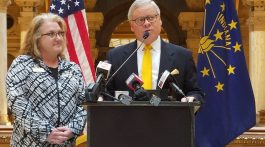

House Republicans this week signaled they may move to rein in how Indianapolis spends leftover local money on roads after a $25 million “underspend” pot was used for councilor-selected projects outside the city’s asset management system — prompting a somewhat pointed exchange between a city councilor and the committee chair.
Testifying before the House Roads and Transportation Committee, Indianapolis City-County Councilor Andy Neilsen described what he called a “fall fiscal” or “standalone fiscal” — a pool of funds created from the previous year’s unspent city dollars. As part of the 2025 budget, Indianapolis set aside $25 million that could be used only for parks and Department of Public Works projects, with district councilors working directly with departments to select specific improvements.
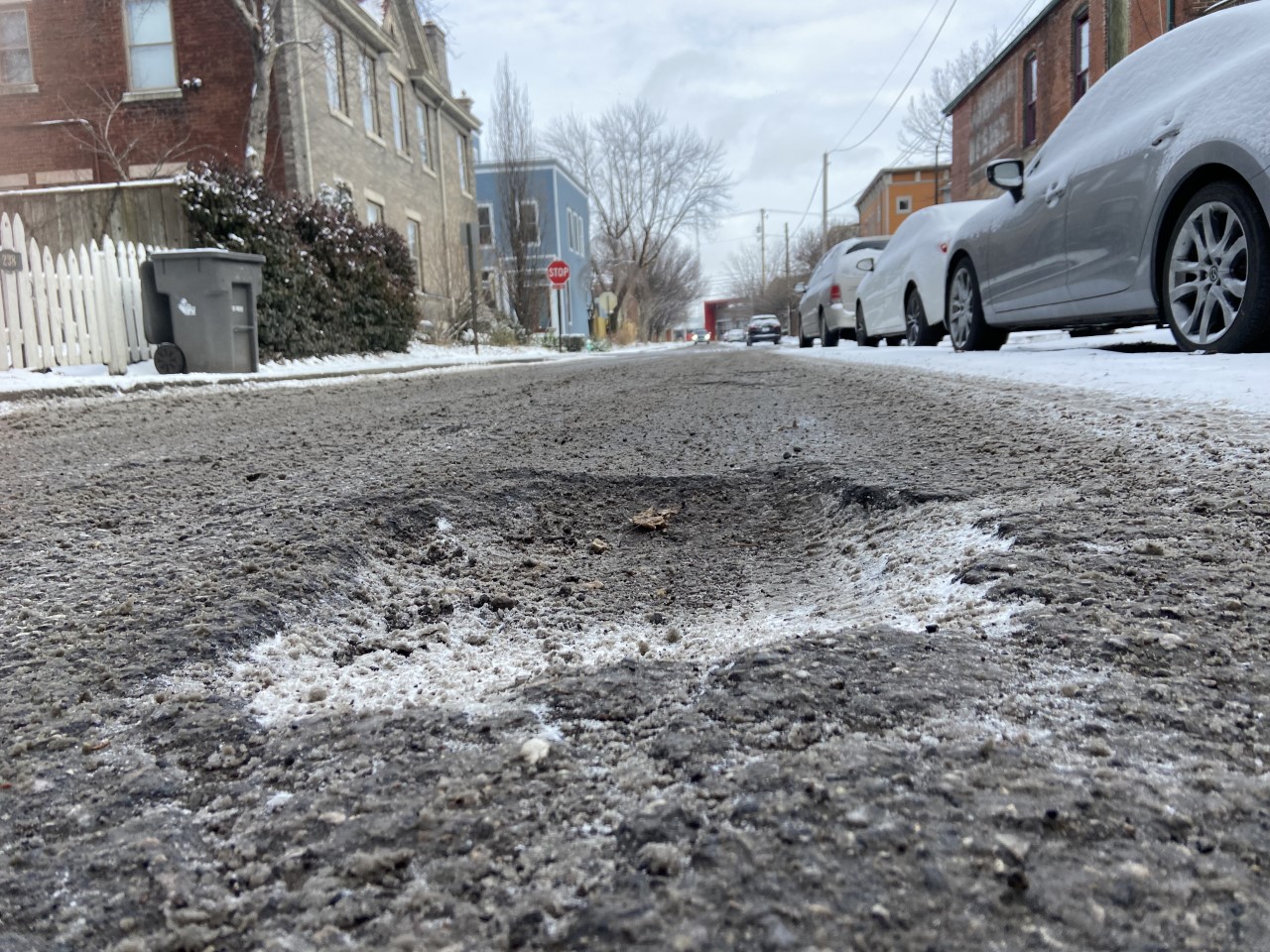
Neilsen framed the approach as a practical supplement to the city’s formal capital planning process, not a replacement for it. He told lawmakers that some projects that matter most to residents — short stretches of deteriorating pavement, missing sidewalks, or dangerous crossings — routinely lose out in the scoring system that prioritizes larger, higher-traffic corridors.
In his east-side district, Neilsen said he used his allocation to fix a badly deteriorated stretch of roadway between Arlington Avenue and Emerson Avenue and to add a protected pedestrian and multimodal path along East Pleasant Run Parkway Drive. He said those projects may not have ranked highly on an engineer’s spreadsheet, but they addressed constant complaints from neighbors.
“These are the things people see every day,” Neilsen said, arguing that the standalone fiscal allowed councilors to respond to on-the-ground conditions that data models can miss.
House Roads and Transportation Chair Jim Pressel (R-Rolling Prairie) pushed back sharply, saying that rationale undercut the very reason the General Assembly created stricter asset management rules in the first place.
Pressel reminded Neilsen that Indianapolis already operates under a state-mandated Asset Management Program that is supposed to prioritize road projects based on condition, need, and objective data. Those guardrails were strengthened in recent years — particularly through HB 1461 — specifically to prevent political favoritism in local road spending.
“What you’re describing sounds exactly like what we were trying to get away from,” Pressel told Neilsen. “If every district gets to pick its own winners, you no longer have a system — you have 25 mini systems driven by politics.”
The exchange grew more pointed when Pressel raised “rumors” that some council members had used the $25 million pot to pave roads leading to their own homes or to one member’s office. He did not name anyone, but said the possibility deeply troubled him.
“I personally take offense to that,” Pressel said, emphasizing that lawmakers spent years “going through a lot of pain” to design a neutral, data-driven process that would prevent exactly that scenario.
Neilsen did not directly contest the rumors, nor did he validate them. Instead, he acknowledged that the process had been imperfect and suggested the city was already recalibrating.
“We’ve learned a lot from that process,” Neilsen replied, saying Indianapolis was “adapting going forward” to better balance local discretion with statewide expectations for “capital city needs.”
Pressel was not dismissive of the idea that Indianapolis should spend its underspend on roads — in fact, he said he welcomed it — but he drew a clear line on how it should be done.
“If Indianapolis wants to put this underspend into roads, I absolutely love that,” Pressel said. “But it ought to go through the asset management program just like every other road dollar in the state.”
The committee took no vote Tuesday, but members made clear the issue is far from settled. Lawmakers signaled they are likely to consider amendments next week aimed at tightening how local underspend or other flexible funds can be used for roads — including whether such dollars must be run through the same asset management standards as regular transportation funding.