







by Abdul-Hakim Shabazz, Esq.
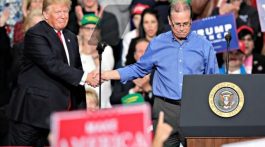
We don’t normally spend a lot of time on national politics here at Indy Politics. Washington has enough drama without us adding to it. But when the President of the United States starts floating the idea of replacing income taxes with tariffs — and Indiana Republicans start lining up behind it — that stops being Beltway chatter and starts being a Hoosier issue.
Because Indiana is not a think tank white paper.
We are a manufacturing state plugged deeply into global supply chains. We build cars in Kokomo. We process steel in Gary. We assemble engines, pharmaceuticals, heavy equipment, and agricultural products across the state. When tariffs move, Indiana feels it — immediately.
So let’s drop the applause lines and talk plainly. Tariffs are taxes.
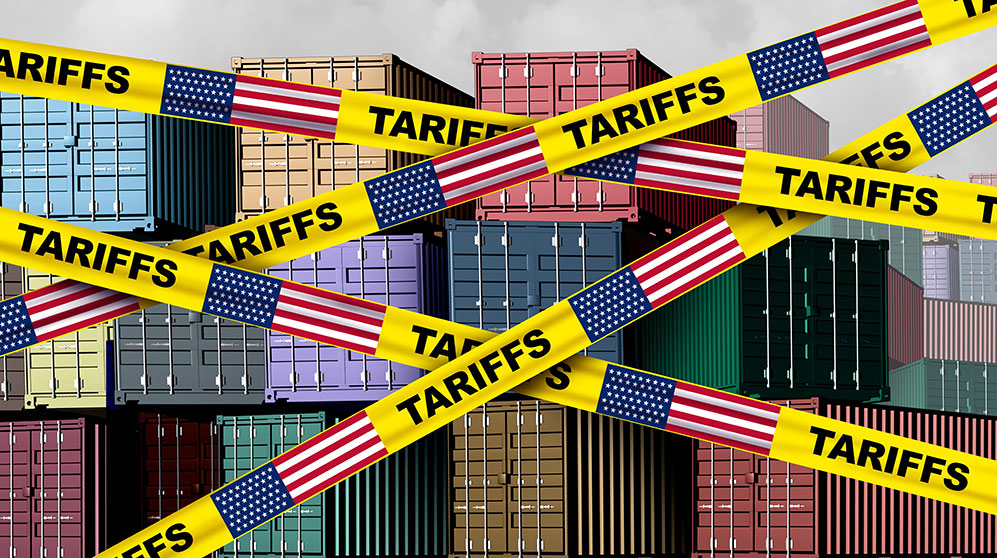
They are not paid by China. They are not paid by Mexico. They are paid by American importers, who pass those costs along to manufacturers and consumers. That means higher input costs for Indiana factories that rely on imported components. It means higher prices for Hoosiers at Meijer, Lowe’s, the car dealership, and the grocery store.
And here’s the part no one at the rally wants to say out loud:
Tariffs are consumption taxes.
Lower- and middle-income families spend a larger percentage of their income on goods. When prices rise across everyday products — appliances, auto parts, food packaging, electronics — those families feel it first and hardest. So when politicians promise tariffs as a path to tax “fairness,” what they’re really proposing is shifting the burden from income to consumption. That doesn’t eliminate taxes.
It relocates them — straight into the checkout line.
“But it brings jobs back.”
Maybe in limited, strategic sectors. That’s a legitimate conversation.
But let’s stop pretending 2026 manufacturing looks like 1956.
If a new plant opens in Anderson or Terre Haute, it will not hire thousands of line workers. It will install robotics, automation systems, AI-driven logistics, and employ a fraction of that number in technical roles. We’ve seen this before. In 1900, roughly 40 percent of Americans worked in agriculture. Today it’s about 1 to 2 percent. Did we collapse? No. We mechanized. We became more productive. We produced more food with fewer workers. We survived.
But we didn’t bring the farm jobs back.
Manufacturing follows the same technological arc. Tariffs don’t repeal automation.
Now let’s address the fantasy being sold to conservative voters: that tariffs could replace income taxes and fix the debt. Federal income taxes generate trillions annually. Even aggressive tariffs bring in tens of billions. Our deficits run in the trillions. You do not fix a trillion-dollar deficit with dock fees at the Port of Los Angeles. To fully replace income taxes, tariff rates would have to be so high that imports would collapse, prices would spike, and trading partners would retaliate against Indiana exports — including agriculture and manufacturing. That means farmers in Indiana would take a hit. Manufacturers would take a hit. Consumers would take a hit. And then Washington would likely write bailout checks. We’ve seen that movie, too.
None of this means tariffs have zero place in policy. Used narrowly and strategically, they can serve as leverage in trade negotiations or protect critical industries. But selling tariffs as a cure-all — as a way to eliminate income taxes, revive 20th-century payrolls, shrink the debt, and make foreigners pay the bill — is not serious policy. It is political kabuki theater. The gestures are dramatic. The slogans are strong. The base cheers on cue. But when Hoosiers swipe their debit cards, the receipt will not read “Paid by Beijing.” It will read what it always reads: Paid by you.
And Indiana voters — especially conservative ones — deserve better than economic cosplay.
Abdul-Hakim Shabazz is the editor and publisher of Indy Politics. He is an attorney licensed in Indiana and Illinois.