






by Abdul-Hakim Shabazz, Esq.
Believe it or not, a Turning Point Action rally in Indiana this weekend had a lot in common with the “No Kings” protest in late March. Say what, Abdul? Hear me out. Both were prime examples of Hoosiers exercising their First Amendment rights to peacefully assemble and make their voices heard. And both were, technically speaking, standing room only. Now, before you accuse me of warping the sensors, let’s talk about what that actually looked like.
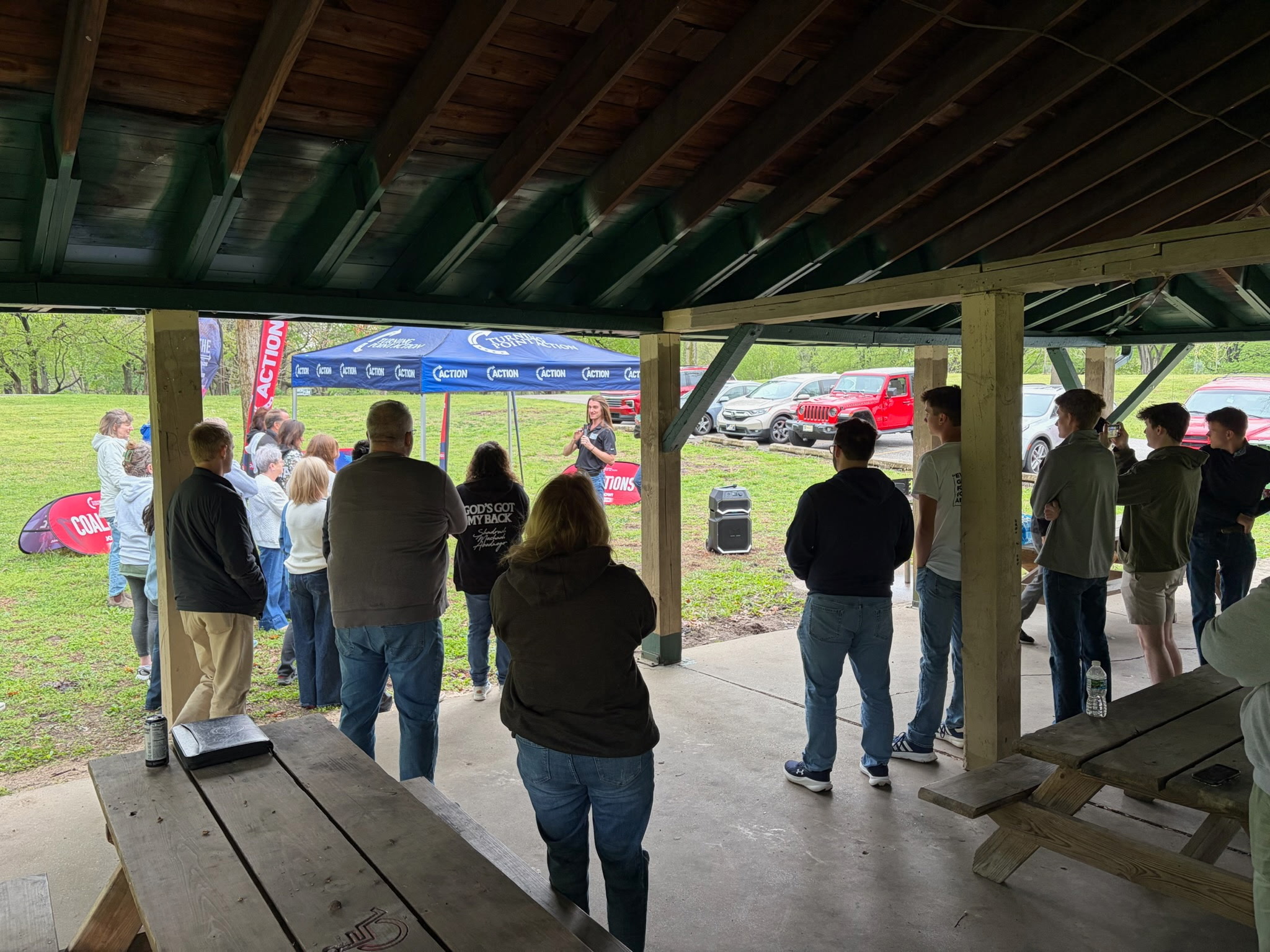
At the Lafayette-area stop featuring Scott Presler, photos show a small, tightly gathered group—roughly two dozen people—standing under a park shelter, listening to remarks, holding literature, and doing what grassroots activists do. It was organized. It was intentional. It was clearly part of a broader ground-game effort.
And it wasn’t just Lafayette.
Photos from Terre Haute—and other stops across Indiana—tell the same story: small clusters of supporters, park shelters and local venues, gatherings that look less like rallies and more like organized meetups. Consistent. Focused. Intimate.
But let’s be honest about the optics. This wasn’t a rally. It wasn’t even really an “event” in the traditional political sense. It was closer to a well-organized backyard barbecue—with a voter file. And let me put it in terms some of you will appreciate, because you were there. There were more people at my wedding—and nearly as many in my wedding party; but I digress.
And again, that’s not necessarily a knock. In Indiana, retail politics still wins races. Small groups, personal conversations, direct voter contact—that’s how votes get banked in a primary. If your goal is turnout, not television, this is exactly how you do it. But that’s not how it’s being sold. It was billed as the “Super Chase” tour.
“Super Chase” sounds big. It sounds urgent. It sounds like something building—something with scale, momentum, and visible energy. It suggests a movement you can see from a distance. But look at the tour itself. A restaurant in Vincennes. An office building in South Bend. A park shelter in Lafayette. Another park stop in Terre Haute. A cattle barn in Johnson County. That’s not a rally circuit. That’s a retail politics road trip. What we’re seeing instead is something much smaller. More targeted. More controlled. The only problem—you’d need the Hubble Space Telescope to find it.
Meanwhile, just a few weeks earlier, downtown Indianapolis told a very different story. Thousands of people packed the area around the Statehouse for the “No Kings” protest—crowds stretching across blocks, signs everywhere, energy you could feel even through a photo. Agree with them or not, the visual spoke for itself.
And yes, that crowd came with its own narrative. In some corners, it was dismissed as “paid protesters.” Maybe. Maybe not. But if that’s the going rate for turnout, somebody might want to check the budget—because in Lafayette and Terre Haute, they were clearly running a volunteer operation.
That’s the difference between projection and presence.
Which brings me (you knew this was coming) to an old episode of Star Trek: The Original Series called “Journey to Babel.” In it, Captain James T. Kirk and the crew of the Enterprise are harassed by an enemy ship that appears far more powerful than it actually is. The ship is running its systems at 100%—not because it is stronger, but because it wants to look stronger. It’s a bluff. A trick of the sensors.
For a while, it works. The Enterprise treats it like a real threat. It responds accordingly. But eventually, reality catches up. The ship pushing everything to 100% to look bigger than it is can’t sustain it. It gets exposed. And in the end, it’s destroyed.
To be clear, this isn’t a prediction of political doom for Scott Presler or anyone aligned with him. Presler’s model has always been about the long game—quiet, methodical, focused on turnout rather than theatrics. But it is a reminder. In politics, you can run the branding at full power. You can amplify the message, project momentum, and create the appearance of something larger than life. But sooner or later, the results show up. The votes get counted. The turnout gets measured. The reality becomes unavoidable. And that’s when we find out whether we were looking at the best of rallies… or the worst of them.
Because in politics, just like in space, you can fake the signal—but you can’t fake the outcome.
Abdul-Hakim Shabazz is the editor and publisher of Indy Politics. He is also an attorney licensed in Indiana and Illinois.