








If last week’s Indiana primary is a dress rehearsal for November, Democrats may finally be feeling some momentum in a state long dominated by Republicans.
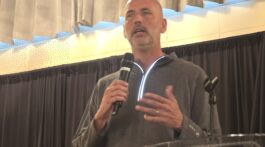
Indianapolis City-County Councilor Nick Roberts (District 4 – Geist/Lawrence) — a self-described data geek who lives in voter files and turnout models — told Indy Politics that Democratic performance in the primary was “shocking” by recent standards. Despite relatively few contested races on the Democratic side, 44% of all primary ballots statewide were Democratic — the highest share in years.
In Marion County, Democrats accounted for 82% of ballots, and all 25 council districts, including traditional GOP-leaning areas like Franklin, Perry, and Decatur townships, were “strongly Democratic.” Suburban counties that have long formed the backbone of Republican strength also showed unusual patterns. Roberts noted that in Hamilton County, including Fishers, Democratic ballots outnumbered Republican ballots, even with several hotly contested GOP races on the ballot. Similar trends appeared in Hancock, Hendricks, Boone, Vanderburgh, Perry, Clark, and Floyd counties.
Roberts said while contested races remain the single biggest driver of turnout, he argued this election went beyond that. He pointed to a combination of voter frustration with the GOP, an anti-incumbent mood, and the role of Turning Point USA and other MAGA-aligned groups, which spent heavily to defeat sitting Republican lawmakers over issues like the gas tax and other unpopular votes. Several Republican incumbents lost their primaries.
On the Democratic side, Roberts noted that party voters largely chose pragmatic, general-election–viable candidates, contrasting that with what he described as more ideologically extreme Republican nominees. He believes that if Democrat Beau Bayh ends up facing Republican Diego Morales in a statewide race, Democrats “have a very real opening” — especially given Morales’ weak showing in his own area.
Roberts cautioned that primary voters and general-election voters are “two very different creatures,” but he sounded more optimistic than many Indiana Democrats have in years.
You can hear Roberts in the audio above. It runs for 18 minutes.