






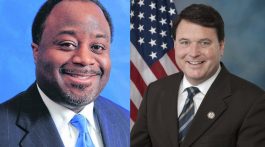

U.S. Sen. Jim Banks and Indiana Attorney General Todd Rokita on Thursday withdrew their endorsements of Secretary of State Diego Morales and endorsed Max Engling, a congressional staffer who officially qualified for the race the same day.
In a joint release, Banks called Engling “a key member of my team” who “will make a great Secretary of State.” Rokita went further, publicly calling on Morales to suspend his campaign and citing “so many self-inflicted wounds and issues” that, in his view, leave Morales unable to win in November.
Rokita also reminded delegates that he himself took the attorney general nomination from then-incumbent Curtis Hill on the GOP convention floor in 2020, and went on to win the general election that fall. The reference signaled the mechanism by which Engling is expected to overtake Morales at this year’s state convention.
The Bayh campaign responded within the hour. Campaign manager Jack Tormoehlen issued a statement characterizing the Engling entry as a last-minute swap engineered by “insiders in DC and Indianapolis,” and pointing to the longer list of controversies surrounding the Morales administration — luxury vehicles, foreign travel funded by undisclosed sources, and no-bid contracts for donors. Republicans, Tormoehlen argued, are moving on Morales not because of those issues but because internal polling suggests he would lose to Beau Bayh.
How it developed
The public sequence — endorsement, withdrawal, replacement — has played out over several months. GOP sources familiar with the Morales campaign’s internal operations tell Indy Politics the private sequence began considerably earlier.
According to those sources, Banks’s original endorsement of Morales was conditioned on Morales agreeing to use a slate of vendors and consultants connected to Banks’s political operation. That arrangement gave Banks’s team visibility into the Morales campaign’s delegate work and internal operations, and positioned the senator’s allies to influence the post-primary delegate and county appointment process.
After the May primary, sources say, Banks provided Morales with lists of recommended delegate nominees and county-level appointees. A significant number of those names were aligned with Engling or otherwise loyal to the senator’s operation. Several county chairs are said to have recognized the pattern at the time.
That history offers context for a development earlier this month, when Indiana political reporter Adam Wren reported that consultants were departing the Morales campaign. The departures were widely read as a sign of internal campaign trouble. GOP sources tell Indy Politics those consultants were aligned with Banks’s operation from the outset, and that their departures reflected the senator’s own changing position rather than turmoil inside the Morales operation.
What’s next
The state GOP convention now becomes the focus. Rokita’s 2020 reference is, in effect, a roadmap: a damaged incumbent in his own party, displaced on the convention floor by a candidate Republican leadership viewed as more electable in the fall.
Whether Morales suspends his campaign, contests the convention, or pursues another course has not yet been indicated by his office. Neither Morales nor Engling responded to requests for comment by publication time.
Indy Politics will continue to follow this story