



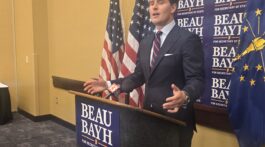






The midterm losses that cost House Republicans their supermajority, including the Speaker and the chairman of the Education Committee, are putting school funding back on the table, according to public education advocate Justin Oakley.
Republicans will hold 54 seats in the House and Democrats 46 when the new General Assembly convenes. House Speaker Todd Huston, R-Fishers, and House Education Committee Chairman Bob Behning, R-Indianapolis, were among the Republican incumbents who lost reelection.
Oakley told Indy Politics the results reflected voter frustration that had been building for years. He added that the reasons behind individual races may vary.
“I think people were just angry,” Oakley said. “I think it was a build up, many years of building up.”
Oakley said the new balance in the House could push lawmakers to look for support across party lines, and could open the door to revisiting how Indiana funds its public schools.
“Maybe we need to have a conversation on school funding again,” he said.
Oakley criticized the state’s reliance on local referendums to pay for school operations and transportation. He said districts that fail to win voter approval may have to consider cutting services, including buses and maintenance.
“Maybe the referendum should not be a way to basically fund our public schools,” Oakley said.
He also pointed to tax incentives for data centers. He said some voters see an imbalance when districts have to ask for more local money while companies receive tax breaks.
“People are tired of, like, wait a minute, we can give a company 100-year basically free land thing here, but we can’t give schools a couple million bucks,” Oakley said.
Oakley called on state leaders to listen to superintendents and educators and to allow a period of stability rather than continuing to change education policy often. He said lawmakers should assess what is working before adding new requirements or systems.
On teacher pay and working conditions, Oakley noted that teacher salaries were frozen in 2011 and that state law limits collective bargaining over working conditions. He said improving those conditions is key to drawing people into the profession.
“If you want to get any restoration of anybody coming back into teaching to teach, you’re going to have to change a lot of things,” Oakley said.
Oakley said the election could open a broader discussion, but he did not predict that lawmakers would reach agreement quickly. He urged elected officials to listen to people outside their political circles.
“The way you treat people matters. The way you speak to people matters. The way you handle your power matters,” he said.
Oakley said he plans to attend the legislature’s Organization Day with a group to meet new lawmakers and look for issues where they can work across the aisle. He said the next session will show whether the election leads to a lasting change in how Indiana approaches education.

