









by Abdul-Hakim Shabazz, Esq.
A thought experiment about replacing income, sales and property taxes with one broad tax on economic activity — and why the math gets complicated fast.
First, an apology.
Stephanie Wells at the Indiana Fiscal Policy Institute spends her days thinking about tax structures, fiscal modeling, and how government actually pays for things. What follows is me wandering squarely into her wheelhouse with a thought experiment that probably makes professional tax analysts reach for aspirin. And while I’m apologizing to people who actually understand tax policy, I should probably extend the same courtesy to Michael Hicks at Ball State University. Economists tend to get understandably nervous when journalists start doing tax policy thought experiments in public.
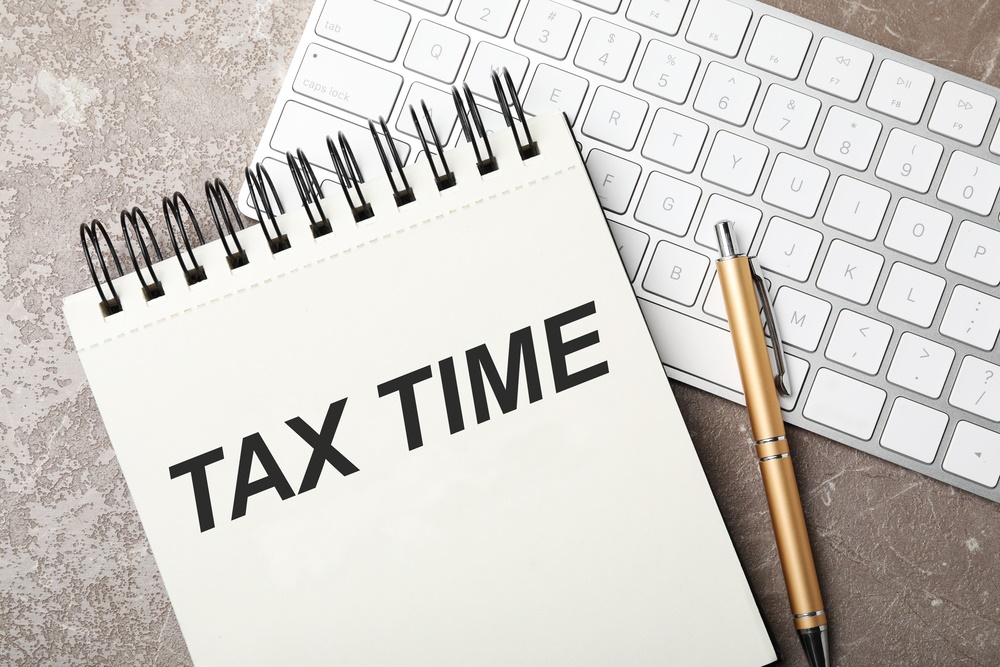
I was back home in Springfield this weekend making my annual trip to see my accountant of nearly 25 years. I’ve always argued that a good accountant is like a good mechanic or a good barber: once you find one you trust, you don’t let them go. When it’s time to render unto Caesar what is Caesar’s, you want the right person handling the paperwork. And while I sat there talking numbers, it inevitably got me to thinking about taxes in general and how they are not inevitably evil.
See what I did there?
Before the pitchforks come out, let me also say something else that shouldn’t be controversial but somehow still is in certain corners of the internet: taxation is not theft. Taxes are the price we pay for civilization. Roads, police, courts, fire departments, schools, and the other boring but essential infrastructure that keeps society functioning don’t materialize out of thin air. The real question isn’t whether we should have taxes at all. The real question is how much civilization we want—and how much we’re willing to pay for it.
Indiana’s tax system, like most states, rests on three primary pillars: income taxes, sales taxes, and property taxes. Each has its defenders, and each has its critics. Critics of the current structure often describe it this way: income taxes punish work, sales taxes punish consumption, and property taxes punish owning the place you live. Whether that description is entirely fair is certainly debatable, but the sentiment captures why tax reform ideas never stay buried for very long.
Which brings us to the thought experiment.
What if we scrapped most of the existing structure and replaced it with a single tax on commercial transactions?
Under such a system, every time money changes hands in the economy—whether through retail purchases, services, wholesale transactions, or business-to-business exchanges—the government would take a small percentage. Instead of taxing income in one place, consumption in another, and property ownership somewhere else, the government would simply tax economic activity itself.
In theory, the concept has a certain elegance. The tax base becomes far broader because revenue flows from the entire commercial ecosystem rather than primarily from wage earners and homeowners. The modern economy is increasingly service-based anyway, so a transaction tax naturally captures large segments of activity that traditional sales taxes often miss. It also becomes more difficult to avoid because economic exchanges occur everywhere.
There is another feature that would intrigue policymakers: a commercial transaction tax can reach parts of the underground economy that income taxes frequently miss. Even people operating outside the formal economy still participate in the regular one. At some point everyone buys groceries, gasoline, clothes, or pays a phone bill. As the French might say, hookers and drug dealers still have to buy pants, n’est-ce pas?
But before anyone at the Indiana General Assembly gets too excited, we should address the two words that haunt every tax reform proposal: the math.
Indiana currently raises billions through its existing mix of income, sales, and property taxes. Replacing that entire structure would require an enormous volume of taxable transactions. This is where people like Stephanie Wells and Michael Hicks begin reaching for spreadsheets.
A transaction tax rate might sound modest in theory, but depending on how broadly it is applied, it may or may not generate enough revenue to fully replace the current system—particularly once local government finance enters the conversation. Property taxes don’t simply fund some abstract notion of government. They fund schools, police departments, fire services, libraries, and a wide array of local functions that Hoosiers rely on every day.
Eliminating property taxes immediately creates the next major challenge: distribution. Even if a transaction tax raised enough money statewide, lawmakers would still have to decide how that money gets allocated. Cities, counties, school districts, townships, libraries, and fire districts all depend on revenue streams that currently flow directly from property taxes. Replacing those local revenues with a statewide transaction tax means the legislature would suddenly be responsible for designing a formula that redistributes funds across the state.
And if you think Indiana politics is spirited now, imagine the debate when lawmakers begin arguing over how much of the transaction tax should flow to Carmel, Gary, Fort Wayne, or rural counties. That conversation would likely make today’s property tax fights look like a church picnic.
There is yet another wrinkle: financial markets. If the definition of “transaction” were broad enough, the tax would technically apply whenever stocks, bonds, or other securities change hands. Every trade, after all, is a commercial transaction. Critics would quickly accuse policymakers of protecting the wealthy if financial trades were exempted or taxed at lower rates.
But that argument ignores how the modern economy actually functions. Millions of ordinary Americans own stocks and bonds through 401(k)s, IRAs, and pension funds. A heavy tax on securities trading wouldn’t just hit hedge funds or institutional investors. It could also reduce returns in retirement accounts held by teachers, firefighters, and workers saving for the future. More importantly, financial markets operate on extremely thin margins and enormous trading volume. A large transaction tax applied to securities could slow trading activity dramatically.
In other words, the policy design becomes complicated very quickly.
Which is why sweeping tax reform ideas often sound brilliant on a whiteboard but considerably more intimidating once the spreadsheets come out. Still, the thought experiment is useful because it forces us to ask a basic question: why do we tax income, consumption, and property separately in the first place?
Perhaps the answer is simply that those taxes are the least problematic options policymakers have discovered so far. Or perhaps there really is a better way to fund government that spreads the burden more evenly across the entire economy.
Either way, I suspect Stephanie Wells and Michael Hicks are already sharpening their red pens.
And honestly, they probably should.