





by Mackenzi Klemann, Indiana Capital Chronicle
April 1, 2026
The Indiana Commission on Higher Education voted Wednesday to consolidate, suspend, eliminate or monitor more than 1,000 low-enrolled degree programs at Hoosier public colleges and universities.
The commission spent the past nine months reviewing 2,300 academic programs to identify low-enrolled degrees to comply with House Enrolled Act 1001, which took effect last July as lawmakers seek to streamline higher education toward in-demand careers.
“This process is almost a no-brainer,” said commission member Larry Garatoni.
State officials emphasized that only 4% of 2024 graduates earned a degree in any of the 1,000 degrees subject to CHE action Wednesday.
Six of Indiana’s public colleges and universities already voluntarily agreed to cut or restructure hundreds of academic degree programs last summer.
The commission will also begin a separate review of low-wage degrees following Wednesday’s meeting to comply with Senate Enrolled Act 199 that was approved by the General Assembly in February and takes effect July 1. The measure directs CHE staff to review programs whose graduates earn median wages below the average earnings of a high school graduate in Indiana — ranging roughly from $24,000 to $35,000 — and determine by Dec. 1 whether those programs should continue, be restructured or be consolidated.
A list of impacted programs can be found here.
What happens to the degrees
Only 210 low-enrolled degrees identified by all seven public universities and the commission will be suspended or eliminated.
Among those degrees are a master’s degree in architecture at Ball State University, a master’s in industrial technology at Indiana State University and an associate’s degree in liberal studies at Indiana University.
Another 374 degrees will be merged or consolidated within similar degree programs. This includes 79 programs that exceeded the state’s threshold for low enrollment.
Colleges and universities identified 280 new degree programs — those that have only started enrolling students in recent years — that will be temporarily exempt from these standards while recruitment ramps up. The commission agreed to revisit those programs over the next seven to 12 years.
Similarly, schools identified 53 low-enrolled degrees that do not directly enroll students. These “stop-out” degrees are used by students who are unable to finish their original degree, but who wish to earn a similar credential in a lower tier like an associate’s or bachelor’s degree.
CHE will monitor 139 programs below the enrollment threshold identified by colleges and universities as critical to the workforce. The commission gave the non-specific example of a doctoral neuroscience program with only two students.
These programs will be placed on improvement plans to increase enrollment or completions, incorporate student-serving features and improve industry alignment, according to CHE officials.
CHE members were unanimous in their approval of Wednesday’s action.
Edward Castronova, who teaches media at Indiana University-Bloomington and serves as a faculty representative to the commission, defended the commission’s actions as a neutral process turned partisan by faculty who don’t want their degree programs to be eliminated.
He said pressure to review degrees comes from students, parents and lawmakers.
Faculty should ask why enrollments are low, Castronova said, noting that liberal arts programs can be popular with students and employers when they promote character development.
“Low enrollment is a sign that something about the teaching isn’t working,” he said.
How degrees are ID’d for review
The 2025 law uses a three-year rolling average to identify degrees producing few graduates.
A bachelor’s degree should produce at least 15 graduates in this time, while an associate’s degree should produce 10 graduates.
The state imposed lower graduate thresholds for master’s and doctoral programs at a rolling three-year average of seven and three graduates, respectively.
Students who enrolled in a degree slated for suspension or elimination will be given the option to finish their degree before the program is fully eliminated. This includes students who enrolled in such a program for the fall 2026 semester.
Schools will cease new admissions in affected programs; no enrollments will be allowed by fall 2027.
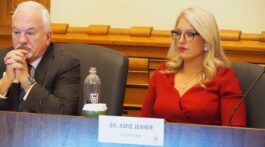
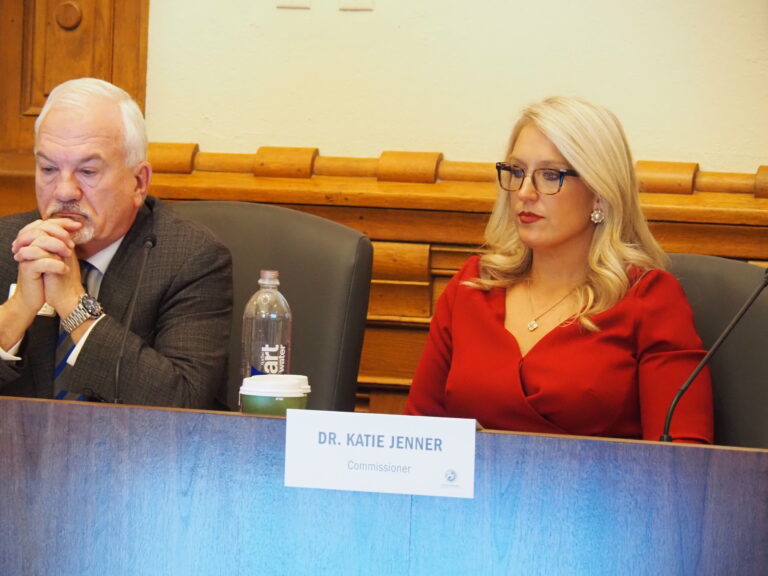
Education Secretary Katie Jenner declared her support for the process as both an educator and mother of two high school girls.
“We have the responsibility to be good stewards of taxpayer dollars and good stewards and supporters of our parents, families and students who are investing in higher education,” she said. “That is a way we can increase our value proposition and bring training to the greatest value to our people.”
What’s next
Indiana’s public colleges and universities voluntarily made changes to low-enrolled degree programs last year in anticipation of HEA 1001, including the elimination of 71 degrees with few or no students enrolled.
Another 1,200 degree programs offered by public Hoosier state colleges and universities remain unaffected.
The commission did not review the additional 3,000 degree programs offered by private or for-profit colleges.
At-large commission member Mike Alley said the panel should be more disciplined in approving new degrees to avoid repeated degree reviews.
He said employers are seeking candidates with a broader set of knowledge than what was provided by some of the degrees the commission voted to suspend, eliminate or consolidate Wednesday.
“In today’s business environment, with AI occurring and all the other dramatic changes that are happening every day, it’s really impossible to nail down or inappropriate to have specific degree programs that are so fine tuned to a certain discipline, because in the business world we need a broader perspective,” Alley said. “I know we can accomplish that.”