








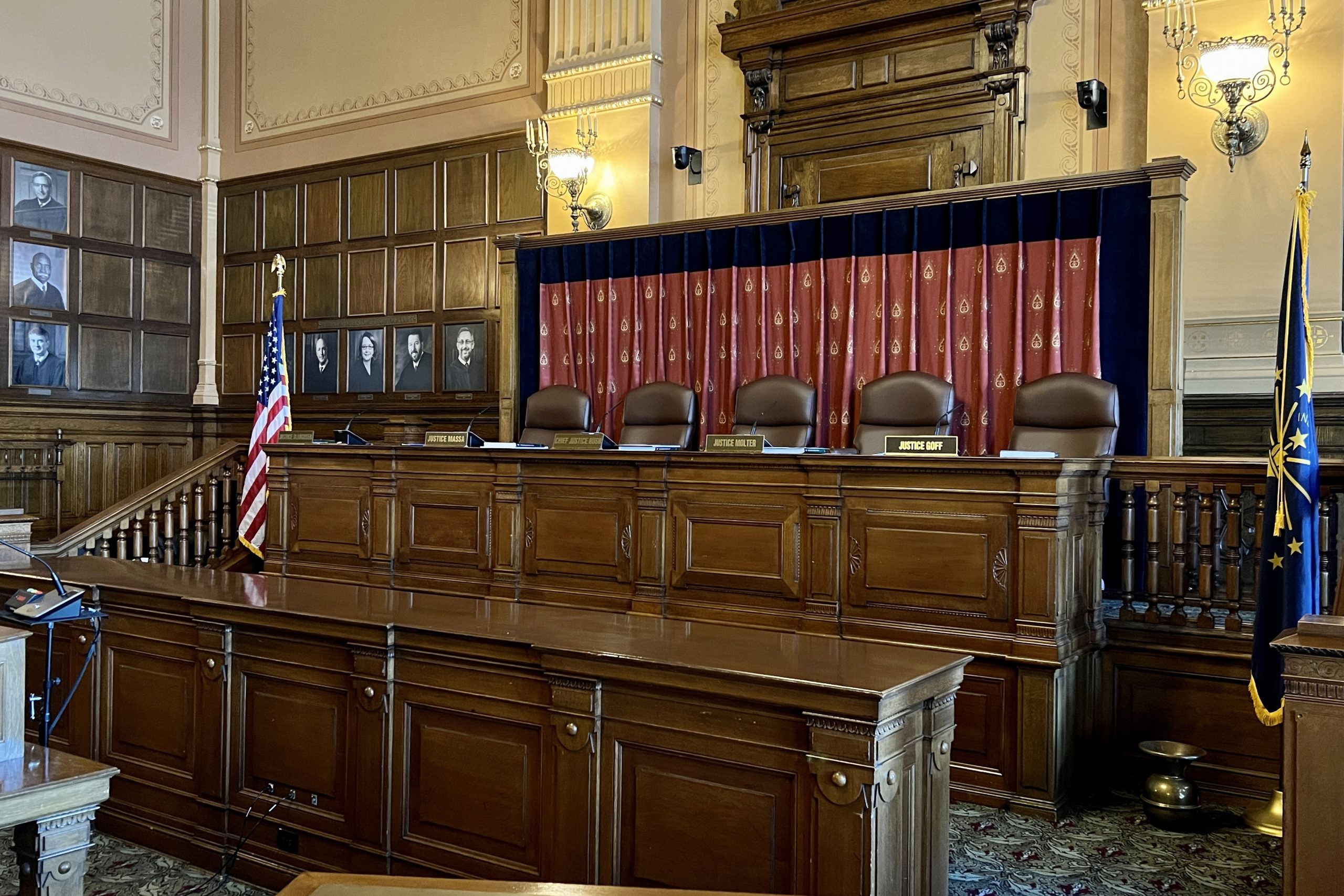
Concerns about judicial security resurfaced this week after a Tippecanoe County judge and his wife were shot in their Lafayette home, prompting the Indiana Supreme Court to convene a statewide security briefing for judges.
Tippecanoe Superior Court Judge Steve Meyer and his wife, Kim, were wounded in the Jan. 18 shooting and are recovering, according to the Indiana Supreme Court. Chief Justice Loretta Rush hosted a security webinar Friday with nearly 200 Indiana judges to discuss safety concerns and ongoing efforts to protect members of the judiciary.
“Any violence against a judge or a judge’s family is completely unacceptable,” Rush said in a statement following the incident, urging judges to remain vigilant.
The webinar also featured Tippecanoe County Circuit Court Judge Sean Persin and security expert James Hamilton, who discussed best practices and the challenges of safeguarding judicial officers amid increasing threats. The issue is hardly theoretical: a 2023 survey conducted by the Supreme Court’s Office of Judicial Administration found that more than 150 of 214 responding judges reported being targeted by threats, including threats of arson and bombings.
Rush noted that the Supreme Court has sought additional funding for security grants to bolster protections for judges, court staff, attorneys, and litigants. She also praised law enforcement agencies for their response to the Lafayette shooting and said arrests have been made in connection with the case.
The shooting has triggered administrative adjustments in Tippecanoe County courts. A request for a special judge has been submitted to the Indiana Supreme Court, with an appointment expected Monday. Meanwhile, a senior or pro tempore judge has been approved to handle Judge Meyer’s caseload while he recovers.
Judge Meyer, in a brief statement, thanked law enforcement and the community for their support and said he would not comment further while the judicial process moves forward.
The incident comes amid a broader national conversation about threats to public officials and the rising hostility toward judges, prosecutors, and election officials. While courthouses often employ metal detectors, security officers, and controlled access points, judges frequently face vulnerabilities outside the courthouse, including at their homes.
Indiana officials have taken incremental steps in recent years to address these risks, but the Meyer shooting underscores lingering gaps in personal and residential security for judicial officers. As Rush noted, the safety of the judiciary is not just a matter of protecting individual judges, but ensuring the integrity and independence of the judicial system itself.
For now, Indiana’s high court is urging vigilance, coordination with law enforcement, and continued investment in security infrastructure as the state grapples with the reality that judges—often tasked with making deeply unpopular decisions—are increasingly becoming targets.