





Over the course of a four-hour hearing Friday, the Marion County Election Board considered 121 ballot challenges involving candidates for precinct committeeman (PC) and state convention delegate. Of those, 120 were upheld.
The headline number raised eyebrows. The explanation is structural.
Indiana operates under an open primary system. Voters are not registered by party. On primary day, you choose which ballot to pull. That flexibility is legal and common. Crossover voting has long been part of Indiana political strategy.
But when someone seeks internal party office, that flexibility narrows.
Under Indiana law, candidates for precinct committeeman or convention delegate must demonstrate party affiliation either through recent primary voting history or certification from the county party chair. Because Indiana does not track party registration, primary ballot selection becomes the proxy for affiliation.
That design shaped the hearing.
Most of the candidates removed fell into two categories: those with no primary voting history and those who had recently pulled the opposite party’s ballot. In either case, the issue was not ideology. It was statutory compliance.
Open primaries invite participation. Internal party governance requires proof of affiliation. Indiana resolves that tension by using ballot history as evidence.
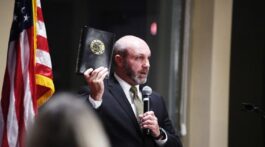
During the hearing, activist Mike Oles urged the board to “be a voice for democracy” and allow candidates to remain on the ballot. But election boards do not have authority to waive statutory requirements. They apply the law as written.
Marion County Democratic Chairwoman Myla Eldridge emphasized that eligibility rules were publicly available and applied uniformly. The board’s votes reflected that consistency.