









Former President Donald Trump jumped into Indiana’s 38th Senate District Republican primary this week, endorsing Vigo County Council member Brenda Wilson and unloading on incumbent Sen. Greg Goode in a characteristically maximalist Truth Social broadside.
Trump labeled Goode an “incompetent and ineffective RINO,” blaming him for voting against Indiana’s congressional redistricting plan and accusing him of costing Republicans potential U.S. House seats. In the process, Trump also elevated Wilson’s résumé—calling her a “Highly Respected Vigo County Commissioner” and a “Successful Family Farmer.”
There’s just one problem: that biography is, at best, aspirational.
Wilson is not a Vigo County Commissioner. She is a Vigo County Council member, an important but distinct role. County commissioners serve as the county’s executive branch, overseeing infrastructure, contracts, and day-to-day administration. The county council, meanwhile, functions as the fiscal body, setting budgets and tax rates. Conflating the two is not a technicality; it inflates the office and the authority.
As for the “successful family farmer” label, public records and campaign biographies emphasize Wilson’s government service and civic roles, not the operation of a commercial farm. She comes from a family with agricultural land and heritage in Vigo County, but the branding fits a familiar campaign trope: rural authenticity as political shorthand. It’s not uncommon in Indiana politics. It’s just not a documented job description.
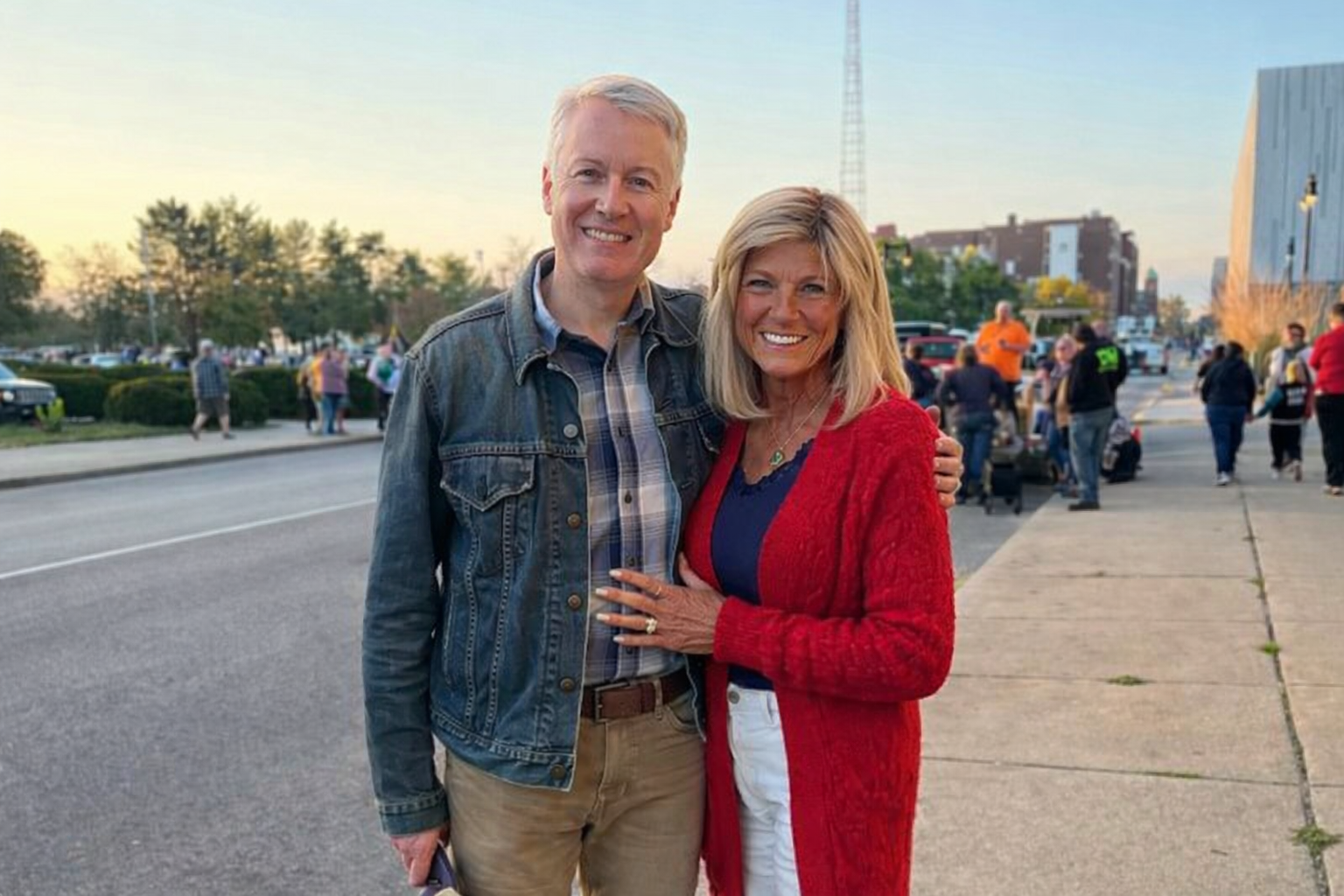
Trump’s endorsement also underscores how quickly political alliances shift in modern primaries. In October 2025, Wilson publicly praised Goode for his dedication to the state and community, posting a photo of the two smiling together at a Terre Haute event and thanking him for his service. Fast forward to 2026, and Goode has been recast as “No Goode,” an America-Last villain in the MAGA cinematic universe.
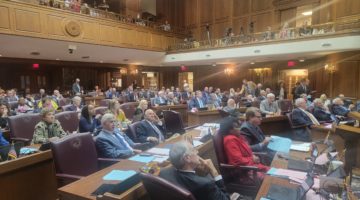
Goode’s redistricting vote, which he argued was flawed and potentially harmful to Indiana, has now become the litmus test for ideological purity. Trump’s framing is blunt: dissent equals betrayal, and betrayal equals primary season target practice.
Goode, for his part, has said his vote reflected the views of his constituents, arguing he was listening to voters in his district rather than Washington political pressure. Whether that stance is rewarded or punished in a Republican primary dominated by national messaging remains an open question.
This race is shaping up as a proxy fight between establishment Republican governance and insurgent loyalty politics. Wilson, buoyed by Trump’s endorsement, will run as the America First alternative, while Goode will defend his record on redistricting, economic development, and legislative effectiveness. The question is whether Republican primary voters in west-central Indiana are more interested in ideological branding or legislative track records.
The endorsement also highlights a broader phenomenon in Indiana politics: biographies that stretch the truth, titles that expand in campaign mailers, and rhetoric that substitutes for résumés. None of this is new, but Trump’s megaphone ensures that inaccuracies travel faster and farther than county government organizational charts ever will.
For voters in Senate District 38, the task is straightforward, if unfashionable: separate campaign narrative from documented fact. Wilson is a county council member, not a commissioner. She has agricultural ties, but not a publicly documented commercial farming operation. Goode is a sitting senator with a controversial redistricting vote, not a Marvel-level supervillain.
In Indiana’s 2026 GOP primary, facts are still available. Whether they matter is the real question.