







by Abdul-Hakim Shabazz, Esq.
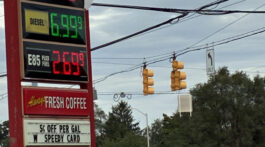
Governor Mike Braun Wednesday announced a 30-day suspension of Indiana’s state sales tax on gasoline, pitching it as relief for people feeling the sting at the pump. On paper, it sounds like real help. In practice? The average driver in Indiana is likely to save about eight bucks.
That’s not a typo. Eight dollars.
Using current gas prices and average monthly driving habits, the typical driver will probably save somewhere between $6 and $10 over the next 30 days, with $8 being a fair middle-ground estimate. Put another way, that’s about two dollars per fill-up for most folks.
Now, let’s be clear: saving money is saving money. If the state wants to leave a few extra dollars in people’s pockets, nobody is going to turn that down. But let’s also be honest about what eight dollars means in the real world.
That’s a fast-food lunch at McDonald’s. A couple cups of coffee from Starbucks. Maybe enough for milk, bread, and eggs at Meijer’s. Or, depending on your tastes, a lower-end cigar. It is not the kind of savings that materially changes a family budget. For most families, eight dollars is a nice gesture, not a financial strategy.
And that is not necessarily a criticism of the governor’s move. Politics often works best when it can offer something people can see immediately. Folks notice when the number on the gas pump receipt is a little lower. They may not do the math, but they feel it. Still, we should also be honest about why gas prices are where they are in the first place. Of course, all of this might have been avoided had someone not decided to try turning Tehran into a parking lot, but that’s neither here nor there.
The spike in gas prices has as much to do with global events and geopolitical instability as anything happening in Indianapolis. When international tensions send oil prices higher, those costs show up fast at the pump, and there is only so much any governor can do in the short term.
Which brings me to the practical side of all this: most drivers could probably save more money by spending ten minutes in their driveway with a tire gauge.
Seriously.
The average driver will save more over the course of a year by keeping their tires properly inflated, rotating them regularly, and getting an alignment when the car starts pulling to one side than from this one-month tax holiday. Low tire pressure alone can reduce fuel economy by several percentage points. That may not sound like much, but on a monthly gas bill of $150, that can easily mean $4 to $6 in extra fuel costs every month. That means in just two months, you’ve already matched the governor’s gas tax holiday. Do that over a year, and you are looking at $50 to $70 in savings, possibly more for heavy commuters, families with multiple vehicles, or folks driving larger SUVs and pickup trucks.
Need another easy win? Clean out the trunk. That extra case of bottled water, old boxes, golf clubs, legal files, and whatever else has been living back there since Thanksgiving all add weight and drag down mileage. The same goes for regular oil changes, replacing dirty air filters, and making sure your wheels are aligned. In other words, the best gas-saving program in Indiana may not be at the Statehouse. It may be at your local tire shop.
Now, politically, Braun’s move makes sense. It is visible, easy to explain, and gives voters something tangible they can see on the receipt. That matters. People remember headlines about tax breaks. They do not remember the time somebody told them to check the air pressure in their tires.
But in terms of actual household economics, this is more symbolic than transformative. Eight dollars is nice. Routine vehicle maintenance is smarter.
And before anyone accuses me of turning into Car Talk, let me offer a disclaimer: do not take mechanical advice from the guy who looks under his hood and may as well be Fred Flintstone standing on the bridge of the Star Trek: The Next Generation Enterprise-D. I know just enough about cars to know when something sounds expensive.
Still, even I know this much: if you really want to save money at the pump, the road to real savings probably runs through the garage, and not necessarily through the governor’s office.
Abdul-Hakim Shabazz is the editor and publisher of Indy Politics. He is also an attorney licensed in Indiana and Illinois.