









Gov. Mike Braun on Monday signed House Bill 1001, marking the latest step in his administration’s affordability agenda and putting local governments on notice that the state wants a harder look at the barriers driving up housing costs across Indiana.
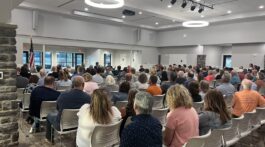
The new law requires every city, town, and county in the state to hold a public hearing this year focused on ways to expand housing supply and reduce obstacles to residential development. Local units of government will also be required to submit annual housing progress reports to the Indiana Housing and Community Development Authority so the state can better track where homes are being built, where projects are being stalled, and why.
The legislation directs communities to examine a number of local regulations that can increase the cost of housing, including parking requirements for multi-family developments, minimum lot sizes, density limits, and design or aesthetic standards that can delay approvals or add construction expenses.
For Braun, the issue fits squarely within a broader affordability message that has become central to the first year of his administration. Along with property taxes and utility rates, housing costs have emerged as one of the biggest financial concerns facing Hoosier families, particularly first-time homebuyers who are finding the cost of entry increasingly out of reach.
The governor has repeatedly tied the housing conversation to broader inflationary pressures and rising costs over the last several years, while arguing that Indiana should focus on what it can control at the state and local level. In this case, that means reviewing regulations and development rules that may be limiting the supply of homes coming to market.
State Rep. Doug Miller, one of the legislation’s primary sponsors and a homebuilder, described the bill as a framework for future reforms rather than a final answer. The measure is intended to gather better statewide data on housing needs, development approvals, affordability benchmarks, and the reasons projects are denied or delayed.
That data, lawmakers say, is expected to guide additional policy proposals in the 2027 and 2028 sessions.
Miller also emphasized the impact of local development fees and regulations, noting that each added cost can price more Hoosiers out of the market, especially those seeking entry-level homes.
The legislation does not directly strip local governments of zoning authority, but it clearly signals growing frustration at the Statehouse with what some lawmakers see as overly restrictive local rules that limit density and drive up prices.
That tension between state priorities and local control is likely to remain a major point of discussion as implementation begins.
For Braun, however, the politics are clear: affordability remains one of the most potent issues in state government, and housing is now firmly part of that conversation.
With job growth continuing in central Indiana and other fast-growing regions, the administration is betting that more supply, faster approvals, and fewer regulatory barriers can begin to ease pressure on the market.
Whether local governments embrace that push — or push back — may define the next phase of Indiana’s housing debate.