









by Abdul-Hakim Shabazz
Every few years, someone in Indiana politics—sometimes me—writes a column arguing that taxpayer-funded primaries are unfair, unconstitutional, or both. The argument usually boils down to a simple question: why should the public pay for what is, at its core, a private decision by a political party about who to nominate?
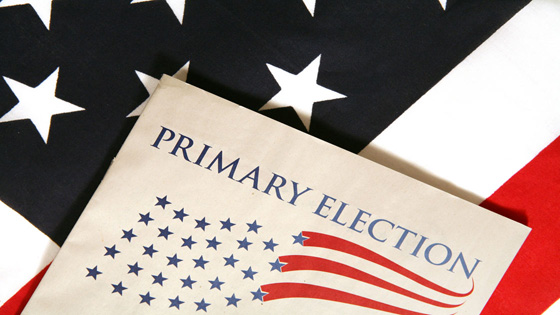
It’s a fair question. It also has a history worth knowing—especially with Indiana’s primary coming up on May 5—because the history changes the argument.
Here’s the thing. The state-run primary isn’t some ancient fixture of American democracy. It’s barely older than sliced bread. And the folks who built it weren’t trying to do the two major parties a favor.
They were trying to break them.
For most of the 1800s, American political parties picked their nominees in caucuses and conventions. Party insiders got in a room, made deals, and came out with a candidate. If you didn’t know the county chairman, the ward heeler, or the state boss, you didn’t have a voice. You had a vote in November, sure. But by then the real choice had already been made.
This worked great for the parties. It worked less great for everyone else. By the late 1800s, machine politics was a national scandal. Tammany Hall. Pendergast in Kansas City. Cox in Cincinnati. These outfits treated nominations like private property—bought, sold, and withheld at the boss’s pleasure.
The Progressive Era reformers had an answer. Take the nomination out of the smoke-filled room and put it on a public ballot. Let voters, not bosses, decide who the party’s candidate would be. Robert La Follette led the charge in Wisconsin in 1903. The rest of the country followed fast. By 1917, all but four states had some version of a primary. Indiana joined the parade in stages over the next two decades.
The goal was explicit: democratize the nomination. Strip the bosses. Give ordinary voters a real voice in picking candidates—not just in ratifying the bosses’ pick in November.
To make that work, states had to do something new. They had to run the primaries themselves. Public election officials. Public ballots. Public polling places. Public money. A nomination process controlled by private parties couldn’t, by definition, be pried open by a public election. So the public stepped in.
That was the bargain. Parties gave up some control over their internal affairs. Taxpayers picked up some of the cost. In return, voters got a real seat at the nominating table, and the bosses got a haircut.
For a while, it worked the way the reformers hoped. Primaries produced candidates the bosses didn’t want. Insurgents won. Voters showed up.
Fast forward a century, and something strange has happened. The state-run primary—originally designed to weaken the two major parties—is now one of the main structural advantages those parties enjoy.
Here’s how the flip works. If you’re a Democrat or a Republican running for office, you get a state-run election. Public employees, public buildings, public ballots—all of it. If you’re an independent or minor-party candidate? Congratulations. You get a clipboard. In Indiana, you need signatures equal to 2% of the last Secretary of State vote in the relevant district, collected within a set window. It’s a real lift, and the candidate eats the whole cost.
So the two parties that were the targets of Progressive Era reform now receive, at public expense, a nomination mechanism their competitors have to build from scratch. The system uses public resources to maintain the dominance of the two parties already in power.
Nobody designed it this way—but nobody in power has rushed to fix it either.
And none of this makes the current primary system unconstitutional. Indiana courts have upheld our primary and ballot-access rules against repeated challenge. “Free and equal elections” under Article 2, Section 1 has been read narrowly. Privileges-and-immunities arguments under Collins v. Day run into real obstacles. Federal courts applying the Anderson-Burdick framework have largely sided with the state.
What the history changes is the framing. The current system isn’t a neutral default. It isn’t constitutionally required. It’s a specific choice, made for specific reasons, in a specific moment—reasons that don’t operate the way they used to.
Defenders sometimes talk as if the alternative is some wild experiment. It isn’t. It’s closer to what America did for its first century and a quarter, or what Indiana still does for Secretary of State, Auditor, and Treasurer at party conventions.
So as you head to the polls on May 5, the real question isn’t whether the system is legal. It is.
The real question is whether a reform designed to break the power of the two major parties should still be paid for by the public now that it mostly entrenches them.
If the Progressives were alive today, they might recognize the system they built.
They might not recognize who it now serves.
Abdul-Hakim Shabazz is the editor and publisher of Indy Politics. He is also an attorney licensed in Indiana and Illinois.