









by Abdul-Hakim Shabazz, Esq.
Albert Einstein once said God does not play dice with the universe. He was arguing about quantum mechanics rather than the weather, and physics has spent the last century politely informing him he was wrong. But the sentiment stuck, because it’s the one most of us live by: nothing is truly random, everything happens for a reason, and if we’re smart enough and patient enough we eventually figure out what it was.
So let’s take this week in Indiana.
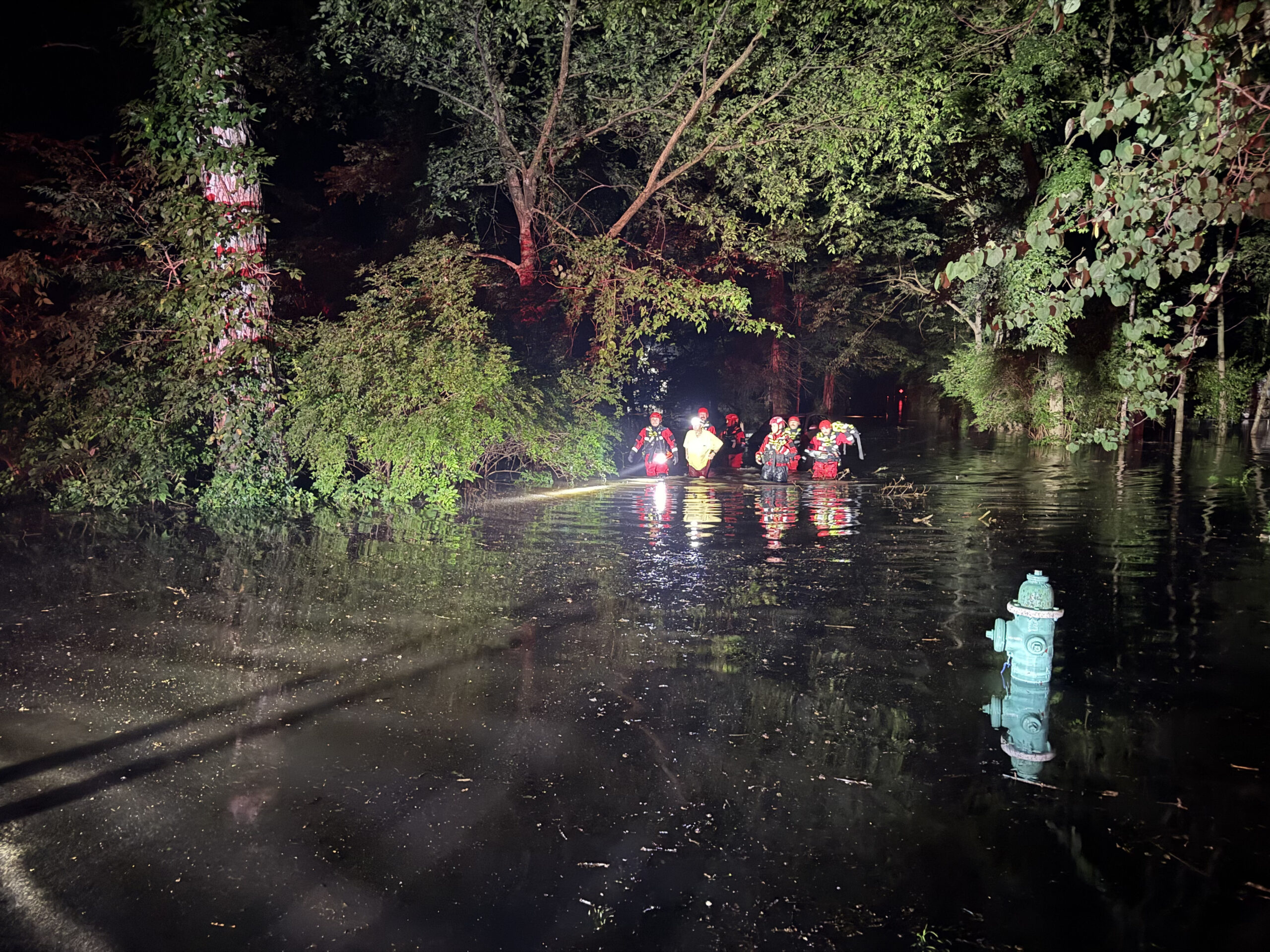
Tuesday’s derecho put a 99 mph gust down at the Gary airport, dropped an EF-2 into St. John and an EF-1 on Munster, flipped semis on I-65 near Lowell, and handed NIPSCO the largest outage event in its history. Then the rain refused to leave. The White River at Anderson blew past a crest that had stood since 1913. The governor has declared a statewide disaster emergency, the state has its hand out to Washington, and as I write this a flood watch still sits over most of central Indiana.
People died in this. I am not going to insult anybody’s loss by suggesting a family got wiped out to teach the rest of us something. But after thirty-plus years of this, starting with the 500-year floods in Iowa back in 1993, I’ve noticed the reason is almost never inside the disaster. It’s in what people do the morning after.
Which brings me to the professional confession. For three decades now — the first ten of them inflicted on Illinois — I have made a living handing people information so they can make better decisions, and unfortunately a good deal of that has meant pointing out the shortcomings of their own government. Do that long enough and hopeful is not your factory setting. This was the most hopeful week I’ve had in a long time.
Because the people who spend the other 362 days a year calling each other fascists and communists on Facebook quietly went out to the garage and got the chainsaw. Guys with bass boats and trailer hitches drove toward the water instead of away from it. Somebody with a generator ran an extension cord across a property line to a neighbor whose yard sign he hates.
Here is what I have never once seen in a debris field: somebody asking how you voted.
The volunteer fire department does not run your voter file before it runs a hose. The casserole shows up before the press release does, and it shows up regardless.
Government does its part. FEMA eventually works, in the sense that a form eventually gets processed. But institutions arrive second. The first responders, in the honest sense of the phrase, are whoever lives closest.
Now the depressing part, because you didn’t think I’d get through 600 words without one.
If we can behave this way for a week, then the way we behave the other fifty-one is not human nature. It’s a choice. Worse, it’s a costume — one we put on because it’s entertaining, because it gets clicks, because there’s a fundraising email attached to it, and because a certain class of people, not the ones telling you what your council actually voted on, have used the Internet to monetize outrage and manufactured grievances.
The tribalism is the performance. The decency is the default. Storms strip out the performance because there’s no time for it. You cannot both help lift a beam off a stranger and maintain the fiction that the stranger is your enemy. One of those has to go, and it is never the beam.
Stick around this town long enough and you see everything two or three times. The storm comes. The neighbors come. Then the debris gets hauled off, the adjusters leave, and we all put the costume back on like nothing happened.
I’m not asking for a derecho. I’m asking that we act like one is coming — that we extend to each other on an ordinary Tuesday in October roughly ten percent of the grace we hand out for free when the sirens go off.
Einstein was probably wrong about the dice. But if you insist on finding a reason in a week like this one, it’s sitting right there in plain sight, and it isn’t complicated enough to need a physicist. We already know how to be decent to each other. We proved it again on Wednesday morning.
We just keep deciding not to.
Abdul-Hakim Shabazz is the editor and publisher of IndyPolitics.org and an attorney licensed in Indiana and Illinois. He has covered a lot of Indiana disaster declarations and has yet to see a partisan one.
Photo: IFD