










by Abdul-Hakim Shabazz, Esq.
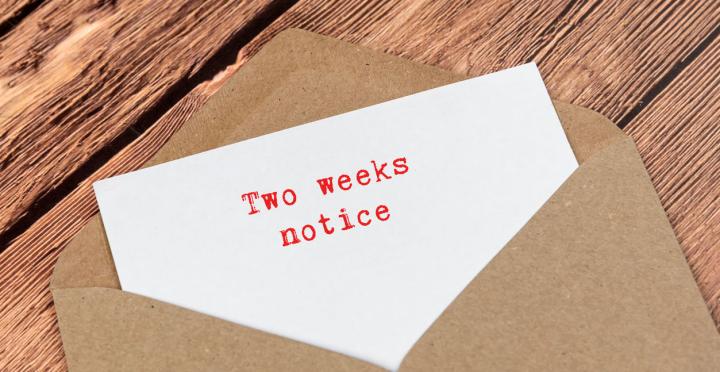
Anyone who has ever held a job knows how two weeks’ notice works. You walk into the boss’s office, hand over the letter, and for the next 14 days everybody pretends nothing has changed while quietly figuring out who’s going to clean out the desk.
Indiana Democrats spent this week acting like they had just handed Republicans that letter.
On Friday, the state party announced that all three of its statewide candidates outraised their Republican opponents in the third quarter and for the year. That came a day after the Free Press Indiana/Bellwether poll showed Democrats leading two of those three races. After 20 years of one-party control at the Statehouse, Party Chair Karen Tallian says Hoosiers are fed up. Put the money and the poll side by side and you can see why the Democrats are feeling bold.
But here’s the thing about a two weeks’ notice. Until the last day, it can still be withdrawn. And there’s an old rule in politics: money follows polls, and polls follow money. Usually you can’t tell which one is driving. So let’s look at whether the notice is real, race by race.
Secretary of State: Notice Served, Signature Pending
This is the race where the money and the polling point the same way. Beau Bayh raised just over $2 million in Q3 and leads Max Engling 43% to 35%. Tom Davies reported that Bayh outspent the other three candidates combined, more than twice over, in the quarter.
But look at the name ID. Nearly half of likely voters, 48%, have never heard of Engling. Only 68% of Republicans are with him, and 11% of them are undecided. In a state Donald Trump carried by 19 points, that isn’t a ceiling for a Republican nominee. It’s a vacancy. Engling’s $1.85 million quarter, with $1 million of it coming from the state party and Gov. Mike Braun’s campaign, is there to fill it. If that money introduces him to Republicans who don’t know his name yet, an 8-point lead can shrink in a hurry.
And we shouldn’t forget the other two people in the room. Greg Ballard started TV the day after the poll closed and has about $279,000 in the bank. If he pulls votes out of the Republican column, he could do more for Bayh than any donor. Lauri Shillings is on the ballot too, and in a four-way race, every point that goes somewhere else changes the math.
Treasurer: The Boss Isn’t Packing Yet
Here the money and the polling point in opposite directions. Coumba Kebe outraised incumbent Daniel Elliott roughly three to one in Q3. Elliott still leads 43% to 38%, and he has 80% of Republicans locked down.
Kebe has the cash and the independents, 32% to 22%, but 46% of independents haven’t decided. A quarter million dollars sounds like a lot until you price out a statewide TV buy. It’s enough for a few weeks of digital ads and some mail. It isn’t enough to introduce yourself to people who don’t know the office exists.
If this is a two weeks’ notice, Elliott hasn’t read it yet. And with four out of five Republicans in his corner, he may not have to.
Comptroller: Somebody’s Updating the Résumé
This is the race where the money and the polling split the difference. Jessica Bailey leads incumbent Elise Nieshalla 39% to 36%, which is inside the margin of error. Bailey also outraised her in the quarter.
But Bailey had raised about $3,600 before July, which means nearly all of her campaign money arrived in one quarter. That could mean donors woke up and decided this race is winnable. It could also mean a few big checks landed at once. And 23% of Republicans haven’t picked a side yet. Down-ballot undecided Republicans in Indiana have a well-documented habit of remembering they’re Republicans on Election Day.
Some Republicans have asked me how an incumbent comptroller ends up trailing a challenger most voters have never heard of. My answer: this one is more about the R than the Nieshalla. When a pollster asks you to choose between Democrat Jessica Bailey and Republican Elise Nieshalla, and you couldn’t pick either one out of a lineup, the only thing you have to go on is the letter after the name. In a year when likely voters disapprove of both Trump and Braun, some of them heard “Republican” and that was all they needed.
Some will ask why the same letter isn’t hurting Daniel Elliott. The difference is that Elliott has shown he’ll break with his own party when he thinks it’s wrong, and mid-decade redistricting is the best example. That put him on the same side as most voters: the FPI poll found likely voters want to wait until after the 2030 census, 56% to 30%. It also put him on the other side from a lot of his own party, since Republicans favored redrawing the maps now, 54% to 27%. And he still has 80% of Republicans with him. Nieshalla hasn’t built that kind of profile, so for a lot of voters, the R is all they know about her.
But the label cuts both ways. If it’s doing the work, it’s also the reason those undecided Republicans are likely to come home. That makes this one a genuine coin flip, which in Indiana is news by itself.
The Money They Didn’t Mention
The press release counted dollars raised. It didn’t count dollars left.
Bayh has outraised Engling all year, and it isn’t close. He came into 2026 with $1.56 million already banked and has raised another $3.2 million since. But he has also spent $4.37 million, and he ended September with $394,052 in the bank. Engling, who didn’t open his committee until May, ended the quarter with $422,572.
So the candidate who raised a million dollars more has less cash for the stretch run. You can read that two ways. Bayh’s campaign would tell you it spent early to introduce a name voters already half-knew and to build an eight-point lead, and the poll suggests that money bought something. Engling’s campaign would tell you it saved its money for the final weeks, when voters are actually paying attention.
Either way, the money race the Democrats announced isn’t the one being run right now.
Who’s Really Giving Notice
So what does all this tell us? Democrats have the money edge in every race, but money only translates into a lead where it’s paired with a known name, and the only Democrat on the ballot with a known name is Bayh. The two down-ballot races are close because of the political environment. The same poll found likely voters disapproving of both Trump and Braun. The Democrats’ fundraising didn’t make those races close. If anything, the money is following the environment, not driving it.
The Republicans’ advantage is the one they’ve had for 20 years: a reservoir of undecided voters who are their own. The Democrats’ job in the final stretch is to keep that reservoir from draining back into the Republican column. The Republicans’ job is simpler: remind their own voters who they are.
Here’s what both parties should keep in mind. Elected office is a job, and the term is the contract. Every two or four years, the voters decide whether to renew it. Politicians don’t give notice. Voters do.
Election Day is Nov. 3. Early voting is already underway. That gives Hoosiers a little over two weeks to decide whether anybody’s getting a pink slip, or whether the letter goes back in the drawer for another four years.
Abdul-Hakim Shabazz is the editor and publisher of IndyPolitics.org and an attorney licensed in Indiana and Illinois.
Photo: Frontline Source