










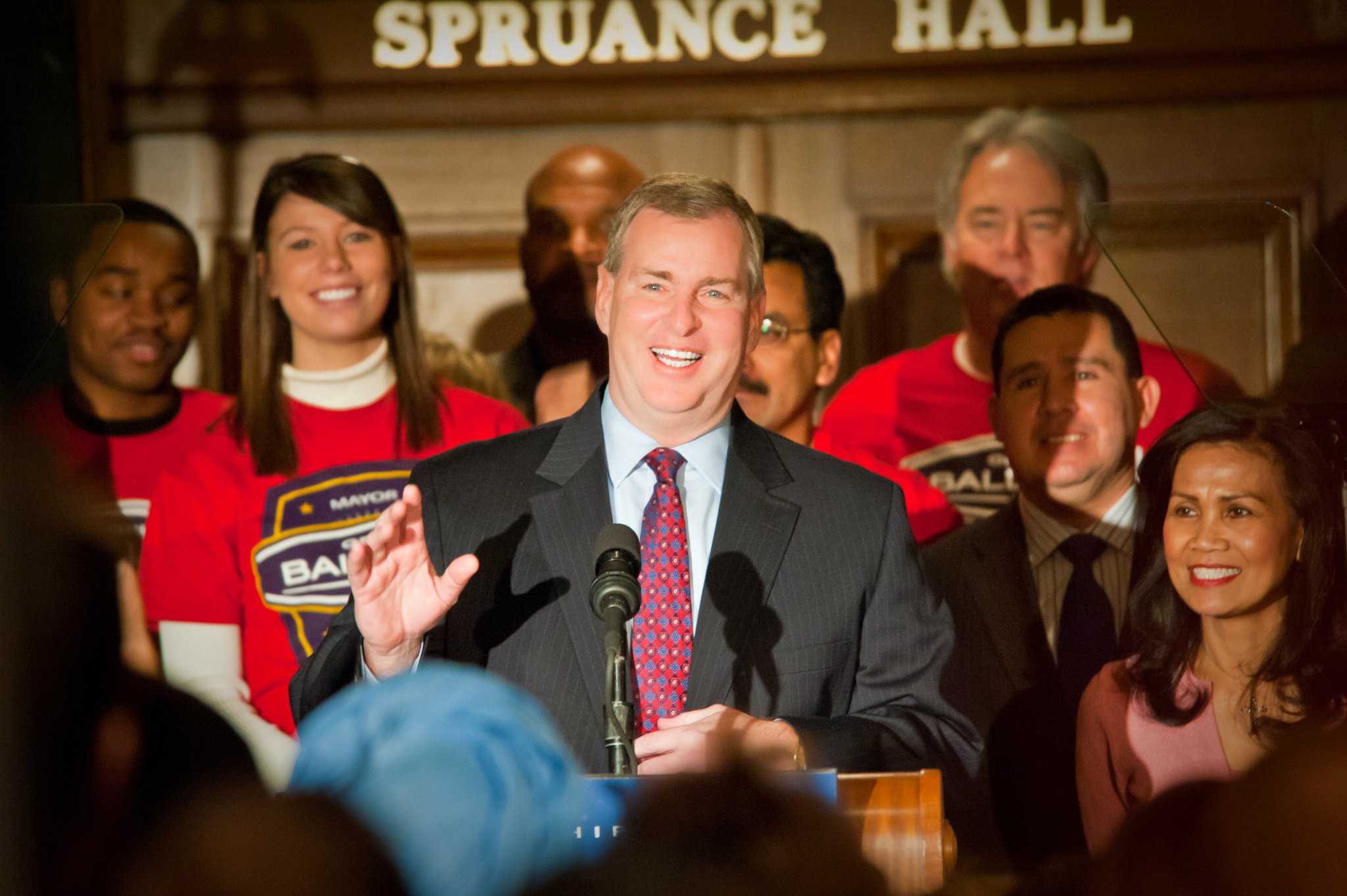
A new survey suggests former Indianapolis Mayor Greg Ballard would begin a three-way race for Indiana Secretary of State in competitive territory — not as a spoiler, but as a factor.
According to a fall 2025 survey of 400 likely Indiana general election voters (±4.9% margin of error), Ballard earns 23.8% in a hypothetical three-way matchup against incumbent Republican Diego Morales and Democrat Beau Bayh.
In that ballot test:
-
Beau Bayh (D): 31.5%
-
Diego Morales (R): 28.5%
-
Greg Ballard (I): 23.8%
-
Undecided: 16%
Ballard sits within single digits of both major-party candidates. In a traditional red-state statewide contest, that alone is notable.
Even more revealing is the comparison to a generic ballot. When voters were asked whether they would prefer a generic Republican, Democrat, or Independent, only 10% selected “Independent.” But when that independent candidate was identified as Greg Ballard, support jumped to nearly 24%.
That suggests Ballard’s numbers are not merely protest votes. They appear to reflect personal brand strength — name ID, familiarity, and potentially crossover appeal.
The poll shows Ballard leading among voters ages 18–34, pulling roughly 32% to 28% for both Morales and Bayh. Younger voters historically show more openness to non-major-party candidates, and in a three-way contest, that bloc could matter.
Geographically, Ballard performs strongest in Central Indiana — no surprise given his two terms as mayor — but still posts around 21% in the rest of the state. Among small-town and rural voters, he lands in the mid-20s, competitive enough to complicate a traditional Republican coalition.
Perhaps the most important structural finding: voters are not hostile to the independent label. Roughly nine in ten respondents said they react either positively or neutrally to a candidate running as an independent. Only a small single-digit percentage expressed a negative reaction.
That matters in a state where ballot access rules, party infrastructure, and straight-ticket habits have long favored Republicans.
Which brings us to the practical question:
Would Ballard need signatures to get on the ballot?
Yes.
In Indiana, a statewide independent candidate must file a petition of nomination and gather signatures equal to 2% of the total vote cast for Secretary of State in the last election. Those signatures must also meet geographic distribution requirements — collected across Indiana’s congressional districts, not just concentrated in Marion County.
In raw numbers, that typically means tens of thousands of valid signatures. Campaigns generally aim well above the required threshold to account for disqualifications.
That’s a heavy organizational lift. It requires money, volunteers, paid petition circulators, or all three. It’s one thing to poll at 24% in October of an off-year. It’s another to build the field operation necessary to qualify.
The polling suggests there is a potential lane.
The ballot-access math reminds everyone that in Indiana, that lane is not automatically paved.
If Ballard runs, the first real test won’t be in November.
It will be whether he can get on the ballot in the first place.