









by Abdul-Hakim Shabazz, Esq.
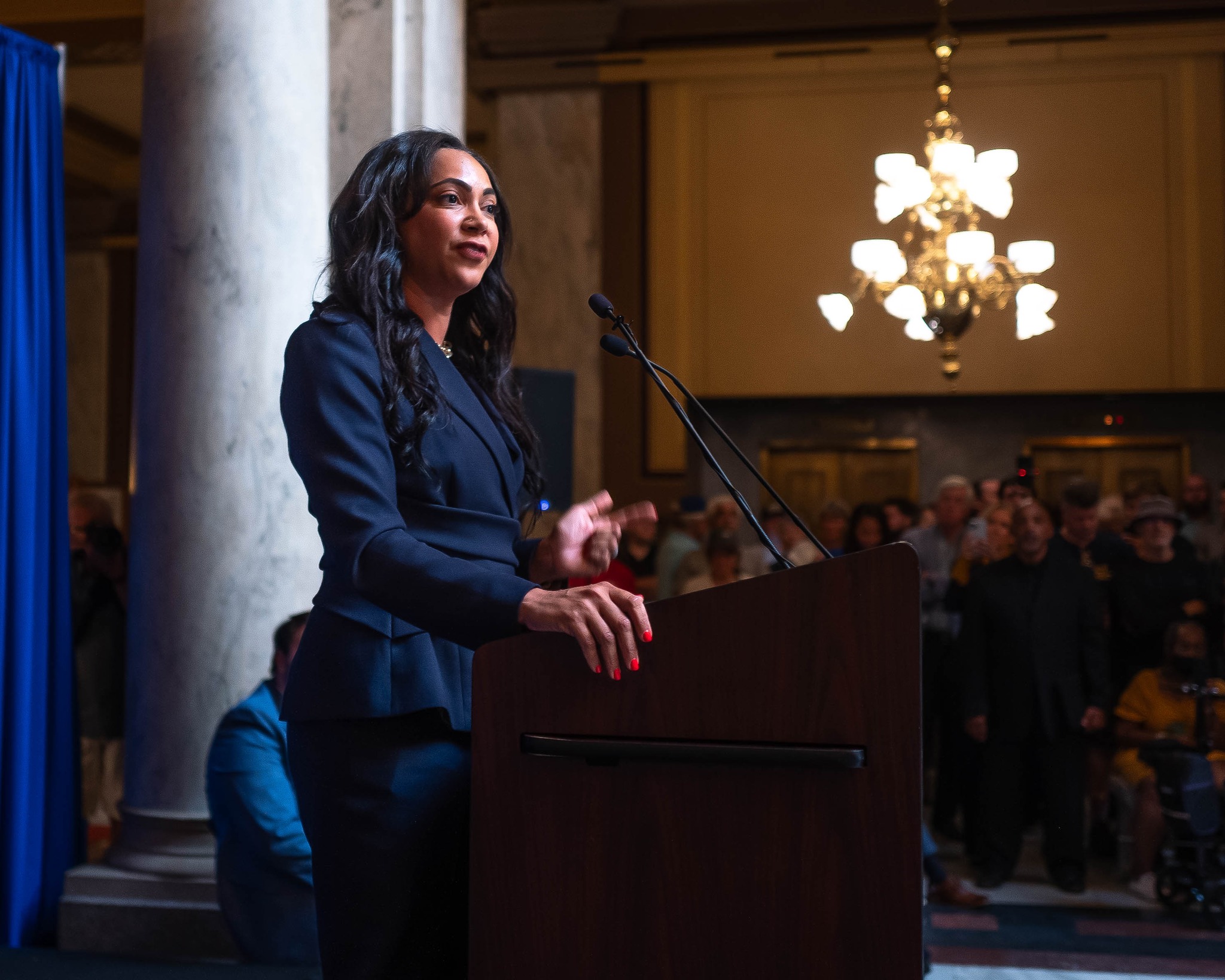
There’s nothing like taking a perfectly good policy conversation and driving it straight into a ditch. Because that’s exactly what happened. It started out during an appearance on the Black Briefing Podcast, where Indianapolis mayoral candidate, State Sen. Andrea Hunley, was asked a straightforward question about what the next mayor needs to do for the Black community. And to be fair, it began as a serious, necessary, and long-overdue conversation about equity, investment, and whether the city has truly delivered for its Black communities. On that point, there shouldn’t be too much debate. Too many neighborhoods have been overlooked, too many promises have been made and quietly recycled, and yes, the whole “rising tide lifts all boats” thing has left more than a few folks standing on the dock wondering when their ship comes in.
Now, we can have an honest debate about how to fix that. I’m more of a free-market guy. Others prefer a heavier government hand. Fine. That’s a real policy discussion—one worth having. But that’s not the conversation we ended up having.
Hunley talked about targeted investment—real money, not pilot programs, not studies, not “we’re looking into it,” but actual dollars going into historically disinvested communities. She pointed to examples like Washington, D.C., where significant funding has been used to build up specific neighborhoods. That’s a conversation worth having.
Then came the line: “How about be Black? Unapologetically.” And just like that, we took a perfectly good policy conversation and drove it straight into a ditch.
Now, having run for mayor myself in 2023, let me offer a quick reality check: voters ask a lot of questions. About crime. About jobs. About schools. About whether you can manage a budget without it turning into a group project gone wrong. What they don’t ask—at least not with a straight face—is for candidates to submit proof that they’re “Black enough.”
Look, representation matters. It does. There is value in lived experience and cultural awareness. But making race the starting requirement for the job? That’s where things start getting…let’s just say, a little wobbly. Because once you open that door, you don’t get to control what walks through it.
And if we’re really going to play this game, let’s be honest about where it leads. Indianapolis could very well end up with a race between two prominent Black candidates—Vop Osili and Andrea Hunley. So now what? Do we break out a scorecard? Start grading folks on background, skin tone, who they married, how they talk, where they grew up? Because that’s the logical next step. Not because it should be—but because that’s what happens when you turn identity into a qualification standard.
And let me save everyone some time: that’s not just a slippery slope. That’s a clown show.
I know, because I’ve been on the receiving end of it. Growing up, I was told I wasn’t “Black enough” because I didn’t sound the way some people thought I should. Apparently, speaking proper English was a problem. Who knew? It was ridiculous then. It’s ridiculous now.
And for those who think this is some big new voter demand, let me add this: when I ran for mayor in 2023, Pastor James Jackson and State Rep. Robin Shackleford were in that primary too. We did forums, town halls, candidate nights all over the city. The number of times anyone asked which one of us was “Black enough” to be mayor? Let me think… oh yeah—none. Because voters weren’t interested in that. They were asking about crime, jobs, schools, infrastructure—whether you could actually do the job without everything catching on fire.
Funny how that works.
Because here’s the part that keeps getting lost: being mayor isn’t a vibe. It’s a job. A complicated one. You’re managing budgets, dealing with public safety, trying to grow the economy, and navigating a City-County Council and a Statehouse that don’t always wake up in a cooperative mood. That takes competence. Judgment. Results. Identity, by itself, doesn’t pave streets or reduce crime.
And here’s something else from the campaign trail: Black voters—like all voters—are not a monolith. They want safe neighborhoods, good schools, economic opportunity, and leadership that shows up and delivers. They don’t need a lecture on what qualifies as “enough.” They already know what they’re looking for.
None of this means ignoring race. It means not turning it into a gatekeeping tool. Because once you start asking who is “Black enough,” you’re not elevating the conversation—you’re shrinking it. And that’s the real problem.
Because voters—Black voters included—aren’t just looking for someone who looks like them. They’re looking for someone who delivers for them. Someone who understands the problem, has a plan, and can execute it. Because at the end of the day, being mayor isn’t about who you are. It’s about what you can do. And Indianapolis doesn’t need a definition of “Black enough.” It needs a mayor who is good enough.
Abdul-Hakim Shabazz is the editor and publisher on Indy Politics. He is also an attorney licensed in Indiana and Illinois.