






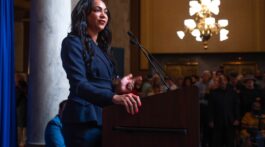



Governor Mike Braun is not shying away from extra scrutiny on one of Indiana’s most controversial proposed highways. Instead, he’s embracing it.
At his end-of-session news conference, Braun was asked about language tying the Mid-States Corridor to additional State Budget Committee review. Rather than complain about legislative meddling, he called the idea “excellent,” framing it as exactly the kind of oversight big-ticket infrastructure projects should face as highway dollars get tighter.
In effect, Braun is turning what some saw as a legislative speed bump into a fiscal litmus test.
The fiscal backdrop matters. Braun reminded reporters that Indiana’s last major infrastructure funding move dates back to 2017, and those revenue streams have now flattened and are expected to wane. That means there won’t be enough money for every wish-list project. In his words, the state needs to be “careful,” and there should be “nothing that doesn’t have the scrutiny.”
Under this approach, the Mid-States Corridor becomes one of several large projects that must compete for a scarce pot of infrastructure funds. That means the corridor will now have to win twice — first in INDOT’s planning process, and again before legislators controlling the purse strings.
Braun said the Budget Committee’s involvement is wise, especially on big-ticket items, because it forces a fuller look at:
-
How advanced a project is,
-
How much “skin in the game” local and regional interests have, and
-
How it stacks up against other priorities statewide.
He also stressed that INDOT will still have the “say so” on projects, with Budget Committee review adding an extra layer of accountability on top of the technical analysis — not replacing it.
Braun folded the corridor oversight into a broader theme of transparency and fiscal discipline, then pivoted to what he sees as the session’s major victories. He touted his “freedom and opportunity” agenda, claiming wins on affordability, public safety, and education.
Among them:
-
A push for lower utility costs, including replacing three of five IURC commissioners and backing a 10% rate decrease instead of a hike for AES.
-
No state tax on tips and overtime for qualifying Hoosiers.
-
A tough-on-immigration stance, including revoking CDLs for drivers without legal status.
-
A suite of kids-and-tech measures, from a bell-to-bell cell phone ban in schools to new parental consent and monitoring requirements for minors’ social media accounts.
On economic development, Braun highlighted efforts to lure the Chicago Bears to Hammond with a $2 billion investment package, and defended incentives for data centers and “hyperscalers” so long as they pay their way and help add power to the grid instead of driving up rates for families and existing businesses. It’s a familiar Braun formulation: growth is welcome, but not if existing ratepayers subsidize it.