





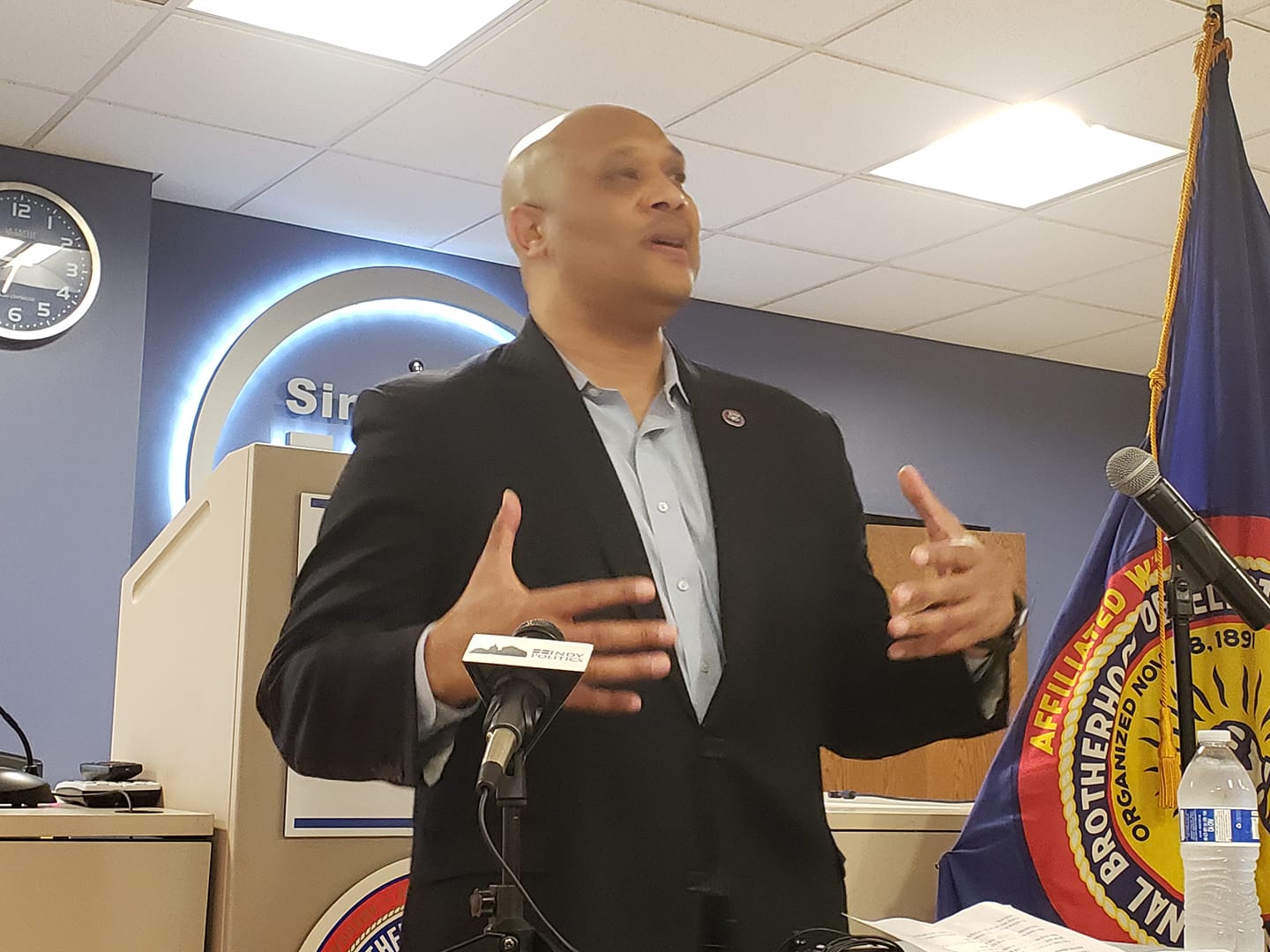
U.S. Rep. André Carson rolled to a 10th full term Tuesday, dispatching a four-way Democratic primary with roughly 65% of the vote against challengers who had spent months arguing the Indianapolis congressman was out of touch with his district.
Destiny Wells, the 2024 Democratic nominee for Indiana attorney general, finished a distant second at about 22%. Political strategist George Hornedo, who blanketed the 7th Congressional District with mailers and texts, finished third at roughly 10%. Former Center Township constable Denise Paul Hatch trailed at 4%.
The result was Wells’s fourth unsuccessful campaign in five years, after losses for secretary of state in 2022, attorney general in 2024, and a 2025 bid for Indiana Democratic Party chair. Wells and Hornedo had built their case against Carson largely around his acceptance of corporate PAC money — a critique Carson rejected, citing his progressive record. The frame did not move voters in the 7th, the bluest district in Indiana, and Carson’s margin exceeded the combined totals of both serious challengers. Wells’s campaign also failed to qualify her slate of state convention delegates for the ballot after her team missed the filing paperwork.
The 7th has been held by a Carson since 1996, when Julia Carson, the congressman’s grandmother, won the seat; André Carson succeeded her after her death in 2007. He will face the winner of the Republican primary, either Felipe Rios or Patrick McAuley, in November.
Morales locked out of his own convention. In a result certain to shape the June Republican state convention, Secretary of State Diego Morales and his wife, Sidonia, both ran for one of six state convention delegate slots in their precinct. Neither finished in the top six.
The outcome leaves Indiana’s chief elections officer unable to cast a delegate vote for his own renomination next month, when delegates in Fort Wayne will choose between Morales, Knox County Clerk David Shelton, and conservative activist Jamie Reitenour. Morales has drawn opposition from county clerks frustrated with his tenure and from Republicans citing his $90,000 taxpayer-funded GMC Yukon Denali, his international travel, and a Marion County Election Board investigation into a 2026 campaign video. He is still the favorite to be renominated. He just won’t be voting for himself.
Other races at a glance. State Sen. JD Ford won a seven-way Democratic primary in the 5th Congressional District with roughly 42%, setting up a November race against Republican incumbent Victoria Spartz, who turned back Scott King 60-40. The 5th hasn’t elected a Democrat since Jim Jontz in 1990.
In Senate District 29, vacated by Ford’s congressional run, health policy consultant Kristina Moorhead led the Democratic primary at about 53% over Demetrice Hicks, the Rev. David Greene Sr., and Kevin Short. Former Sen. John Ruckelshaus led the GOP field at about 51%, ahead of former Sen. Mike Delph.
In Lawrence Township, longtime trustee Steve Talley appeared headed for defeat. With 62% of vote centers reporting, Lisa Chavis led the Democratic primary 40-33, with Alison Cole at 27%.
In the 6th Congressional District, freshman Republican Rep. Jefferson Shreve survived a closer-than-comfortable challenge from Sarah Brown, winning the AP-called race by about six points. Brown raised roughly $20,000 to Shreve’s $2.3 million and still held him under 53% — a sign the party’s right flank isn’t sold on Shreve, who pivoted from a moderate platform during his 2023 Indianapolis mayoral run to a more conservative posture in 2024. Cynthia “Cinde” Wirth won the Democratic primary, setting up a 2024 rematch.
For coverage of the eight Republican state Senate races shaped by the redistricting fight, see Indiana Capital Chronicle’s full breakdown at indianacapitalchronicle.com.