










The Indianapolis City-County Council will vote Monday on whether to extend the county’s enhanced public safety curfew to 17-year-olds, part of an agenda that also includes a proposed overhaul of the Office of Public Health and Safety and more than 20 affordable housing agreements.
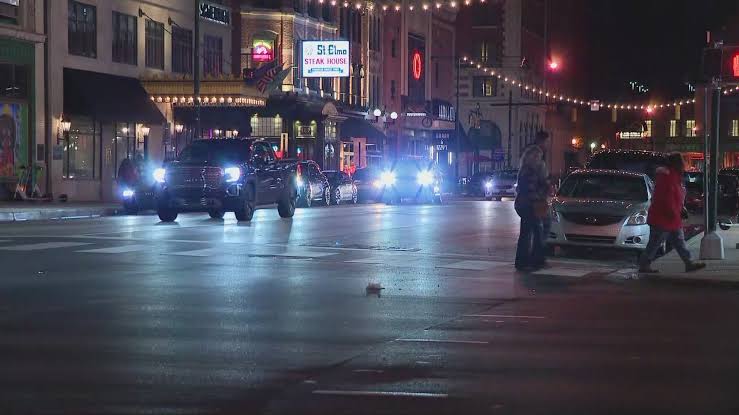
Proposal 189, authored by Republican Councilor Michael-Paul Hart, would apply the county’s stricter curfew hours — 11 p.m. on Fridays and Saturdays, 9 p.m. on weeknights — to 17-year-olds. Those hours currently cover only 15- and 16-year-olds, and only when the county determines the standard curfew is insufficient for public safety. The proposal, drafted by minority caucus counsel Paul Mullin, also adds language stating that 17-year-olds “shall remain subject to” the standard curfew ordinance, a provision that appears to conflict with the amendment’s expanded coverage and could invite legal challenge. Indianapolis curfew ordinances have drawn constitutional scrutiny before; a federal appeals court struck down Indiana’s juvenile curfew statute in 2004 on First Amendment grounds. The measure passed the Public Safety and Criminal Justice Committee 7-4 as amended.
The Council will also take up a second Hart measure, Proposal 190, which would direct the city to require changes at OPHS following an audit completed this spring by the Office of Audit and Performance. It cleared committee on a 6-5 vote, as amended, setting up a potentially close floor vote.
The audit rated six of eight findings “high risk,” including contracts awarded to vendors with connections to OPHS staff, missing or incomplete documentation on 84 percent of contracts reviewed, and no formal system for measuring program effectiveness. The agency’s budget has grown 75 percent since 2020 to more than $33 million. The State Board of Accounts is now conducting its own review, and a separate examination is underway into whether roughly $45 million in federal anti-violence funds were properly spent.
OPHS Director Andrew Merkley, appointed in March 2025, has said corrective measures — including new standard operating procedures and procurement training — were underway before the audit was completed. The Hogsett administration has defended the agency’s results, citing a more than 60 percent reduction in criminal homicides since 2021. The Marion County Republican Party has called for freezing the agency’s funding until the audit’s findings are addressed.
On the housing front, councilors will consider final adoption of 21 payment-in-lieu-of-taxes agreements for affordable housing developments financed with federal low-income housing tax credits. Together the projects total approximately 2,438 units, concentrated largely in Districts 8, 9, 13, 18 and 19. The largest include Beechwood Gardens and Hawthorne Place (321 units), Twin Hills and Blackburn Terrace (307), Union at Astor (241), Laurelwood Apartments and Rowney Terrace (231), and The Holcomb (204). All 21 proposals passed the Metropolitan and Economic Development Committee unanimously.
A related measure, Proposal 237 from Councilor Jesse Brown, will be introduced Monday, requesting that the Department of Metropolitan Development eliminate parking minimums citywide.
Other business includes Proposal 163, appropriating $19.5 million in supplemental income tax revenue across city-county departments; Proposal 192, the overhaul of the county’s excise and wheel taxes tied to the state’s new road funding framework, which cleared the Rules and Public Policy Committee 7-3; and Proposal 164, a tax abatement for Zima International that reaches the floor after failing in committee on a 5-5 vote.
The meeting begins at 7 p.m. in the Public Assembly Room of the City-County Building.