








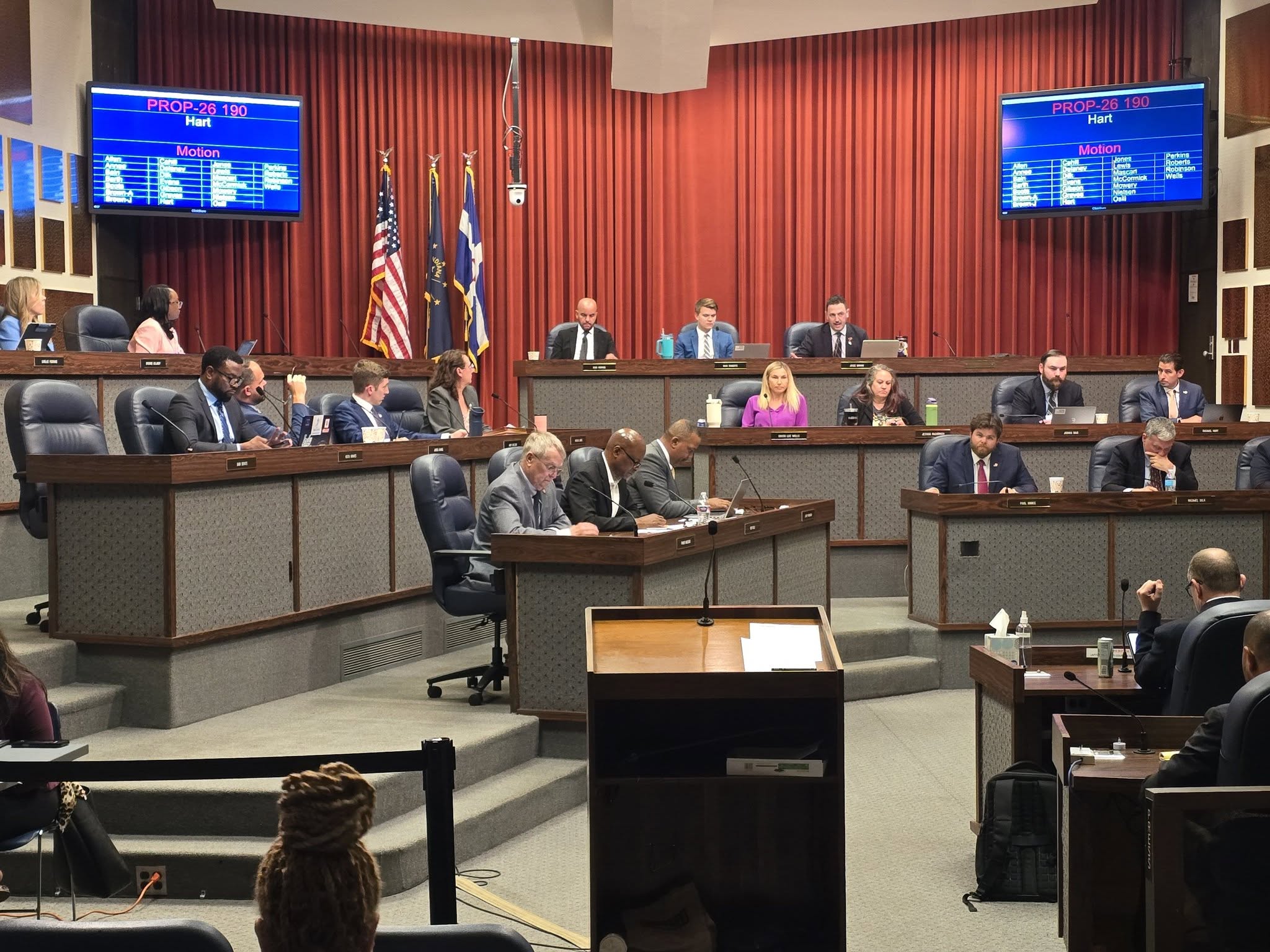
A simmering dispute over how to fund Indianapolis’ road improvements is intensifying, with Mayor Joe Hogsett’s administration and members of the City-County Council split over whether to commit the city’s income tax growth almost entirely to infrastructure.
At the heart of the disagreement is how to interpret a state legislative directive for “new revenue” to match state road money. Hogsett administration officials argue the legislature never specified that the new revenue must come from tax increases, only that the city identify new revenue to provide a local match.
Last year, during the city’s budget process, Hogsett officials say they presented a plan that relied on income tax growth as that match. Income tax, aside from the portion dedicated by law to public safety, is one of the few discretionary revenue sources available to the city. The plan effectively channels most of the city’s future income tax growth into road and infrastructure projects.
Under the structure described by Hogsett officials, public safety income tax dollars remain restricted to public safety uses. The remainder of the county income tax — the discretionary portion — is where the administration looked to fund the road match. That approach has drawn concern from some council members who want more flexibility to fund other priorities, such as urban forestry and neighborhood initiatives.
From the administration’s perspective, the core policy question is straightforward: Do city leaders commit all, or nearly all, of income tax growth to roads? Hogsett officials believe that is the real debate, rather than whether a plan exists or not.
Republican council members and state lawmakers have generally signaled some agreement with the concept of using income tax growth for infrastructure, though they differ on specifics. They have positioned their own road funding proposal alongside both the council’s plan and the mayor’s, creating a three-way debate over how aggressively to dedicate new revenue to streets and thoroughfares.
Complicating the discussion is the impact of Senate Bill 1, which could reduce property tax values and put additional pressure on local finances. Some policymakers and commentators have raised the question of what happens “next year when Senate Bill 1 fully kicks into effect,” and whether the city might ultimately face another round of tax changes if property tax capacity erodes.
Hogsett officials contend that if tax adjustments are ultimately required, they should be done comprehensively rather than in stages. They argue that if leaders must ask taxpayers for more, it should be done in a single, coherent action rather than through multiple, incremental tax changes that could confuse residents and further politicize the issue.
Another flashpoint is whether council members were fully aware of the mayor’s road funding strategy when they approved last year’s budget. According to the administration, Hogsett officials have provided the council with a five-year capital plan every year since 2016 as part of the budget presentation by the Department of Public Works. That plan last year, they note, included the income-tax-growth match for roads.
From the mayor’s side, the claim that council members are still “waiting to see the mayor’s plan” is at odds with this history. Hogsett officials maintain that the plan was presented during last August’s budget process and that the council subsequently voted for the budget that incorporated it.
The council’s more recent involvement at the Statehouse has also drawn attention. Administration allies argue that when council members became more active in lobbying at the legislature this year, the required local match for road funding increased to $100 million, raising the city’s financial commitment.
Behind the technical details is a broader political tension over how much scrutiny and analysis local officials bring to the city’s finances. Some close to the administration criticize what they describe as a tendency among certain political observers and media outlets to accept statements at face value rather than “digging in” to the numbers and legislative language.
For now, the central policy choice remains unresolved: whether Indianapolis will commit most of its income tax growth to roads — limiting what can be spent on other programs — or pursue a more diversified approach that could slow the pace of infrastructure upgrades. As the mayor, council Democrats, and Republicans continue to advance competing visions, residents are left to weigh tradeoffs between immediate infrastructure improvements and broader spending priorities.