










By Abdul-Hakim Shabazz, Esq.
Americans love a good comeback story. Fall down, get back up, and prove you’ve changed. It’s baked into our culture—and, frankly, into our faith traditions as well. That instinct to forgive, to believe in second chances, is part of what defines us.
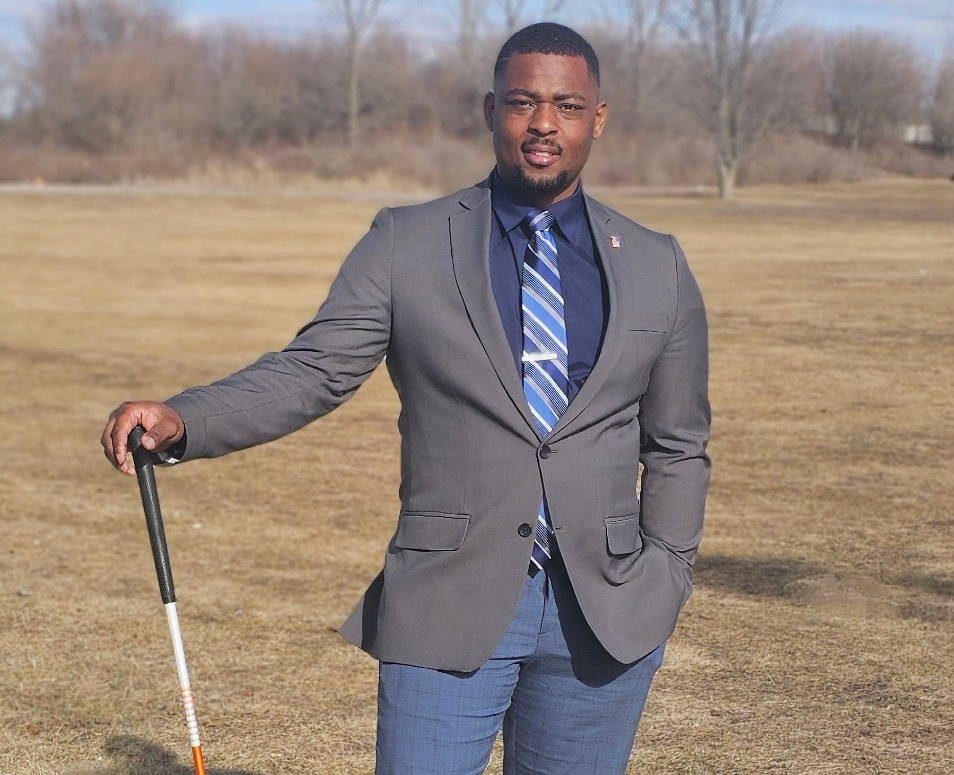
Candidate Richard Bagsby is clearly leaning into that tradition. He is running in the Republican primary against incumbent Ron Alting in Senate District 22, which contains most of Tippecanoe County, and he is presenting himself as an outsider ready to challenge the status quo. His campaign is built around a familiar but powerful narrative: a man who has faced adversity, learned from it, and is now prepared to lead.
On the campaign trail, Bagsby casts himself as a reformer—a figure called to restore integrity, hold government accountable, and fix a broken system. His messaging is grounded in faith, discipline, and renewal. He has also been candid about a troubled past, including serious legal issues from years ago that, under Indiana law, have since been expunged. That point deserves acknowledgment. The justice system is designed, at least in part, to allow individuals to move forward. Without that possibility, the idea of rehabilitation becomes meaningless.
But redemption stories depend on something more than acknowledgment. They depend on separation—a clear and convincing line between who someone was and who they are now. Voters are not looking for perfection, but they are looking for progress. They are willing to accept a past; what they struggle with is a pattern.
That is where Bagsby’s narrative begins to encounter friction with the public record.
Court filings reflect multiple collection actions involving Bagsby and his business in recent years, including default judgments and post-judgment proceedings. These are not abstract claims or political talking points; they are documented cases. Among them is American Builders & Contractors Supply Co. v. B Squared Construction Service LLC, et al. (49D02-2505-CC-022622) in Marion Superior Court, which resulted in a default judgment and subsequent garnishment proceedings. There is also ABC Supply Co., Inc. v. B Squared Construction Service LLC (79D02-2508-CB-000029) in Tippecanoe County, a foreign judgment action, as well as Interior Supply Company v. B Squared Construction Service LLC, et al. (49D02-2601-CC-002996), filed in January 2026 and currently pending.
These matters are not relics of a distant past. They extend into 2025 and 2026. At least one has been filed within the past year. That timeline complicates the narrative. It raises a question that is both simple and unavoidable: at what point does a “troubled past” become an ongoing concern?
This is not an argument for relitigating criminal matters that have already been resolved under the law. Nor is it a rejection of the idea that people can rebuild their lives. They can, and they do. The issue here is not forgiveness. It is consistency.
If a candidate’s central message is accountability—if he is asking voters to trust him to demand transparency, responsibility, and ethical conduct from government—then it is reasonable for voters to ask how that standard applies to the candidate himself. Accountability does not begin at the Statehouse. It begins with the individual seeking office.
Bagsby’s campaign frames him as someone prepared to “restore the system.” That is an appealing message, particularly in a political environment where distrust of institutions runs high. But reform is not simply a matter of intention. It requires credibility. And credibility depends on whether the “after” portion of a redemption story is clearly established, rather than still unfolding.
None of this disqualifies Bagsby from seeking office. That decision belongs to the voters. But it does place an obligation on those voters to examine the full picture. At present, there are two narratives in play. One is the campaign narrative: an outsider, a reformer, a man shaped by adversity and ready to lead. The other is the record: a series of recent legal and financial disputes that suggest challenges that are not entirely in the past.
Those narratives do not necessarily negate each other, but they do collide. And when they do, they invite scrutiny.
For that reason, an open invitation is warranted. Richard Bagsby is welcome to sit down, on the record, and explain the timeline, the cases, and how they align with his message of accountability. Such a conversation would not only serve his campaign; it would serve the voters he is asking to trust him.
There is also a broader principle at stake—one that resonates within both civic life and the faith-based framework his campaign invokes. The idea of rendering what is owed is not merely financial; it is moral. Obligations, once incurred, carry weight. And in both business and public life, accountability often begins with meeting those obligations.
That brings the issue into focus. Before voters decide who should hold government accountable, they may reasonably ask whether the candidate has fully accounted for his own obligations.
Until that question is answered, the debate is not about whether redemption is possible. It is about whether it is complete.
If Bagsby accepts the invitation to explain his record, voters will have the opportunity to hear directly from him. And it will be worth watching which Richard Bagsby shows up—if he shows up at all.
Abdul-Hakim Shabazz is the editor and publisher of Indy Politics. He is also an attorney licensed in Indiana and Illinois.