










by Abdul-Hakim Shabazz
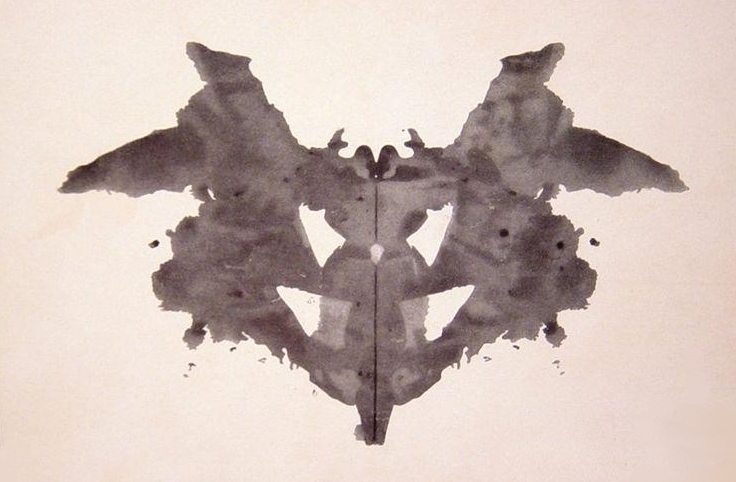
Have you ever taken a Rorschach test?
It’s that psychological exam where they show you an inkblot and ask: “What do you see?” Some folks see butterflies. Others see demons. A few see their ex.
But if you want a real-world example of an inkblot that reveals everything about the people who created it (from outside Indiana by the way), just look at the maps House Republicans are voting on this week. Indiana’s 2025 draft congressional plan isn’t just a map — it’s a political Rorschach. And no matter who you are, what you see is definitely not natural geography.
Start here: someone at 38th and High School Road on Indy’s west side is now in the same district as a guy frying catfish on the Ohio River. Because nothing says “community of interest” like Speedway commuters and riverboat anglers being represented by the same member of Congress. If Hoosier common sense were a person, it would’ve filed a restraining order.
And then there’s the justification. Every time someone raises a concern, the defenders of the map — say the quiet part out loud:
“Unfortunately we have to do it to counteract states like California, Illinois and New York who have been gerrymandering to benefit the left for decades… It’s a necessary evil.”
Let me put it this way: If your kid cheated on an exam, got caught, and said, “I had to — the other kids were doing it,” you wouldn’t pat them on the head and say, “Good instincts, champ.” You’d tell them to stop making dumb excuses and follow the rules. My parents would have done worse.
But in politics? That excuse is now a strategic talking point.
Legally, this all rides on a razor’s edge. The Supreme Court’s decision in Rucho v. Common Cause took federal courts out of the partisan gerrymandering business. But racial gerrymandering? That’s still very much on the menu. Marion County is roughly 35–40% Black. Yet under this draft, minority voters get spread so widely across multiple districts that each only ends up with about 10–12% Black representation.
That’s not respecting communities. That’s diluting them.
Lawmakers will swear it’s partisan, not racial. But the line between the two can get mighty blurry when the same cuts that weaken Democrats also just happen to fracture the bulk of Indiana’s Black population.
And the geography? An absolute fever dream.
Bloomington is superglued to rural counties that share nothing but oxygen. Terre Haute has been elongated like political taffy. District 4 is a pterodactyl. District 5 looks like the state of Indiana sneezed. District 6 is an amoeba floating toward Kentucky. And Indianapolis — the most densely populated, diverse county in the state — has been chopped so thoroughly it should come with a warning label: “Prepared on shared equipment with sharp partisan objects.”
Will there be lawsuits? Oh, absolutely.
Will they cost taxpayers millions? Without question.
Will they solve the real problem? Probably not. Because until Indiana joins the growing list of states that use independent redistricting commissions, everything else is just theater in different costumes.
But I’ll give lawmakers this much: they’ve given us one lasting benefit.
A lifetime supply of content.
So here is your moment of financial honesty:
Redistricting: $4 million
Lawsuits: $5 million more
An endless supply of Cheat Sheet material:
Priceless.
For everything else, there’s the Indiana General Assembly.
Abdul-Hakim Shabazz is the editor and publisher of Indy Politics. He is also an attorney licensed in Indiana and Illinois.