











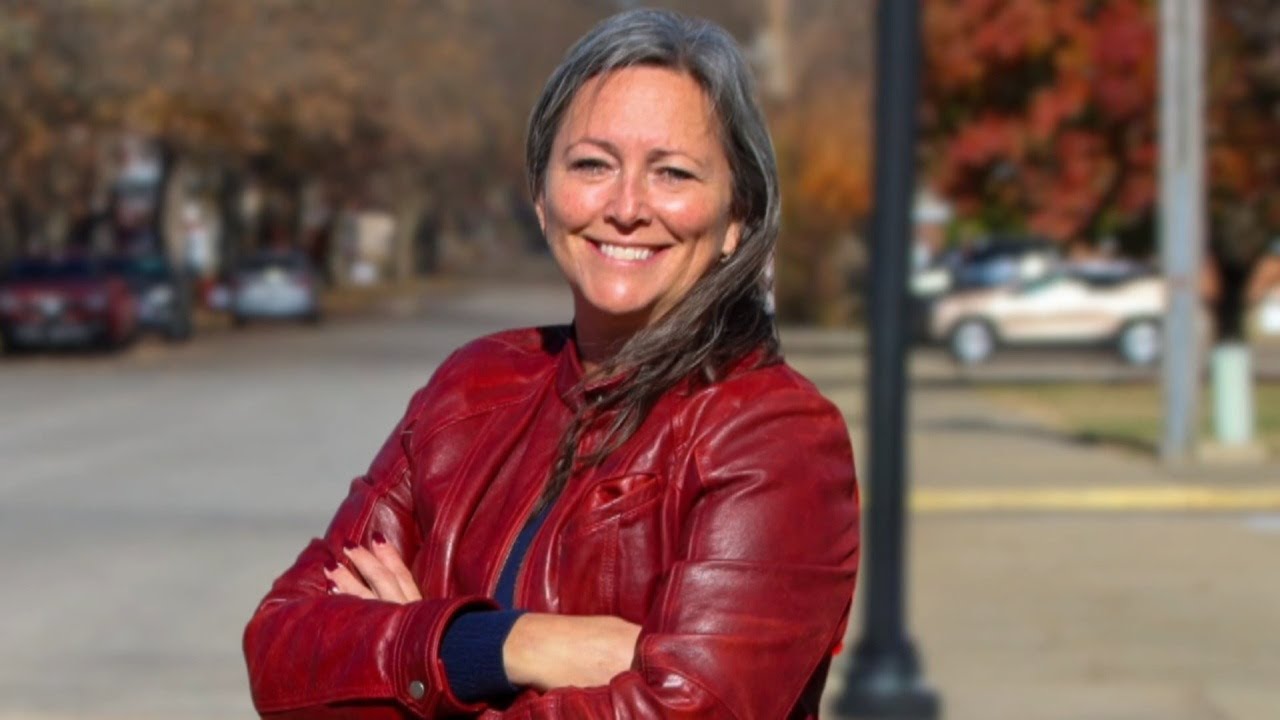
LAFAYETTE — One day after the Indiana Recount Commission denied Paula Copenhaver’s attempt to subpoena her, Tippecanoe County Clerk Julie Roush used a public meeting to answer the allegation at the center of the Senate District 23 election contest: that she personally opened and counted an absentee ballot marked for Sen. Spencer Deery.
“I did not personally open or count any ballots,” Roush told the county Election Board Wednesday morning.
Roush, a Republican in her second term, said it is her standing practice not to handle ballots in any election in which her own name appears. She was on the May 5 Republican primary ballot for county commissioner.
The allegation comes from a July 24 filing by William Bock III, Copenhaver’s attorney at Kroger Gardis & Regas. Bock wrote that Copenhaver’s side had been told Roush opened an absentee envelope taken from a bag found in a corner of the Tippecanoe County Courthouse on May 6, saw the ballot marked for Deery, and directed the county’s voting equipment vendor to add the votes to the totals — without other election officials involved. The filing hedges with “apparently” and “allegedly,” and does not identify who gave Copenhaver’s team that account.
Roush’s version is different in nearly every particular. Four absentee ballots were dropped off at a vote center by the 6 p.m. Election Day deadline, she said, and were transported that evening by bipartisan poll workers to the County Office Building, where votes were being tabulated — a transfer she said state law and board-adopted procedure both authorize. The ballots stayed under lock and continuous video surveillance overnight and were opened the next morning by bipartisan election staff working with MicroVote, the county’s vendor. Only one of the four was from Senate District 23.
No ballot, she said, was ever delivered to the courthouse. That building is not where votes are counted.
Election staff members Germany Harris and Mike Smith confirmed Roush’s account at the meeting. Roush called it “deeply disappointing” that a candidate would make allegations she said misrepresent the county’s process.
Both other board members backed her. Randy Vonderheide, the Republican appointee, said challenges like this undermine public confidence in the process. Kent Moore, the Democratic appointee, went after the other half of Copenhaver’s case — the 11 voters she says crossed over improperly to pull Republican ballots. Moore said those were not illegal voters but unchallenged ones, and that Indiana law gave Copenhaver’s side a mechanism to challenge them at the polls, which nobody used.
Moore said he did not understand how the same election could be fair when a candidate wins and rigged when she loses.
At Tuesday’s hearing in Indianapolis, Deery’s attorney, Samantha DeWester, called Copenhaver’s claims hearsay and asked whether Bock had picked up the phone and called Tippecanoe County before filing them. The Commission’s omnibus order, signed by Chair and Secretary of State Diego Morales, denied the Tippecanoe subpoenas along with almost everything else in front of it.
At least 13 votes remain in dispute heading into the Aug. 18 final hearing: the Parke County certification change, the Tippecanoe absentee ballot, and the 11 challenged crossover voters — nine in Tippecanoe, one in Fountain, one in Warren. A State Board of Accounts recount left Deery ahead 6,337 to 6,334, unchanged from certification.
One practical wrinkle surfaced at Wednesday’s meeting: Tippecanoe’s voting equipment and ballots remain under an Indiana State Police lock, with the county’s own bipartisan locks off and both party keys surrendered. Staff cannot get in to program, test or repair machines for the general election.
Recount Director Evan Norris said the Aug. 18 hearing will likely be held in Tippecanoe County. Ballots statewide must be certified by Aug. 21.
The Republican nominee will face Democrat David Sanders and independent Joshua Brant in a district covering parts of Tippecanoe, Montgomery, Fountain, Warren, Parke and Vermillion counties.