





by Abdul-Hakim Shabazz, Esq.
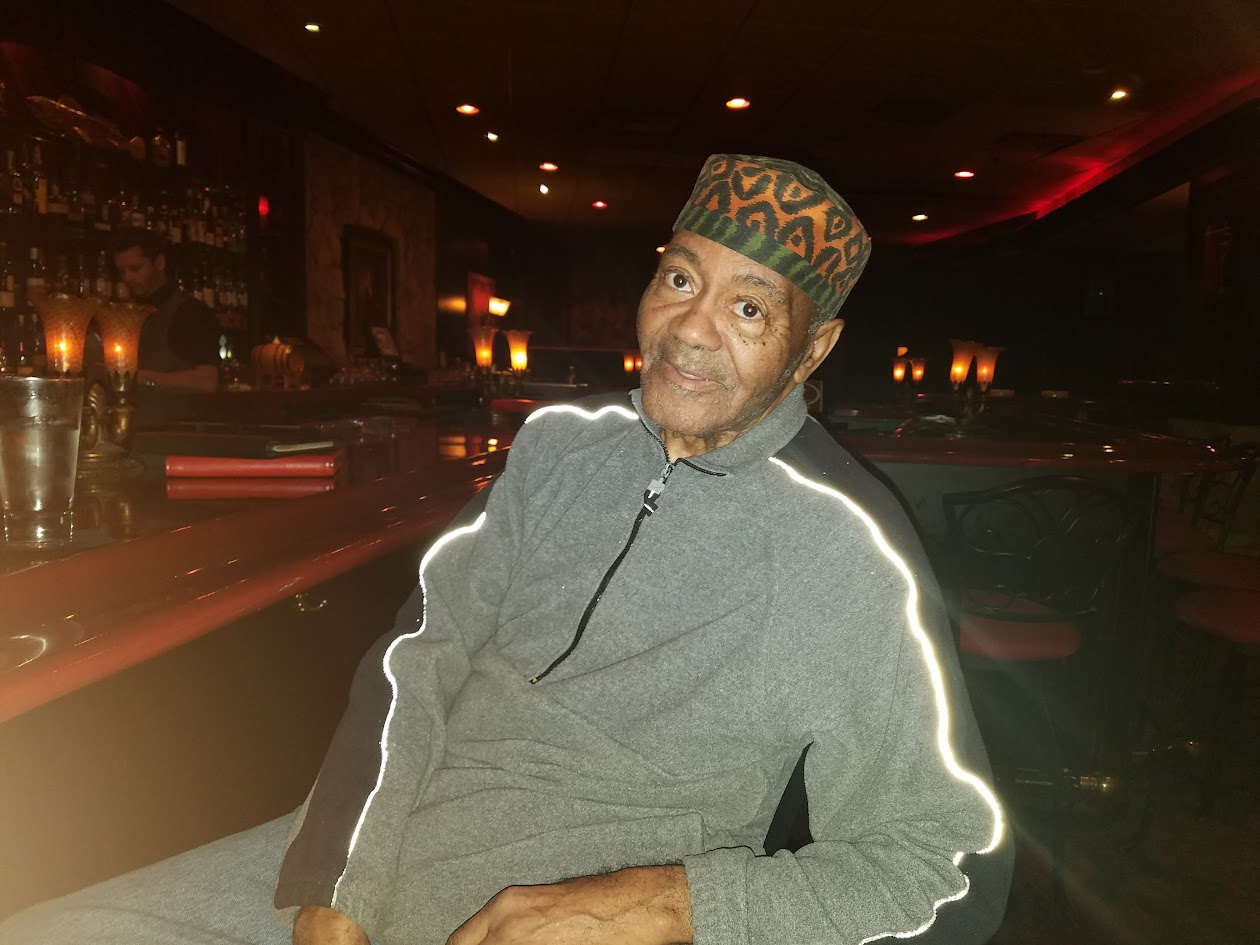
I only ever managed to get my dad into Nicky Blaine’s once. One night — low light, a scotch for me and a club soda for him, because my dad never drank — and him in his kufi at the end of the bar like he’d been a regular for years. We lost him in 2020, and on Father’s Day, that’s the picture I keep. But this isn’t only about him. It’s about all of them. Mine just happens to be how I learned what a father is.
The best gift he ever gave me wasn’t money or even advice. It was an appreciation for education. “Get all of it you can,” he’d tell me, “because it’s the one thing nobody can ever take away from you.” He was right, the way he was right about most things.
He proved it in the summer of 1986. He’d taken a new assignment and moved the family to Kaiserslautern, in what was then West Germany — there were two of them back then. We’d been there about a week when it was time for me to leave for college in Munich, at the University of Maryland’s Munich campus. So he walked me to the station, put me on a train, pressed 200 Deutsche Marks into my hand, and said, “Son, I love you. But I’ve got your mother and your brothers to take care of.” Then the train pulled off before he could step back onto the platform. He rode it one stop and got off at the next station. I have never let him forget it.
It was a four-and-a-half-hour ride to Munich, and it gave me plenty of time to think. Somewhere along the way I landed on the conclusion that has stuck with me ever since: I could complain about it all day and change nothing, or we could man up and deal with it. We dealt with it.
He backed me in everything. When I switched my major from computer science and engineering to radio and television, he didn’t flinch: “It’s okay to change your major. Just don’t do it too often. I’ve got your four younger brothers behind you.” When the Illinois bar exam folks told me I’d failed the test — then sheepishly corrected it to passed — he celebrated like he’d never doubted it for a second. He came to the plays, Driving Miss Daisy and Dial M for Murder. And I think he was proudest the day I was sworn in as a lawyer on the set of Titanic: The Musical, standing right beside me, holding the family Koran I took my oath on.
The first time he and my mother stayed at the Columbia Club, I walked them in — and I’ll never forget my dad looking around, taking it all in, and telling me, “Son, you’re in tall cotton.” From him, there was no higher praise.
It went both ways. He loved westerns — he’d grown up on them — and one of his favorites was She Wore a Yellow Ribbon. My mother couldn’t stand westerns, but she tolerated them — the same way my wife tolerates my comic books and superhero action figures. It took me the better part of the mid-’90s to track down a copy of that film for him; this was before Amazon, when finding an old John Wayne picture meant hunting for it store by store. I found it. His face when I handed it over was worth every call.
He loved my mother fiercely, and he stayed right next to her as Alzheimer’s took its slow toll. Was he perfect? Not even close. But who is — present company excluded.
He was also a bit of a radical, and I never blamed him for it. For the first thirty years of his life, in much of this country, poll taxes and worse stood between a Black man and the ballot box. He used to tell me he didn’t hate white people — he just wasn’t going to let them off the hook. He believed in reparations. I don’t, and we went a few rounds over it, but I always understood exactly where he stood and why.
And he was there for every big decision I ever made. I’d call him, lay out all the scenarios, weigh every angle — and he’d listen to the whole production and then say, “Son, you already had your mind made up.” He was right. I just wanted to float it by him.
If there’s one thing I miss most, it’s the phone calls. Almost every day, usually around ten, we’d talk for a few minutes — nothing momentous, just checking in. And he knew that if I didn’t pick up, I’d call him right back. I always did.
He was my Jor-El and my King of Zamunda — the wise man who sent me off with everything I’d need, and the king whose dignity filled a room the second he walked in.
So Happy Father’s Day, Dad. And to all of them — the fathers, the stepdads, the granddads, the father figures, and the men who stepped up when they didn’t have to. Hug the ones you’ve still got. And raise one to the ones you don’t.
Abdul-Hakim is the son of John Shabazz.