

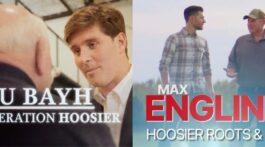




With a little more than 100 days to go before the November election, Democratic Secretary of State nominee Beau Bayh is sharpening his message around ethics, competence, and a promise to overhaul an office he argues has been marred by corruption and mismanagement.
Bayh laid out his case in a recent conversation with Indy Politics, where he repeatedly tied Republican nominee Max Engling to outgoing Secretary of State Diego Morales, whose tenure he characterizes as both ethically and administratively flawed. Bayh accused Morales of misusing taxpayer dollars on “luxury SUVs,” hiring family members, taking taxpayer-funded trips, and steering no-bid state contracts to political donors. He said the decision by Republicans to replace Morales with Engling as the nominee was driven less by concern over ethics and more by political self-preservation.
“This change of Diego Morales was not wrought about because of the corruption,” Bayh said. “It was actually a result of them realizing that they were going to lose political power, which tells you everything you need to know about Max Engling and his friends.”
Bayh has made an independent audit of the Secretary of State’s office his first stated priority if elected. He likened the public record of alleged misconduct under Morales to “the top 10 percent” of an iceberg, arguing that far more could be uncovered with a full review of contracts, travel, hiring, and internal practices.
“It’s important that we conduct this independent audit to get at the 90 percent lurking underneath the surface,” he said, adding that “others complicit” in any wrongdoing should be held accountable. Bayh contends that without restoring public trust in how the office is run, voters and taxpayers will be less likely to support any future initiatives that come out of it.
Beyond ethics, Bayh is also focusing on the business services and securities functions of the office. He criticized what he described as excessive self-promotion on the Secretary of State’s website, saying entrepreneurs who click “I want to start a company” are first met with promotional content about the officeholder before reaching substantive resources. He argued the office should prioritize practical guidance for small businesses, including information on licensing, financing, and compliance, rather than political branding.
On the securities side, Bayh highlighted his experience handling securities fraud cases while working for a federal judge in Bloomington. He pointed to reports that money from a reimbursement fund intended to compensate victims of securities fraud has, in some instances, been used to pay vendor contracts. Bayh called that an inappropriate mingling of funds and said every dollar in the securities division should go toward investigating wrongdoing and making victims whole.
Bayh is also attempting to address criticism about his own background and residency. He has been attacked as not truly being a Hoosier and labeled a “nepo baby” because of his family’s political ties. In response, Bayh said he was born on the north side of Indianapolis, took his Marine Corps officer’s oath at the Indiana War Memorial, and has voted in every Indiana election since turning 18. He said he has paid Indiana state and federal income taxes for the past eight years and views the state as his permanent home.
He contrasted his record with Engling’s, claiming Engling was previously a Virginia voter and spent more than a decade living and working in Washington, D.C. Bayh argued that it was “rich” for Engling or his allies to question Bayh’s Hoosier credentials under those circumstances.
Throughout the interview with Indy Politics, Bayh sought to frame the race as a choice between continuity and change in an office that has been held by Republicans for more than two decades. He described his campaign as an “insurgent” effort aimed at disrupting what he characterized as a long-standing political establishment around the Secretary of State’s office.
On issues of ballot access and political competition, Bayh expressed openness to making it easier for independents and new parties to get on the ballot, noting the significant financial burden associated with gathering tens of thousands of signatures. He said it should not require “hundreds of thousands of dollars” to create a new political party in Indiana and argued that more competition in politics can function like competition in business, ultimately benefiting voters.
As the campaign moves from fair season into the fall, Bayh said he plans to visit all 92 counties, emphasizing anti-corruption, business support, securities enforcement, and rebuilding trust in state government as the central themes of his bid for Secretary of State.
The Election is November 3.