








Hamilton County Democrats say their recent election gains came down to strong candidates, steady voter outreach and growing concern over the future of local schools.
Josh Lowry, chair of the Hamilton County Democratic Party, said Democrats did particularly well in the southern part of the county, while also winning in Noblesville and Westfield. For a county once known as a Republican stronghold, the results mark a notable change.
Lowry said Democratic canvassers used to hear the same thing at the door: “I thought I was the only one.” That, he said, has changed over time as more voters have become open to Democratic candidates.
The party’s strategy was twofold: help candidates spend time talking with voters, and turn out voters already likely to support them. That gave candidates more opportunity to reach independents and Republicans, Lowry said. He believes the approach paid off, with Democratic candidates earning Republican votes.
Lowry credited the candidates and their campaigns, while acknowledging that the broader political climate helped. “Waves happen,” he said. “You got to be able to surf them.”
One issue that came up repeatedly, he said, was Senate Bill 1 and its effects on school funding. In conversations with voters, Lowry said, some were frustrated by the contrast between promises of lower property taxes and claims that schools were receiving record funding.
“They’re two separate pots,” he said, describing what he viewed as confusing messages. Lowry said concerns about schools became more immediate for some residents when teacher layoffs were announced or anticipated. He did not suggest teachers alone drove the results, but said voters appeared to recognize the consequences of funding decisions.
Lowry also pointed to the work of individual candidates. Some Democratic challengers had run before and had more time to build relationships in their districts. Lindsey Gramlich, who defeated Rep. Danny Lopez, was a strong candidate, he said, and her vote total showed little drop-off from Democratic candidates higher on the ticket. Lowry said school funding was among the concerns voters raised in that race.
He rejected the idea that Democrats’ gains were simply the product of new apartment developments or newcomers to the county. While apartment residents may be more likely to vote Democratic, he said, many longtime residents who live in houses have also changed their political preferences.
“Like, at a certain point, you have to go and talk to voters,” Lowry said. “No one’s entitled to anyone’s vote.”
He made a similar argument about Rep. Victoria Spartz’s defeat, saying that representatives need to stay connected to the people they serve. Lowry said demographic change alone did not determine how voters would cast their ballots; candidates still had to earn their support.
Looking to next year’s municipal elections, Lowry cautioned against assuming the same results will repeat. Local contests, he said, are often more focused on candidates and community issues than national political trends. He expects Democrats to compete for more seats, but said they are not taking anything for granted.
“You’re not entitled to a vote just because there’s a letter next to your name,” he said.
Lowry also criticized Lt. Gov. Micah Beckwith’s rhetoric, saying it has alienated some residents. He argued that people who live in Hamilton County should be treated as members of the community, regardless of their background or political views.
For Lowry, the election’s message is straightforward: Hamilton County voters are changing, but parties still have to show up, listen and make their case.
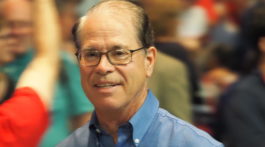
Photo: Derek Jensen (Tysto) / Wikimedia Commons, CC BY 2.0 (creativecommons.org/licenses/by/2.0). Color-tinted by Indy Politics.