





by Abdul-Hakim Shabazz, Esq.
If you’ve been following the story about the White House banning CNN, MS NOW and Politico, and you’re thinking that could never happen here, I hate to disappoint you. It did. Five years ago. To yours truly.
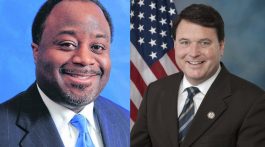
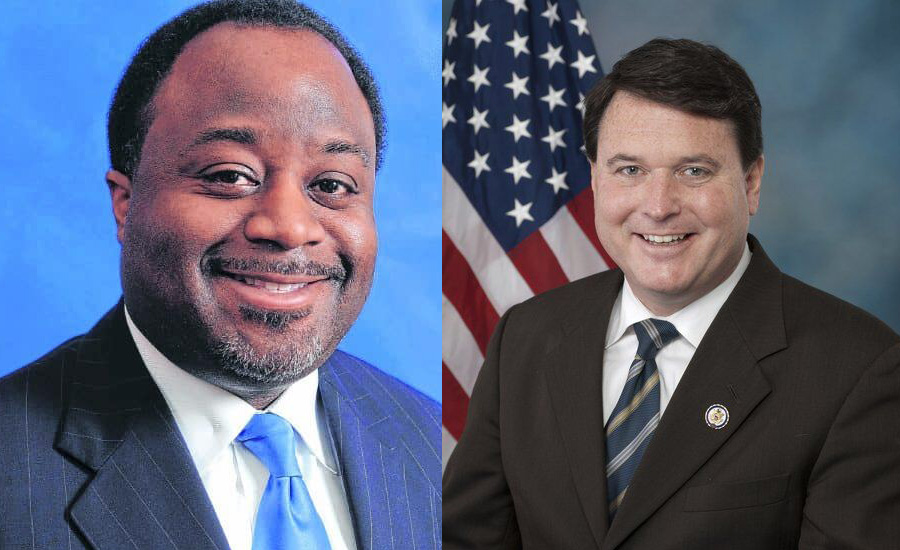
In October 2021, Attorney General Todd Rokita held a press conference about robocalls. It was billed as credentialed media only, which is where I come in, because I’d been carrying a Statehouse media badge for years. A staffer at the door informed me I wasn’t credentialed. Meanwhile, on my way over, the press secretary had emailed to suggest I watch the livestream. So I was barred from a press conference about unwanted recorded messages and offered, in its place, an unwanted recorded message. Afterward, the office clarified that I wasn’t an actual journalist, but a gossip columnist. I’ve been called worse, usually by people who read me anyway.
I then asked, in writing, for the criteria that office used to hand out media credentials. I also filed a public records request for them. I am still waiting. For those keeping score at home, that’s five years and counting.
So in February 2022, the ACLU of Indiana (shout out to Ken Falk and his staff) filed Shabazz v. Rokita in federal court. Five weeks later it ended in a stipulated dismissal: the General agreed to let me in on the same terms as everybody else. No judgment, no finding, no fees for my side. He then wrote an op-ed explaining that the dismissal freed up his office’s resources. Nothing frees up resources quite like agreeing to do the thing you got sued over.
Stick around long enough and you see everything two or three times. This time it went national, with better lawyers.
Last Friday, President Trump announced on Truth Social that he was “banning Fake News CNN, MSNOW … and Politico” from the White House, “effective immediately.” By Saturday morning the Secret Service was collecting hard passes at the gate. The outlets sued Monday. And early Thursday, U.S. District Judge Timothy Kelly told the administration to hand the passes back for the next 14 days while he decides whether to make it permanent.
The two cases share a structure. A credentialed reporter gets shown the door by an official who doesn’t care for the coverage. There are no written standards, no notice and no hearing, and the reporter is sent home with a livestream as a parting gift. But the real work happens before and after the podium: the hallway question, the aide who stops to clarify a number, the look on someone’s face. None of that comes through your laptop.
Both cases also run the same play. You can’t ban a reporter over coverage and say so out loud, so you go after the reporter instead. Rokita’s office decided I was a gossip columnist. The Justice Department advised Judge Kelly that these outlets had published classified information and failed to meet minimum professional standards. To my knowledge, there has never been a successful prosecution of a news organization for publishing classified information, which is why the government goes after the leaker and not the outlet. If Justice believed otherwise, the remedy is an indictment, not a fellow at the gate collecting badges.
Two things are different. The first is candor. In my case we had to infer the motive like it was a whodunit. Trump spared everyone the trouble, calling it “the ban on the free press” and citing “cumulative stories over the last two years.” The second is scale. I was one guy kept out of one office. This was three national outlets locked out of the complex, more than 60 hard passes, and a promise that “other Fake News Media Outlets” would follow, which is a bold thing to put in writing right before somebody sues you.
Here’s the part that got my attention as a lawyer, and it isn’t the part making headlines. They didn’t win on the First Amendment. They won on due process, because nobody bothered to give these reporters notice or a chance to respond. Kelly, whom Trump himself put on that bench in 2017, found the government’s professional-conduct standard “so vague it hardly does the trick.” He wasn’t buying national security either: nothing in the record, he wrote, suggests the revocations had anything to do with it. That’s what happens when the client explains his reasoning on social media and leaves his lawyers to find a better one later.
Which brings me back to those credentialing criteria I never got. Turns out that wasn’t a paperwork question. That was the whole ballgame. If you can’t produce the standard, you can’t show you followed it.
And while we’re here, I should mention that I still get that office’s news releases. The media advisories, the ones that tell you when and where the news conference actually is, somehow never seem to make it to my inbox. A case can settle and the problem can keep right on going.
Now the sober part, because I don’t believe my own press, or anybody else’s. A 14-day restraining order is not a victory lap. Justice says it’s appealing. And the fight over the television pool is unresolved, which matters. Last year, in the Associated Press’s case, a divided panel of that same circuit let the White House keep the AP out of the Oval Office and Air Force One while the appeal plays out, on the theory that the First Amendment doesn’t reach those rooms at all. The AP held onto the East Room and not much else. That will be the government’s best argument here, and it isn’t a bad one.
Asked whether his ban would hold up in court, Trump said it “depends on the judge you get.” He got the judge he appointed. He lost anyway.
When I sued, people asked if it was personal. It wasn’t. I still have Todd Rokita’s cell number in my phone. As a private citizen, he was free to block me, ignore me, or conclude I’m the worst writer in Indiana. As Attorney General, he wasn’t free to decide which reporters get to cover his office. That’s the whole distinction, and it’s the one that keeps getting missed. An official who can ban one reporter can ban any of them, and today’s target is tomorrow’s guy you happen to agree with. That used to be a hypothetical.
Same suit, different day.
Abdul-Hakim Shabazz is the editor and publisher of IndyPolitics.org and an attorney licensed in Indiana and Illinois. He was the plaintiff in Shabazz v. Rokita, and he still hasn’t received those credentialing criteria.