






The U.S. Department of Justice’s Civil Rights Division will send election monitors to Marion County for the Nov. 3 general election. The information comes from the Marion County Election Board and a DOJ letter the Marion County Clerk’s Office provided to Indy Politics.
Marion County is one of two Indiana counties to receive the designation, according to the board. The other is Lake County.
Hwui Lee, a Civil Rights Division trial attorney and the regional coordinator for election monitors in Indiana, notified the board by email. The email is dated Oct. 20. The board’s statement says it received notice Oct. 21.
“This is to notify you that the Civil Rights Division of the U.S. Department of Justice intends to send election monitors to your jurisdiction on November 3, 2026,” Lee wrote.
Lee copied Timothy Mellett, deputy chief of the division’s Voting Section, and Assistant U.S. Attorney Michael Mohler of the Southern District of Indiana.
The letter says the monitors “only observe” and do not interfere with voting. Lee wrote that they will check compliance with federal voting laws enforced by the division, including the Voting Rights Act, the National Voter Registration Act, the Help America Vote Act and the Americans with Disabilities Act. He asked to meet with the board by Microsoft Teams before Oct. 29 to discuss any specific issues the division may focus on in the county.
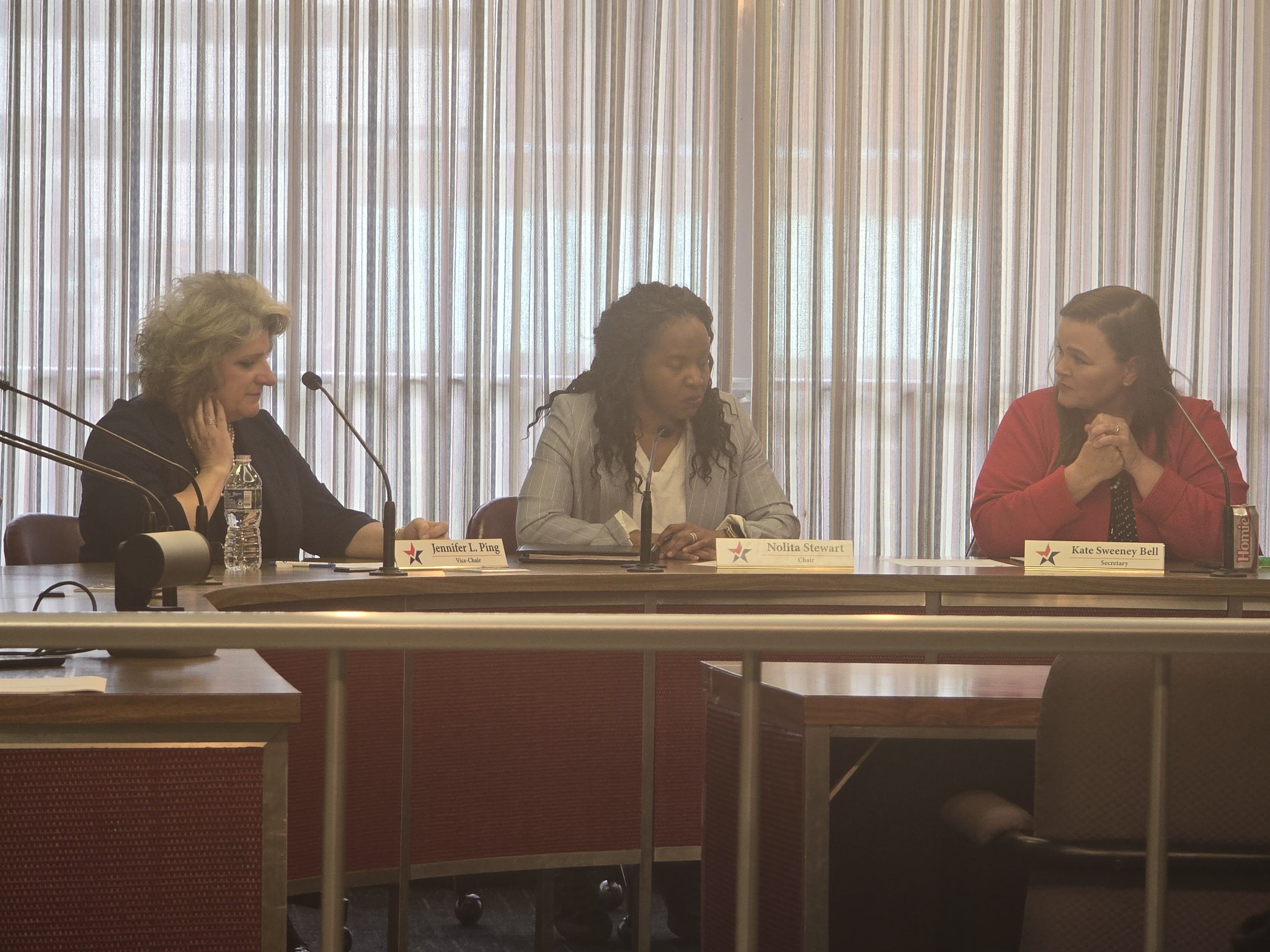
Marion County Clerk Kate Sweeney Bell said the county was given no reason for its selection.
“We were not informed as to who or what prompted this unique status,” Sweeney Bell said in a statement Thursday. “We were not told what criteria was used to make this determination, and we do not know why the Department of Justice chose these two specific counties in this election cycle in this particular state.”
Poll worker protocol
The board’s Poll Worker Response Protocol, last updated Oct. 2, sets out how poll workers should handle DOJ monitors, federal law enforcement, third-party monitors and media at vote centers. The Clerk’s Office provided a copy to Indy Politics.
The protocol says DOJ monitors do not have an automatic right to enter vote centers. It says they may not enter without consent from local election officials or a court order, and that no court order currently applies to Marion County or Indiana.
Under the protocol, poll workers are to ask monitors to wait outside the voting area and record their names, badge numbers, agency and stated purpose. Poll workers are then to call the Election Board during early voting or the Inspector Hotline on Election Day. The protocol says poll workers should neither admit nor turn away federal personnel until the board responds.
The protocol says a federal badge or agency ID is not, by itself, an Indiana polling-place credential under state law.
For federal law enforcement, including ICE, the FBI and DHS, the protocol tells poll workers to note whether officers are armed or in uniform. It provides a script citing federal laws that bar armed federal officers at polling places, voter intimidation and interference by federal employees. It tells poll workers not to physically block officers and not to intervene in an arrest.
Requests for voter records or information about specific voters must be referred to the board, according to the protocol. Poll workers are told not to sign anything or answer questions without board authorization.
National context
Last month, Harmeet Dhillon, head of the Civil Rights Division, said the department planned to send 1,000 observers nationwide, which she called the largest monitoring effort in DOJ history. Counties in Colorado, Florida, Minnesota, Texas and Washington have also been notified, NPR reported Wednesday.
A DOJ spokesperson, Kiersten Pels, told NPR the department prioritizes places with competitive elections. In a Colorado county, she also cited coverage under the Voting Rights Act’s language-assistance provision. Under President Biden, the department monitored 64 jurisdictions in 24 states in 2022.
The letter does not say how many monitors will be sent to Marion County or where they will be stationed.