




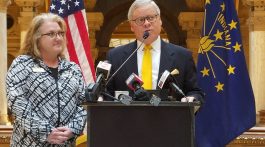

Indiana Senate President Pro Tem Rod Bray defended the Senate’s decision not to redraw congressional districts mid-decade, saying a move made for political reasons could further erode public trust.
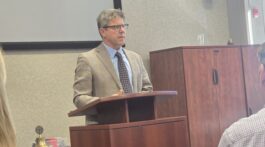
“It just was not the right thing to do for the state of Indiana,” Bray said during a speech and question-and-answer session last week with the Greenwood Rotary Club. He described the redistricting debate as one of the most challenging periods of his life and said he stands firmly behind the Senate’s decision.
Bray also discussed the state budget, taxes, education, Medicaid, road funding, marijuana and data centers, outlining what he called Indiana’s economic progress and the challenges facing lawmakers.
Despite Republican supermajorities in both chambers, about 90% of bills that pass the Legislature receive bipartisan support, Bray said. He said that involving both parties in reviewing legislation can strengthen the process by bringing more scrutiny to proposals. The bills that divide lawmakers along party lines tend to involve contentious issues such as abortion and gun rights, he said.
Bray, a Republican who represents Senate District 37, has served as president pro tempore for eight years. He said he plans to step down from the leadership position.
The state has cut taxes 30 times over the past decade, Bray said, including repeated reductions to the individual income tax. He pointed to growth in outside investment as evidence of Indiana’s economic performance: Annual capital investment from outside the state rose from $2 billion in 2017 to $39 billion in 2024, he said.
Those investments have helped bring higher-paying jobs to Indiana, Bray said. He cited an average wage of $40.95 an hour for jobs announced in 2025. But he acknowledged that affordability remains a major concern for residents. State lawmakers can work to reduce costs and encourage wage growth, he said, though they have fewer tools than the federal government to address inflation.
Education accounts for about 47% of Indiana’s $46 billion budget, Bray said. He cited improved national test rankings for fourth- and eighth-grade students between 2022 and 2024, as well as increased third-grade reading proficiency. A club member credited some of the progress to the state’s shift toward phonics-based instruction. Bray agreed, saying the focus on evidence-based reading methods had been helpful.
Bray said Medicaid has become a growing pressure on the state budget. The program accounted for 12% of the budget when he entered the Senate in 2012 and now accounts for about 24%, he said. He called for addressing fraud and improper enrollment while preserving coverage for people who need it, including children, older adults and people with disabilities.
One attendee criticized recent property-tax changes, saying they placed financial pressure on local governments and services while saving the average homeowner about $300 a year. Bray called the criticism fair and said lawmakers would continue to look for ways to give local governments more options to generate revenue. He cited housing shortages and rising demand as factors behind higher property values and taxes.
Road funding was another concern raised during the discussion. Bray said the suspension of fuel taxes had left the state with an estimated $1.2 billion shortfall for road work. He said the taxes would need to return to support construction and maintenance. He also suggested that money freed up when Indiana finishes paying its pension debt—expected by early 2028—could help fund roads.
On marijuana, Bray opposed legalization to raise tax revenue, saying the decision should be based on whether legalization is good policy. He cited concerns about the effects of high-THC products on young people. Regarding data centers, he said local governments should decide whether to approve projects and companies should pay the full cost of any added power capacity.
Bray said Indiana has seen economic growth but continues to face challenges involving affordability, housing, daycare and local government finances.