


by Abdul-Hakim Shabazz, Esq.
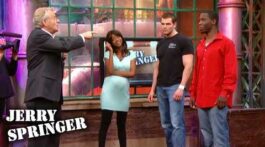
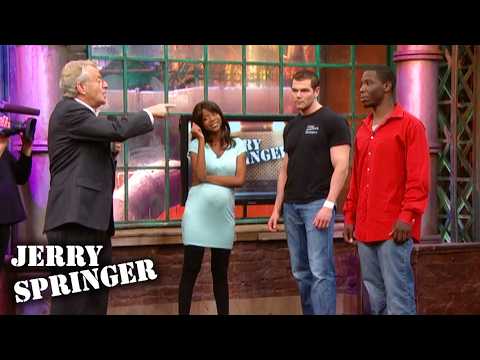
Okay, yes I freely admit, my Gen X is showing. That headline does read like a really bad episode of Springer, Ricki Lake or Sally Jessy. But let’s face it: it got your attention, like most of those 90s TV talk shows. So pretend you’re watching on that brand-new 25-inch color TV you just bought at Best Buy, and allow me to elaborate.
I’ve noticed that every couple of years, ironically around this time, somebody, somewhere, discovers the other party exists. (Oh, lord, Yankees, in Georgia!!) POLITICO wrote about it in Washington this week, where Republicans who are staring at a rough midterm have suddenly gotten “bipartisan curious.” Ads about working across the aisle. Promises to bring both sides together. The works.
That got me to thinking about Indiana. And what we found, the curiosity isn’t coming from the politicians. It’s coming from the voters.
(Before we go further, we acknowledge all the criticisms of the poll, and with that said, back to our column.)
Swiping in a Red State
Politically speaking, Indiana is not a bi-curious state — at least not publicly, anyway. Republicans have held the Secretary of State’s office since 1994. So when the Free Press Indiana/Bellwether poll we covered this month showed Democrat Beau Bayh leading Republican Max Engling 43% to 35% — with Libertarian Lauri Shillings at 6% and Lincoln Party candidate Greg Ballard at 5% — somebody in this state is clearly swiping.
Who’s that? Well start with the bases. Bayh holds 85% of Democrats and Democratic leaners. Engling holds 68% of Republicans and Republican leaners, with 11% of that group still undecided. That’s not a ticket-splitting problem. That’s a home-base problem. When nearly a third of your own team isn’t with you three weeks out, the issue isn’t the other side’s voters. It’s yours.
The Independent Study
Now let’s look at the voters everybody claims to be chasing. Among true independents — no lean either way — it’s Bayh 39%, Shillings 15%, Engling 9% and Ballard 8%, with 27% undecided.
That’s a tough number for a campaign built around voters who are tired of both teams. In fairness to Greg, the poll closed before his TV ads hit the air, 44% of voters said they’d never heard of him, and he’s in double digits in the Indianapolis suburbs and west-central Indiana. A former two-term mayor with a fresh ad buy has room to grow, and 27% of independents are still up for grabs.
But here’s the point. Right now, the independents who’ve made up their minds aren’t going to the independent. They’re going to the most familiar name on the ballot — and in Indiana, Bayh is less a party affiliation than a brand that’s been on our ballots since the 1960s. The Republican, meanwhile, is in single digits.
The major parties have spent months telling people a vote for Ballard is wasted. Some independents may be buying it. They’re just not taking it where the Republicans hoped they would.
Lessons From Down the Ballot
Now the part both parties should study. Same poll, same voters, two more races — and one Republican running well ahead of the pack.
Treasurer Daniel Elliott leads Democrat Coumba Kebe 43% to 38%. That’s eight points better than Engling and seven better than Comptroller Elise Nieshalla, who’s in a statistical dead heat with Democrat Jessica Bailey, 39% to 36%. Elliott is holding 80% of Republicans and leaners, compared with 70% for Nieshalla and 68% for Engling. Independents still lean Kebe 32% to 22%, but Elliott is pulling more than twice the independent support Engling is.
Why? The poll doesn’t ask, so this is my read. Elliott has spent this year showing he’ll pick a fight with his own side when he thinks it’s right. In May, while other Republicans were quietly pulling their endorsements of Secretary of State Diego Morales, Elliott called on him to resign. And when Lt. Gov. Micah Beckwith went after Islam, Elliott — a Latter-day Saint — defended religious liberty for Muslims, told the Star he’d “die on the hill of religious freedom,” and said that if it cost him an election, so be it. Beckwith responded by saying he regretted helping Elliott win the 2022 convention.
That’s not bipartisanship. Elliott is plenty conservative — he’s the guy who put BlackRock on the state’s ESG watch list. It’s independence. And independents can tell the difference between a politician who says he’ll stand up to his own party and one who actually does.
In Indiana, Republicans don’t lose because independents fall in love with Democrats. They lose when they give independents no reason to look their way.
Meanwhile, in the 5th District
You can see it in Congress, too. J.D. Ford against Victoria Spartz in the 5th District is the Indiana seat I think has the biggest chance to flip — and not because of independents, per se.
Go back to May. Spartz won her primary with about 60% of the vote. Most of the rest went to Scott King, a Noblesville man whose campaign website was a Facebook page and who, politically speaking, didn’t spend a dime. That’s not a challenger running a campaign. That’s thousands of Republicans voting for the empty chair. When four in ten of your own primary voters pick “anybody else” over you, the problem isn’t the other side’s coalition. It’s yours.
Sound familiar? It’s the same story as the Secretary of State’s race. Ford doesn’t need a wave of independents in Hamilton County. He needs some of those empty-chair Republicans to skip the race or cross over — and Democrats are energized enough to take advantage if they do.
Hoosier Democrats have picked up the vocabulary, too. Back in August, they rallied in Marion with Bayh and Ford headlining and called it the “Common Ground Rally.” Common ground. In Grant County. Somebody read the focus groups.
Our Sober Assessment
Name ID is still thin: 48% of likely voters had never heard of Engling, and 27% had never heard of Bayh. An earlier Tarrance Group poll for Hoosier Leadership for America had the race at Engling 38%, Bayh 37%. Undecided Indiana Republicans have a long history of coming home in the final stretch, and Engling’s path runs straight through that 11%. On the other side of the ledger, 32% of likely voters say they’re certain to vote for Bayh, compared with 22% for Engling. With a 3.4-point margin of error and more than a quarter of independents still shopping, this race can still move.
But curiosity has a way of becoming a habit. If Republicans in this state are counting on independents to rescue them, the numbers say they’re looking in the wrong direction. Some of the voters are doing the swiping on their own.
Abdul-Hakim Shabazz is the editor and publisher of IndyPolitics.org and an attorney licensed in Indiana and Illinois. He finished second in the 2023 Republican mayoral primary in Indianapolis, so he knows a little something about voters keeping their options open.
Photo: You Tube

