




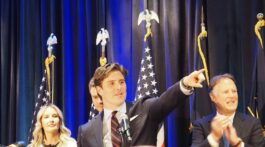
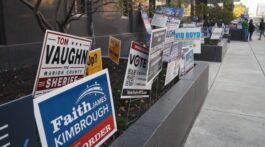

A series of post-election conversations about Indiana’s political landscape kept returning to one question: what were voters telling elected officials? Democratic strategists and lawmakers cited affordability, utility costs, education funding and frustration with state policy. A Republican leader said his party would make affordability and the economy its priorities. Other guests discussed the future of third parties, tensions over local development and the strain politics can put on personal relationships.
Democratic strategist Lindsey Shipps said Republican losses reflected more than a favorable climate for Democrats. Voters, she said, were responding to household costs, utility bills and gas prices. She pointed to Democratic gains in traditionally Republican areas, including Hamilton County, and said some Indiana counties appear to be becoming more competitive.
Shipps said those results could change the balance of power in the legislature. With more Democratic seats, she said, committee dynamics could shift, and Republicans would have to build support for legislation instead of relying on a supermajority. She also raised the question of how local issues, including tax incentives for data centers, could affect future races.
House Speaker Ben Smaltz acknowledged the disappointment of losing the Republican supermajority. He said Republicans remain the majority and will develop their legislative agenda before the next session. Smaltz named affordability and a strong economy as priorities. He said the caucus would also work with Gov. Mike Braun’s administration on issues such as child care.
Smaltz said the caucus would have to adjust to a narrower margin and would rely on members who have served under similar conditions. He also said he wants to keep working relationships with Democrats. The election does not change his party’s intention to govern, he said, but it will change the dynamics inside the House.
House Democratic Leader Phil GiaQuinta gave a different account of the results. He said Democrats grew their caucus to 46 members. He credited candidates’ local campaigning and their focus on rising utility costs, public school funding and the effects of Senate Bill 1 on local governments and schools.
GiaQuinta said the larger caucus could give Democrats more influence in committees and more chances to shape legislation. He described his party’s approach as pragmatic, with an emphasis on working across party lines on costs and public services. He said candidates’ direct contact with voters was a key part of the gains.
Former State Senator Jim Merritt and Libertarian Executive Director Brad Klopfenstein called the election an “anti-red wave,” saying voters were pushing back against Republican policies and leadership. They discussed property tax changes under Senate Bill 1. One question was whether local governments and schools can replace the lost revenue. Another was whether some communities will be pushed toward referendums. They said rural areas could have the hardest time if local income tax options do not bring in enough money.
Merritt and Klopfenstein also said the way legislation is developed adds to public frustration. In their view, lawmakers should consult local officials and communities before major bills are finalized. They discussed possible election changes, including open primaries and a top-two general election, as ways to push candidates to appeal to more voters.
They also discussed data centers. Merritt and Klopfenstein said residents have questions about the facilities’ water and electricity use and about effects on farmland and nearby communities. They urged companies to answer those concerns more directly and suggested putting new projects on previously developed industrial sites.
Nathan Gotsch discussed the Lincoln Party and the obstacles facing candidates outside the two major parties. He said Greg Ballard’s Secretary of State campaign received about 3.6% of the vote, enough to clear the threshold for ballot access. Gotsch called the result a step toward building a lasting third-party option in Indiana.
Gotsch said the party plans to build its organization and recruit candidates, including for municipal races. He argued that ballot access should not be so hard or expensive that independent and third-party candidates are shut out. He said a viable third option could also push elected officials to pay attention to constituents beyond their own party’s primary voters.
The conversations also covered political conflict outside the Statehouse. Alexandra Hudson, author of The Soul of Civility, said people should not reduce one another to a single political belief. She called this “unbundling”: recognizing a person’s broader humanity even in political disagreement.
Hudson said treating politics as a person’s defining identity makes conflict worse and can damage friendships and family relationships. She encouraged people to:
- set boundaries around political discussion when needed
- approach conversations out of curiosity rather than to argue
- move meaningful exchanges off social media when possible
She drew a line between civility and politeness, defining civility as treating others as moral equals, even in hard disagreements.
The guests offered different explanations for the election and different ideas for what should come next. Several challenges came up repeatedly: addressing voters’ concerns about costs, rebuilding confidence in government and reaching people who feel unheard.

