










by Mackenzi Klemann, Indiana Capital Chronicle
September 30, 2026
Gov. Mike Braun on Wednesday renewed Indiana’s gas tax suspension for another 30 days — until early November — and issued a new order lifting restrictions on the sale of untaxed diesel fuel for trucks operated by farmers and timber harvesters on public roads.
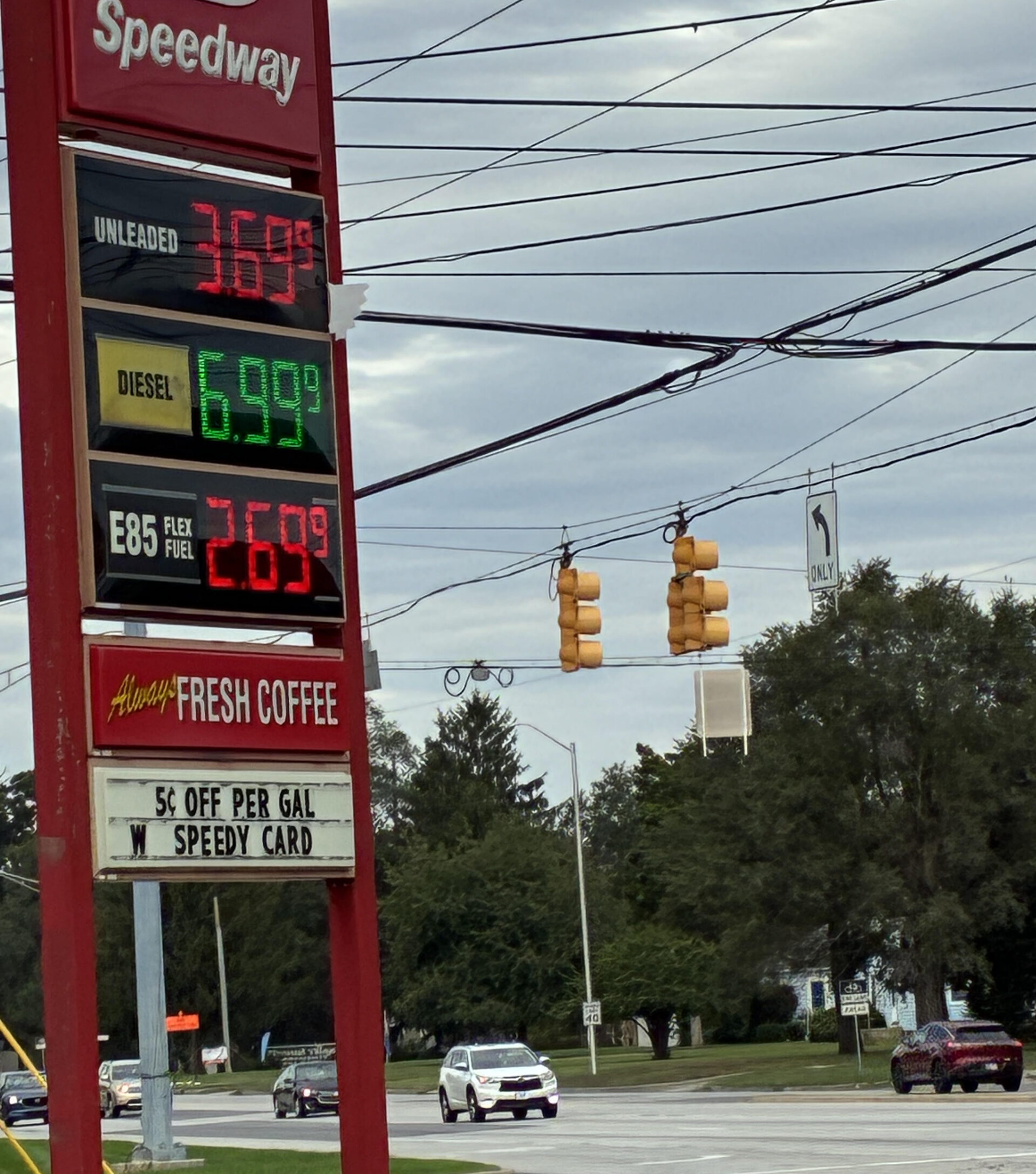
The order cited continued disruption to global oil supply as diesel hit a record high $6.92 average in Indiana in September.
“Affordability is my top priority and my gas tax suspensions have delivered immediate tax relief and some of the cheapest gas in America for Hoosier families,” Braun said. “I’m delivering relief for Hoosier farmers by lifting special fuel restrictions to help ease the burden and providing relief from high gas prices to keep more money in Hoosiers’ pockets and make life more affordable.”
A coalition of more than 50 state legislators sent a letter to Braun this week asking him to lift restrictions on off-road diesel fuel for farmers, who have not seen relief at the pump during the gasoline tax suspension.
The diesel fuel covered by Braun’s order is untaxed, but limited to off-road usage in tractors, bulldozers and other farming or construction equipment.
Braun’s order will permit farmers and timber harvesters to use off-road fuel for “any farm-related activities” for the next 30 days, at which time he will review both orders for possible renewal. This would include semi-trucks hauling crops and pickup trucks that might have dual uses.
Indiana’s gasoline excise and sales taxes — which would be about 61 cents a gallon — will remain suspended through Nov. 4. Indiana’s diesel tax is 63 cents a gallon and remains active.
“As harvest season is underway here in Indiana, this will provide relief to farmers who rely on it to operate essential off-road equipment to provide food, fuel and fiber for the world,” a spokesperson from the Indiana Farm Bureau said in a statement. “We appreciate the governor’s support for Indiana agriculture and for listening to our concerns about the ongoing economic pressures farmers are facing from high input costs.”
Off-road diesel fuel, also known as red-dyed diesel, is heavily restricted because it is not taxed by the state or federal government for about 87 cents in combined tax savings per gallon.
Typically, improper use of dyed fuel can result in fines and criminal charges: Indiana charges a $200 fine for the first offense and $2,500 for second offense, with additional fines and a Class D felony possible for subsequent offenses.
The IRS can impose additional penalties starting at $1,000.
Braun’s order suspending Indiana’s special fuel restrictions for dyed diesel cites a national emergency declared by President Donal Trump in January of 2025, the governor’s previous energy emergencies and a waiver issued in September by the Federal Motor Carrier Safety Administration, which extended the number of hours motor carriers can transport untaxed fuel during harvest season.
Braun told reporters he didn’t take action on diesel sooner because the situation wasn’t as severe when he first lifted the state’s gasoline use tax in April, and because doing so would have extended the savings to commercial truckers just driving through the state.
He said the Department of Revenue estimated the order will cost the state $1 million to $3 million in foregone revenue a month — far below the gasoline use and excise suspensions.
Indiana follows other states like Texas, Alabama, Louisiana and Nebraska that took similar action. The Trump administration is considering the same or a ban on diesel exports.
The order is intended only for farmers and timber harvesters. Asked how the state will enforce the exceptions, Braun said farmers are the only ones buying off-road fuel in the first place.
“They’ll just put it in their vehicles when they take their crops and livestock to market,” he said.
Reactions from lawmakers
Indiana House Speaker Todd Huston, one of the lawmakers who urged Braun to make an exception for farmers to use off-road diesel, issued a statement Wednesday praising Braun for taking action on diesel.
““I appreciate the Governor’s continued efforts to keep gas prices affordable for Hoosiers,” he said. “Indiana’s strong financial position gives us the flexibility to provide meaningful tax relief and helps keep costs down for working families. We’ve also been concerned about the impact of rising diesel prices on Indiana farmers, and I’m glad we’re working with the administration to provide additional relief during the critical harvest season.”
House Democratic Leader Phil GiaQuinta, D-Fort Wayne, also praised the decision. But he said the action provides only temporary relief for farmers who face rising costs for diesel and fertilizer and tariffs on exports.
“Our farmers need help right now, and we support the governor’s decision,” GiaQuinta said in a statement Wednesday. “But let’s be clear about what this is: small, temporary relief. It’ll help with the harvest this fall, but it barely touches the rising costs farmers face. … A few months of relief won’t make up for a trade war that sent Indiana’s biggest soybean buyer to South America and a foreign war that hiked fertilizer prices. Hoosier farmers deserve real, lasting solutions, and Indiana Republicans should be demanding them from Washington.”
Braun said he will revisit the emergency orders before they expire Nov. 4 to determine whether he will renew the suspensions for another 30 days through Dec. 4 — the final suspension permitted by law under the state’s current energy emergency.
“We’re doing this out of the $2 billion of extra reserves we created in one year,” Braun said. “Everybody should be applauding that. That’s not happening in other places.”
Lawmakers return for their budget-writing session in January.
Asked whether he anticipates declaring a third energy emergency to continue the gas tax suspensions beyond Dec. 4, Braun hinted that he likely won’t take formal action but might work with lawmakers to change the tax structure next session.