






by Niki Kelly, Indiana Capital Chronicle
September 29, 2026
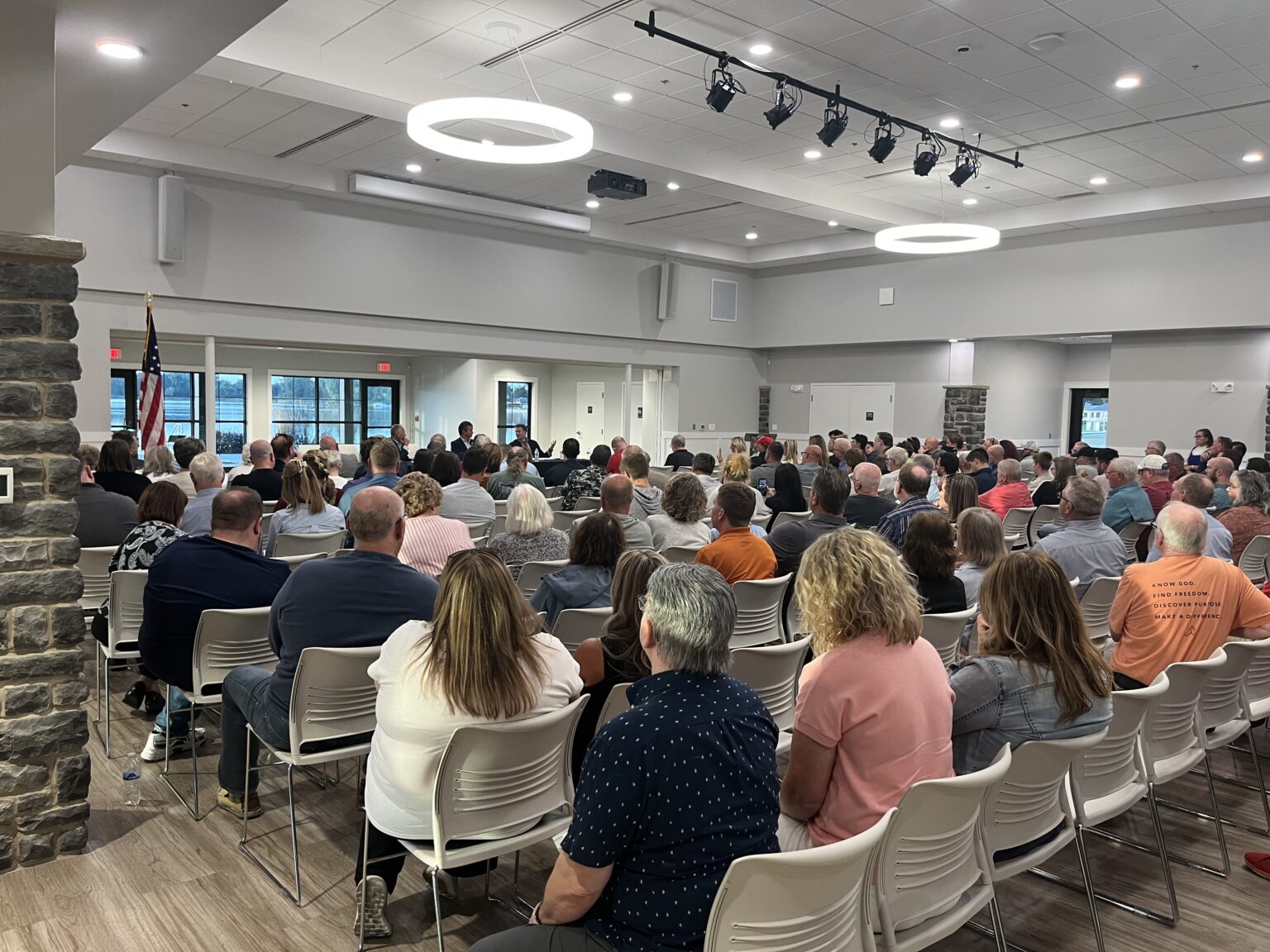
WARSAW, Ind. — About 300 Hoosiers showed up Tuesday night in Warsaw to hear a pitch headlined by three high-ranking legislators about ending “property taxes on the home you live in.”
Another dozen lawmakers also attended, and the room also had local government officials worried about revenue cuts and homeowners worried about keeping their homes.
A flyer for the event started circulating in August but those involved remained mum, until now.
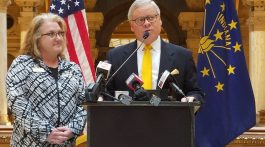
Sen. Ryan Mishler, R-Mishawaka, started by explaining that proposals to completely eliminate property taxes simply aren’t realistic because of the $54 billion in local debt backed statewide by the revenue. He chairs the appropriations committee in the Indiana Senate and is a fiscal leader in the chamber.
Instead, Mishler introduced a solution he said already exists: local governments can increase their local income tax rate now and use that to give owner-occupied homes a full 100% credit on property taxes, phased in over a five-year period.
Mishler said all but 14 counties have capacity now to cover that full amount and those counties will reach that over time due to reforms the Legislature passed in 2025, also known as Senate Enrolled Act 1.
That new law means local units will see their property taxes grow at a smaller rate and many local officials and residents are concerned about cuts to services.
Mishler gave the example of Kosciusko County needing to cover $44 million in homestead property taxes.
“You still get a property tax bill because, again, remember you can’t eliminate it because of the bonds,” he said. “But if you have a 100% credit, the bill is zero.”
The only caveat would be if a community approved a referendum for additional property taxes for a school district or other entity.
Mishler said a credit avoids the shifting of the taxes to other classes of property, such as agriculture or business.
“This really gives the locals the ability to make that decision. You know, it’s their money. It’s their decision to make, and it’s already there. So, we don’t really do anything legislatively to allow them to raise bills,” he said. “So that’s it. The key thing here is to simplify. It would take it down to zero.”
Property taxes on owner-occupied homes amounted to nearly $4.1 billion, or 38%, of the $10.6 billion in statewide property taxes billed during 2025, according to a Legislative Services Agency report.
The trio of legislators took questions from the crowd, which included several people pushing back on the idea and others saying they aren’t doing enough.
“When the state has excess revenue why aren’t you kicking some of that revenue back to the counties?” asked Mike Felker. “It’s public money.”
Another person said, “you’re telling us locally take care of yourselves” and argued that a large part of local property tax use is for public safety.
Sen. Chris Garten, R-Charlestown, responded “if I’m a taxpayer I think anyone here who is a local elected official should have to justify why you need more money out of my pocket. That’s the case you make to your taxpayers.”
Garten is set to become the next Senate president pro tem after the November election.
Mishler ended the event by noting that he personally would likely pay more in income taxes than he would save on property taxes because he has downsized his home.
“All I’m doing is putting together something to answer those people who have reached out — something that can actually work … it’s good policy for everyone as a whole,” he said.
Another proposal from a Republican legislator would eliminate all property taxes and replace that revenue by extending the state’s 7% sales tax to include a vast array of currently untaxed services such as haircuts, construction labor costs and lawyer fees.
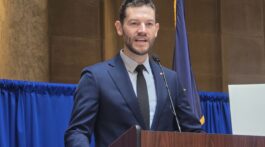
Rep. Craig Snow, R-Winona Lake, said lawmakers in 2025 began moving property taxes from a levy-based system to a rate-based system. And he hopes another step can be taken in the 2027 session. He is vice chair of the House Ways and Means Committee, which handles tax code legislation.
“We don’t have it all figured out, but we did take the right step to move forward in that fashion,” Snow said. “It’s going to take time to get us there. We’re going to land the plane at some point, but we’re looking at three or four years.”