








by Abdul-Hakim Shabazz, Esq.
Politics makes strange bedfellows, but this pairing belongs in a museum. Donald Trump and Bernie Sanders — a Republican president and a card-carrying democratic socialist who agree on approximately nothing, up to and including what day it is — have stumbled onto the same bright idea about artificial intelligence: Washington ought to own a piece of it.
Trump confirmed it this month aboard Air Force One, musing that the government might grab equity in the big AI companies so that “the American public essentially becomes a partner.” Sanders, never out-flanked on the left, wants to go bigger — a 50% public stake in the largest AI firms, board seats included. OpenAI floated a “Public Wealth Fund” to someday mail every citizen a check from AI’s winnings.
Call it the new bipartisan consensus: if you can’t beat ’em, buy ’em.
I’ll give the idea its due: there’s a real argument here, actually two.
First, fairness. Taxpayers are already greasing this boom — chip subsidies, research dollars, the grid and permitting favors that turn a press release into a data center. If we’re footing the bill, we ought to see something north of a ribbon-cutting. Exhibit A: the Intel stake, converted from CHIPS Act money and now sold as a “direct windfall for American taxpayers” after the shares quadrupled.
Second, politics — the sneaky one. Americans don’t trust AI — most figure it’ll do more harm than good — and that suspicion is hardening into the local resistance that strangles data centers at the zoning board. So the plan is to make the skeptics into shareholders. Hand the villagers a dividend and maybe they set down the torches.
Which brings me to a timeless bit of wisdom: the best way to convert a socialist is to make him a capitalist. Hand even Indianapolis’ own Jesse Brown a dividend check and I suspect the revolution could find room on its calendar for a quarterly earnings call. Solidarity is forever; portfolios compound.
Clever, all of it. And it should still give a conservative hives.
Here’s the catch my old civics teacher would’ve flagged before the bell rang: you can’t referee a game you’ve got money on. Once Uncle Sam owns a slice of OpenAI, what happens when a regulator wants to slow a dicey launch, or Congress floats privacy rules these companies can’t live with? Every one of those calls now lands on a government rooting for its own stock price — regulator and regulated, business partners, with the house promising to police itself. We’ve seen this movie; the taxpayer isn’t the one who walks out richer.
Sanders at least says the quiet part out loud: that’s not a dividend, it’s nationalization with a name tag. Trump’s “voluntary” version just takes the same road with better catering.
Which hits close to home: Indiana is living both halves at once.
Start with what’s coming. Senate Enrolled Act 1, the property-tax relief Gov. Braun signed last year, is about to carve a hole in local budgets. The Legislative Services Agency pegs the hit to public schools alone at nearly three-quarters of a billion dollars over three years, worst in 2028. Counties, cities, libraries — everybody funded by property taxes does more with less. The relief is real. So is the morning after.
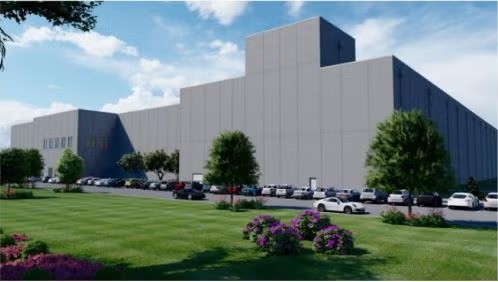
Now the other half. Since 2019 we’ve waved data centers past the 7% sales tax on equipment and energy — up to 50 years on the marquee projects. State analysts tally tens of billions across three dozen-plus projects floated or already humming. Hoosiers are bankrolling the buildout as we speak. And the Legislature couldn’t summon the nerve to make these outfits hand even one lousy percent back to the locals — it opted to “study” it instead.
And the grievances aren’t NIMBY theater. A single hyperscale campus can drink millions of gallons of water a day; the New Carlisle developments were cleared for as much as 24 million from the local aquifer. Backup power runs on diesel — Google’s Fort Wayne site alone is slated for three dozen generators, the kind that throw off the particulates and nitrogen oxides tied to asthma and heart disease. Add the round-the-clock hum and the paved-under farmland, and the packed “no” votes make sense.
Put the two halves together: the state squeezes local budgets with one hand and gives away the richest new tax base in a generation with the other.
Here’s the alternative to buying OpenAI, and it costs the Treasury nothing: stop buying off communities with a one-time check. Ask Franklin Township how that goes. When Google came courting with a billion-dollar campus and a sweetener for the local schools — schools that, thanks to SB 1, suddenly needed it — the southeast side ran the company off before the council could vote. A lump sum reads like hush money, and people know it.
Try revenue sharing instead. As long as the data center is humming, the community gets a cut — a slice that grows when the company does, not a single envelope at the zoning hearing. Give the neighbors a reason to want the thing to succeed and you’ve turned opponents into stakeholders without nationalizing a soul.
And that steady cut is exactly the replacement revenue SB 1 left local government hunting for. Done wrong, a data center is a tax-exempt energy hog the neighbors resent. Done right, it’s the line item that keeps the library open and the buses running after Indianapolis stopped writing the check.
Then put the exit in writing. When the servers go dark and the company chases cheaper power elsewhere, it — not the township — pays to haul off the steel, tear down the shell, and own the mess it made: the diesel tanks, the drawn-down water, the leaching ground. Call it the corporate equivalent of a security deposit, the thing every renter in Indiana already understands.
Pay the locals while you’re here. Help backfill what the state took. Clean up when you leave. That’s a deal a taxpayer can actually follow.
Buying them is just the lazy way to avoid asking.
Abdul-Hakim Shabazz is the editor and publisher of Indy Politics. He is also an attorney licensed in Indiana and Illinois.