








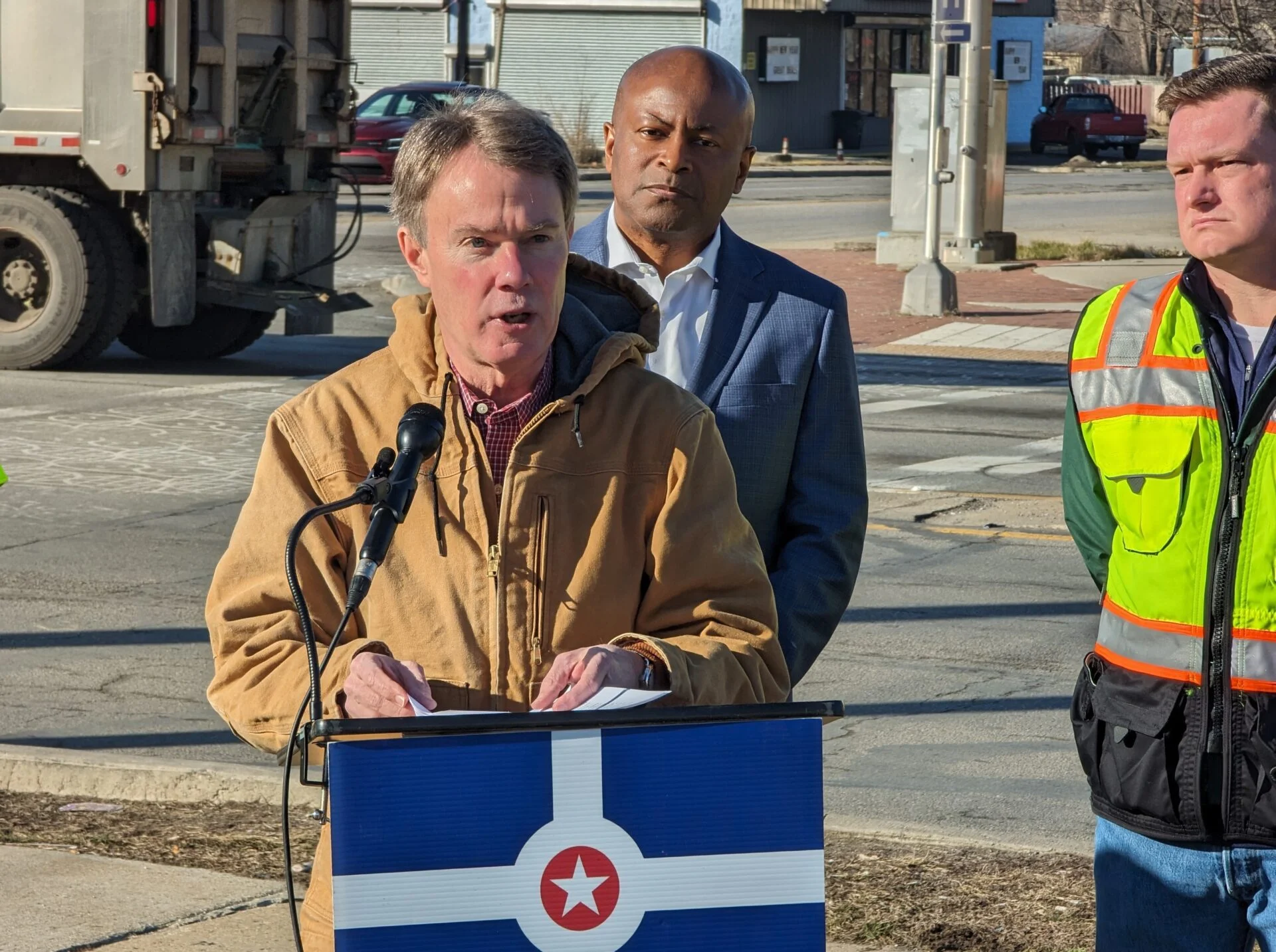
Mayor Joe Hogsett is opposing a road-funding proposal his own City-County Council will introduce Monday, breaking with council leaders a day before the plan was formally filed.
In a statement issued Thursday, Hogsett said two principles have guided his approach to infrastructure: that residents deserve sustained investment in their roads, and that they should not be asked to pay more in taxes. He said his administration has nearly tripled road funding over the past decade and secured an additional $50 million in state funding while developing a plan to meet the required 2027 local match “without raising taxes.”
The mayor said families are already stretched by rising costs at the gas pump, in utility bills, and at the grocery store, and that the council’s plan would fall hardest on those least able to afford it. He called the proposal the wrong solution but did not detail, in the statement, how his own plan would cover the escalating match in later years.
The proposal Hogsett is opposing would restructure Marion County’s vehicle excise surtax and wheel tax into flat annual fees paid at registration. Owners of passenger cars, motorcycles, and trucks under 11,000 pounds would pay a flat $100 a year, replacing the current charge based on 10% of the state excise tax with a $7.50 minimum. Heavier vehicles subject to the wheel tax would pay a flat $240. No vehicle would pay both fees, and the revenue could be spent only on building and repairing local roads.
Council leaders estimate the average passenger-vehicle owner would pay roughly $80 more a year — about $6.67 a month.
The plan stems from HEA 1461, passed by the General Assembly in 2025 to let Indianapolis draw up to $50 million in additional annual state road funding if it provides a local match. Lawmakers amended the law in 2026 to require the match come from new revenue and to escalate it over time, from $50 million in 2027 to $100 million annually beginning in 2031. The city must certify each year that it can meet the match; if it cannot, the state transfer does not occur.
Council leaders project the changes would generate about $70.95 million in new transportation revenue in 2027 and roughly $355.75 million over five years, supporting an estimated $855.75 million in infrastructure investment between 2027 and 2031.
Council President Maggie Lewis has framed the measure as a shift toward long-term infrastructure planning rather than reactive repairs. Supporters also point to SEA 1, which is expected to slow property-tax revenue growth and increase pressure on cities to find alternative funding for roads and basic services.
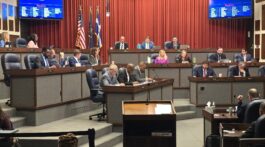
Hogsett’s opposition may not be enough to stop the plan. The mayor can veto a council ordinance, but the council can override a veto with a two-thirds vote — 17 of its 25 seats. Democrats hold 19, meaning the majority could override a Hogsett veto without a single Republican vote, so long as no more than two of its own members break ranks. Republicans, who hold the other six seats, have criticized the plan, arguing the city should reduce spending and reprioritize its budget rather than raise fees.
The proposal moves to committee hearings in June, with public comment and two planned town hall meetings, before a final council vote expected July 6.