







by Abdul-Hakim Shabazz, Esq.
With everybody throwing around “socialism” and “communism” these days like confetti at a parade, here’s a Labor Day fact worth knowing: the workers’ holiday the Soviets rolled tanks through Red Square for was an American product, and the one you’re grilling on this week exists specifically so it wouldn’t be.
May 1 became International Workers’ Day because of the Haymarket affair — a labor rally in Chicago in 1886 where somebody threw a bomb at the police. The Second International adopted the date in 1889, and every communist government from Moscow to Havana ran with it. Which is a little rich, if you think about it. The Politburo spent seventy years commemorating a riot on the West Side of my hometown.
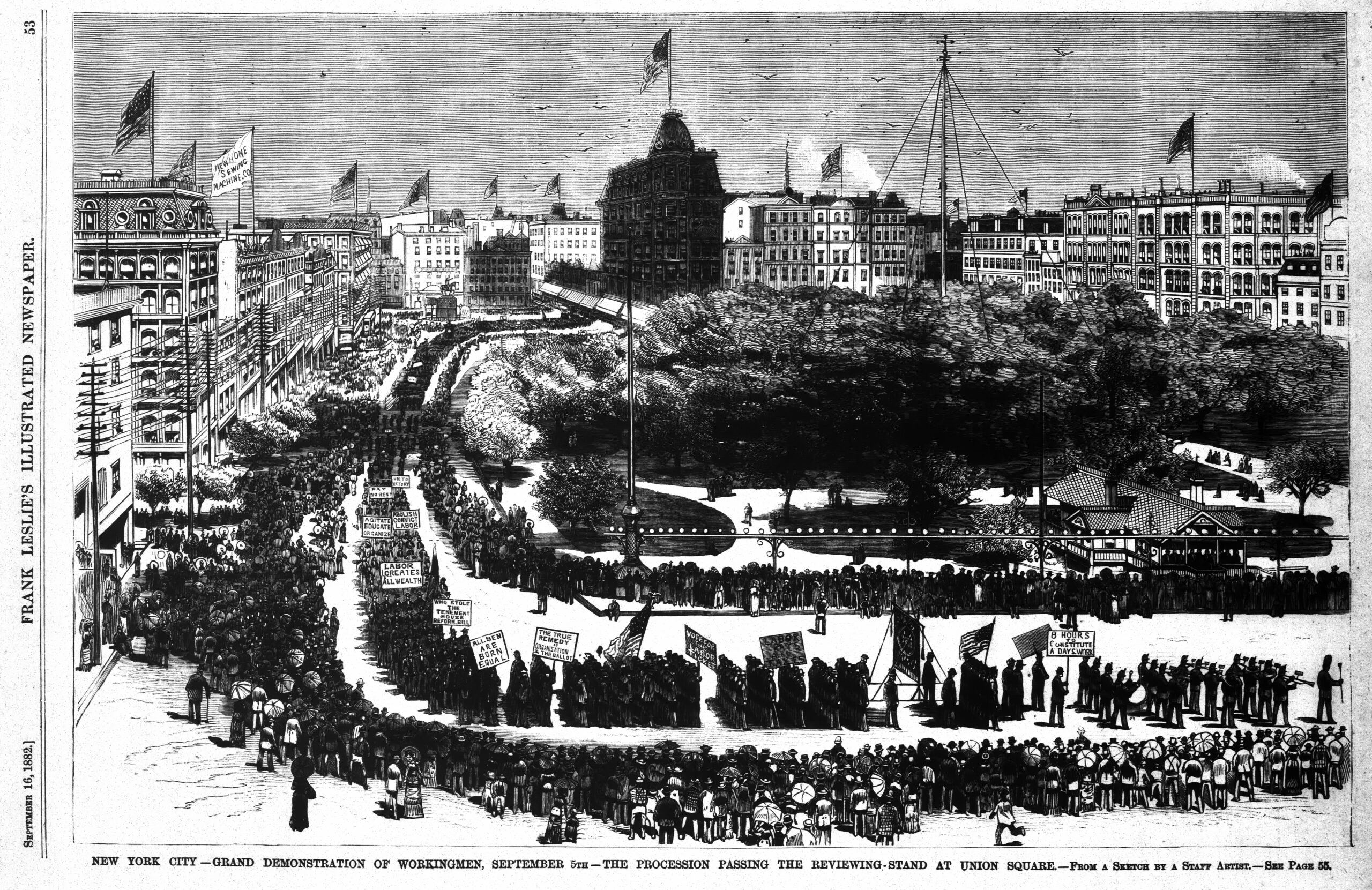
America wanted no part of that. Labor groups had already been marching in September, and after the Pullman Strike, President Grover Cleveland signed Labor Day into law on June 28, 1894 — six days after he’d sent federal troops into Chicago. September was picked precisely because it carried no May Day baggage. Samuel Gompers of the AFL wanted the distance too. So the American labor holiday was, from the jump, a deliberate rejection of the radical version. Keep that in your pocket the next time somebody calls a hot dog un-American.
Now, the state of play. The Bureau of Labor Statistics counted 14.7 million union members in 2025, about 400,000 more than the year before, with the rate ticking from 9.9 percent to 10.0 percent. In a movement shrinking since Reagan’s first term, that counts as a parade. But read the fine print: essentially all of the gain came from government. Public-sector membership rose to 32.9 percent while the private sector sat exactly where it was, at 5.9 percent. Indiana went the other way entirely, from 9.0 percent down to 8.3 percent.
I’ve never been a union member and I’m not starting. I’ve spent most of my working life as a one-man band. I set my own rates, I eat what I kill, and when I have a grievance with management I take it up with the guy in the mirror, who usually rules against me. That’s a character flaw, not a philosophy.
But I understand why other people join. Strip away the bunting and a private-sector union is a contract. A group of people decide they have more leverage together than apart, they pool it, and they negotiate with an employer who has every reason to hold the line, because it’s his money. Conservatives are supposed to like contracts.
Public-sector unions are where I get off the bus. I used to be a government employee, so let me say the obvious part first: public workers should be paid fairly. But nobody at that table is spending his own money. The union helps elect the officials sitting across from it, those officials hand out raises and pensions drawn from people who weren’t in the room, and everyone goes home happy except the taxpayer, who learns about it later in a levy. Franklin Roosevelt, not exactly a union-buster, told the federal employees’ union in 1937 that collective bargaining “cannot be transplanted into the public service,” because the employer is everybody.
Indiana ran that experiment. Mitch Daniels rescinded bargaining for about 25,000 state employees on his first day in 2005. Membership wasn’t outlawed, just made optional. Within six years, dues-paying state workers fell from more than 16,000 to fewer than 1,500.
That’s my whole test. Make it voluntary and let the product sell itself. We went right-to-work in 1957, repealed it in 1965, and passed it again in 2012, because stick around this town long enough and you’ll see everything two or three times.
Either way, most of us get Monday off, and nobody had to throw a bomb to get it.
Abdul-Hakim Shabazz is the editor and publisher of IndyPolitics.org and an attorney licensed in Indiana and Illinois. He is also a former government employee.