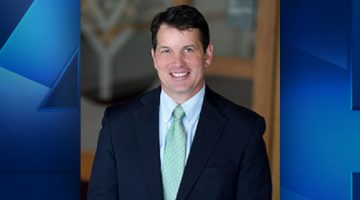











Former Republican state senator Jim Merritt, who spent three decades in the Indiana Senate and 14 years as chairman of the Indiana Utility Regulatory Commission (IURC), says Indiana’s energy future is “bright” but increasingly shaped by politics, data centers, and a renewed openness to both coal and nuclear power.
In a wide-ranging conversation on utilities and energy policy, Merritt defended the traditional regulated utility model, arguing that guaranteeing a fair rate of return for utilities is essential if Indiana wants reliable service and continued private investment.
“If you didn’t have a rate of return, no one would invest in it,” Merritt said. “The question is what is fair for the utility and what is fair for the ratepayer.”
He warned that efforts to deregulate electricity markets—like those seen in states such as Ohio—have not delivered clear benefits to consumers. At the same time, he expressed skepticism that government-run utilities, common in some states, would perform better than Indiana’s current system of privately owned, regulated utilities.
Merritt also pointed to growing federal environmental mandates and storm-related reliability obligations, such as vegetation management, as major cost drivers that complicate rate cases and bills.
Politics and regulation
Merritt said politics is now inextricably linked with virtually every major rate case.
He cited the controversy surrounding former state senator Andy Zay, who was removed from the IURC after a high-profile dispute over a rate case involving AES. Zay supported the utility’s request while Gov. Eric Holcomb had publicly campaigned on lowering rates.
Merritt said it was not entirely clear what “for cause” meant in Zay’s dismissal but acknowledged the governor had indicated Zay “did not vote correctly.”
“What happened to him was embarrassing and humiliating,” Merritt said, while stressing that he had no inside information beyond public reporting. “When you start electing or politically pressuring commissioners, you’re inviting raw politics into the process.”
Merritt noted that Indiana’s regulatory framework already creates what he called a “wrestling match” among the IURC, the Office of Utility Consumer Counselor, and advocacy groups over what constitutes a fair return that doesn’t “strap the ratepayer.”
Data centers: the new cell towers
Much of the discussion focused on the rapid growth of data centers in Indiana and their impact on local communities, the grid, and rates.
Merritt said large “hyperscale” operations—such as those pursued by tech giants like Amazon, Google, and Meta—have made strategic missteps by failing to do basic political and community outreach.
“They just didn’t lay the groundwork,” he said, arguing that data center developers need to show up at Rotary, Lions Club, and school board meetings, and integrate themselves into local civic life. “If data centers are going to succeed, they’ve got to dig in and contribute to the community.”
He pointed to a proposed data center near the Indianapolis airport in Decatur Township, which he said is investing heavily in local grid upgrades and community benefits like support for education, as an example of how to “do it right.”
Merritt compared today’s backlash against data centers to the public fights over cell phone towers and even early cable deployments decades ago, controversies that eventually faded as the technologies became commonplace.
Despite local moratoriums and pushback, Merritt predicted data centers will continue to expand and could actually help lower residential rates over time.
“Once the data centers get online, I think rates for the residential set are going to go down,” he said, arguing that spreading fixed system costs over more usage and requiring data centers to secure their own power or special arrangements will ultimately benefit households.
Coal, gas, and nuclear
On fuel mix, Merritt said coal still has a long runway in Indiana, noting the state has an estimated 200-year supply.
“As long as we need coal and natural gas hasn’t fully taken over, coal has a bright future,” he said. But he framed natural gas as a “bridge” fuel toward a more nuclear-heavy system.
Currently, about 19–20% of Indiana’s power comes from the Cook Nuclear Plant in Michigan, he said, a fact he believes most Hoosiers don’t realize. He is pushing for small modular reactors (SMRs), including a model reactor at Crane Naval Base in southern Indiana, which he argues could demonstrate that nuclear is safe, reliable, and carbon-free.
Merritt said the key to nuclear’s future in Indiana is education and rebranding, moving public perception beyond images of Chernobyl, Three Mile Island, and pop culture portrayals like “Silkwood.”
“We’re taking the blindfold off,” he said. “We’re going to communicate, legislate, and advocate for nuclear power in the coming years.”
With expanding industrial loads, new data centers, and a governor and energy leadership team he called “staunch” supporters of an “all of the above” strategy, Merritt concluded that Indiana’s energy future is bright—“bright enough,” he suggested, that Hoosiers may indeed “need to wear shades.”