







The first increase in Marion County’s vehicle taxes since 1992 now rests in the hands of the one man who has opposed it all summer.
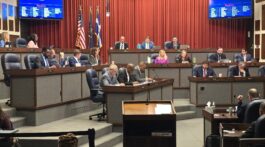
The City-County Council voted 14-10 Monday night to approve Proposal 192, sending the measure to Mayor Joe Hogsett, who has 10 days to sign or veto it. The margin matters: overriding a veto requires 17 votes, and supporters fell three short.
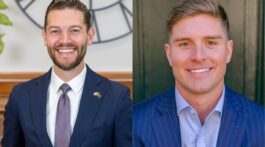
The math is slightly better than it looks for backers. Councilor Dan Boots was absent Monday, and the proposal’s author, Assistant Majority Leader Andy Nielson, said Boots supports the plan — putting the coalition at 15, still two shy of override strength. Nielson insisted the additional votes “are available” if it comes to that, but made clear the preferred outcome is the mayor’s signature.
Asked whether Hogsett might veto the measure, Nielson demurred: “That’s a question for the 25th floor.” He publicly urged the mayor to approve what he called a realistic, fully fleshed-out proposal that meets statutory deadlines, and to “think critically about the city’s long-term infrastructure needs.”
Council Minority Leader Brian Mowery is rooting for the opposite outcome.
“I actually look forward to seeing how the mayor does this,” the Republican said after the vote. “I hope we’re on the same side and he does veto it, so we can kill this.”
Under the proposal, the typical surtax payer — who now pays about $20 per vehicle — would see an average increase of roughly $80, and every registered vehicle in Marion County would pay more next year. Mowery pegged the total haul at roughly $800 million over five years. Supporters say the new revenue is required to unlock a $50 million state match for road funding and to chip away at an infrastructure backlog estimated between $635 million and $1 billion.
Nielson said the plan was more than a year in the making, with months spent modeling registration data and tax structures — work complicated when the General Assembly rewrote the rules through Senate Enrolled Act 179. “By the time we’re about to hit lift-off on maybe a plan, they changed the rules again,” he said.
He also rejected the argument that the city could find $50 million through cuts or natural revenue growth, citing state law changes and contractual obligations. “There’s just not all this excess in the budget that’s just sitting around,” Nielson said, challenging critics to name which police stations, firehouses or parks they would cut. As for affordability, he argued residents already pay for bad roads through car repairs and safety risks: “Residents are paying for this one way or another.”
Mowery countered that the council never seriously examined alternatives. “We went straight to a tax increase,” he said, arguing that his conversations with state lawmakers suggest the match requires new money dedicated to roads — not necessarily new taxes. He warned the jump will hammer residents on fixed incomes, some of whom testified they cannot absorb an increase from roughly $7.50 to $100. “What are we going to tell these people that can’t afford this increase?” He floated future legislative fixes, including tying the tax to vehicle value, and said he would be open to a voter referendum.
The tax vote capped a night Mowery called a “mixed bag.” The council rejected an expansion of the enhanced curfew to 17-year-olds, 9-15, and voted down a resolution directing changes at the Office of Public Health and Safety, 6-18, despite what Mowery called a “black eye of an audit.”
Hogsett’s office has repeatedly declined to say whether the mayor will use his veto pen. He now has 10 days to answer the question.