











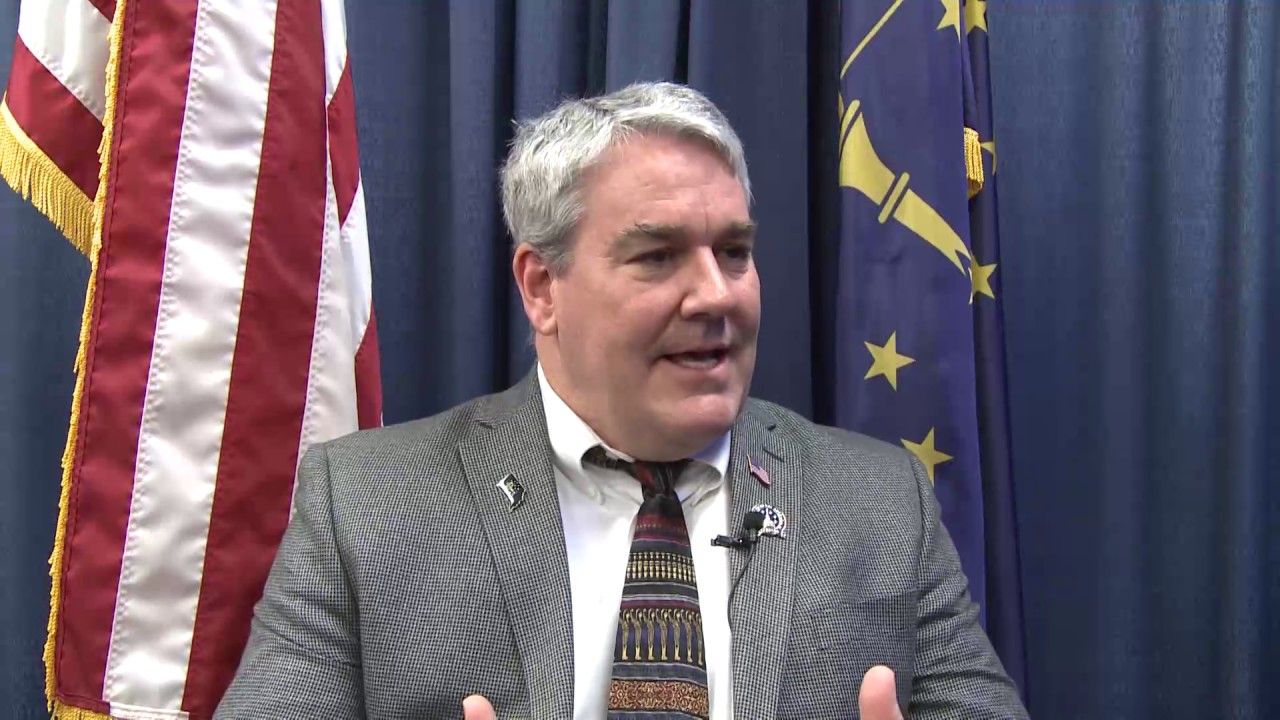
The Braun administration is asking a Marion County judge to reject former utility regulator Andy Zay’s bid to get his seat back, arguing that Indiana courts have spent more than a century refusing to use injunctions to remove one officeholder and install another.
The filing landed just before 11 p.m. Sunday, hours ahead of a status conference in the case.
Zay was removed from the Indiana Utility Regulatory Commission on August 3, six weeks after he joined a 3-1 majority approving a $71 million rate increase for AES Indiana. He sued on August 10, asking for a temporary restraining order, a declaratory judgment, and a quo warranto ruling against his replacement, former Indianapolis City-County Councilor Joshua Bain.
The state’s lead argument is not about whether Zay did anything wrong. It’s that a court cannot give him this particular remedy. Defendants cite a line of Indiana Supreme Court cases running back to an 1898 decision holding that public business should not be disrupted by claimants whose right to the office is still unsettled. Courts of equity, a 1935 opinion says, have no jurisdiction to oust one officer and install another by injunction.
The state then argues, in the alternative, that Governor Mike Braun had cause anyway.
Three grounds are laid out. First, that Zay used campaign funds to buy ties and scarves for IURC employees. Second, that he improperly awarded bonuses to commission staff, both by skipping state procedure on who received them and by exceeding allowable amounts. Third, that he failed to file a required financial disclosure within 30 days of leaving the commission’s chairmanship, a filing required of anyone serving as an appointing authority.
The gift allegation is documented most heavily. A campaign finance report attached to the filing shows a $3,090.11 expenditure to Candor Threads of Lincolnwood, Illinois, dated February 1 — after Zay had resigned his Senate seat and taken the commission job. An IURC employee, Amy Tokash, submitted a sworn affidavit stating that Zay told a quarterly staff meeting on May 20 that he had paid for the gifts from campaign funds. The ties and scarves carried a woven label reading “Designed exclusively for Andy Zay by Candor Threads.”
Former Attorney General Steve Carter, now deputy counsel for appointments in Braun’s office, filed a declaration describing what happened next. Carter says he learned of the purchase on July 26, then described the expenditure to the Indiana Election Division without naming the official or agency involved, and was told it did not appear legitimate.
Carter says the August 3 meeting was meant to give Zay notice and a chance to respond, and that he had drafted three documents in advance — a removal letter, a resignation letter, and an acknowledgment of resignation — depending on how the conversation went. Zay, Carter says, refused to engage. He was removed that day.
That refusal, the state argues, is why Zay cannot now claim he got no hearing. He is entitled to a post-deprivation hearing, the filing says, and he is getting one — this lawsuit.
The state also objects to Zay’s expedited discovery requests as a fishing expedition, saying they would sweep in tens of thousands of emails. Attorneys have proposed a narrower set of interrogatories and documents, with responses due at noon Thursday.
If the judge does grant something, the state proposes a limited order: through August 31, Bain would take no case assignments at the commission, and Braun would appoint no one else to the seat.
Procedurally, the case is moving fast. Judge Christina Klineman has consolidated the restraining order request and the preliminary injunction into a single hearing set for August 27 and 28. Pre-hearing briefs are due August 26.
The timing matters. The commission’s reconsideration of the AES rate case remains live until September 8.
Zay is represented by Betz + Blevins. The state’s defendants are represented by Kroger, Gardis & Regas, outside counsel rather than the attorney general’s office.