










by Mike ter Maat
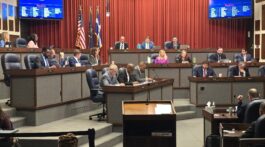
I was at the Indiana Republican convention in Fort Wayne when delegates selected Max Engling as their nominee for Secretary of State.
What happened there deserves more attention than it has received. Republican delegates rejected their own incumbent, Diego Morales, and chose somebody else. Engling won on the second ballot.
That is democracy in action.
It reminded me of Indiana’s 2024 Republican convention, when delegates rejected gubernatorial nominee Mike Braun’s preferred candidate for lieutenant governor and nominated Micah Beckwith instead. I happen to think national Republicans should take a lesson from Indiana and give convention delegates the same meaningful authority when we select our vice-presidential nominee in Houston in 2028.
Conventions become more valuable – and more interesting – when delegates have something to do besides eat and applaud.
Now Engling faces an unusual four-way general election against Democrat Beau Bayh, Libertarian Lauri Shillings and former Republican Indianapolis mayor Greg Ballard, running under the Lincoln Party banner. I have met both Engling and Shillings and consider them excellent candidates. I am a Republican and support my fellow Republican Engling in this race.
But the structure of this election raises a larger issue for Republicans. Shillings and Ballard have political freedom Engling doesn’t necessarily enjoy. Neither has to maintain relationships inside a Republican coalition strongly supportive of President Trump. They can disagree with the Administration without worrying about offending Republican activists or party leaders.
That distinction appeared during the candidates’ first debate. Bayh, Ballard and Shillings supported an audit of the Secretary of State’s office following the controversies of Morales’s tenure. Engling did not pledge one.
Big mistake.
Republicans should be the first people demanding transparency from Republican officeholders. We don’t strengthen institutions by applying one standard to Democrats and another to our own side.
The same principle applies nationally. Republicans don’t need to run against President Trump. But neither should Republican candidates manufacture agreement with the Administration where they genuinely disagree. Constitutional fidelity is not disloyalty. Fiscal conservatism is not disloyalty. Free markets, federalism, congressional war powers and skepticism of centralized executive authority do not suddenly become Democratic ideas when a Republican occupies the White House.
Indiana’s four-way Secretary of State race makes that tension unusually visible in this plurality election. Because there is no runoff requiring the winner to receive 50 percent, Engling cannot plan to win by allowing Bayh to keep 40 percent of the Indiana vote. Engling must contend for votes outside of the Republican Party to win.
This will require Engling to run on tried-and-true conservative principles long cherished by Hoosiers whether they can be found on the GOP website this year or not. That should make this a fascinating race rather than another predictable Indiana statewide election.
It should also remind Republicans of something Indiana’s own conventions have demonstrated twice in three years: a political party is healthier when its members are participants rather than spectators.
Indiana delegates exercised independent judgment when they chose Beckwith. They exercised it again when they rejected an incumbent and nominated Engling. Republicans should welcome that independence even when it produces an outcome party leaders didn’t plan.
And in Houston in 2028, we should try it nationally.