








by Abdul-Hakim Shabazz, Esq.
Every law student dreads the issue-spotter: a fact pattern that looks simple and isn’t. So this week, class, take out your blue books. Our exam concerns State Rep. J.D. Prescott’s plan to eliminate property taxes, returning to the Statehouse in 2027.
Question Presented: Whether replacing every property tax in Indiana with a 7 percent tax on services will fund schools and local government “the same as today,” as advertised, or whether the promise fails as a matter of arithmetic.
Facts: Clark owns the family farmhouse outside Smallville, a rural county with modest levies and plenty of road miles. Lois rents an apartment in downtown Metropolis, a big city with big levies, a tax-increment redevelopment district, and a school corporation that needs a new building. Bruce owns a mansion in adjacent Gotham, assessed in the eight figures. Barry owns a modest bungalow in Central City. LexCorp owns the tallest office tower in the state.
Under the plan — House Bill 1288, whose fiscal note is our record on appeal — property taxes vanish. In their place: a 7 percent sales tax on services. Haircuts, landscaping, legal work, accounting, advertising. Healthcare and education are exempt. The Legislative Services Agency projects $13.3 billion to $15.4 billion in new revenue against roughly $11.6 billion in lost levies. Collections flow to a state fund, 10 percent goes into reserve, and the rest is distributed by formula: 45 percent to schools based on enrollment, with the civil-government share split 75 percent by population and 25 percent by road miles.
Analysis: Spot the issues.
Issue one: distribution. Nothing in the formula entitles Metropolis to what it levies today. The money follows population, enrollment, and pavement — not need, cost, or current budgets. Smallville, blessed with gravel roads to nowhere, comes out ahead; Metropolis, with its police pensions and aging sewers, does not. “Fully funded, same as today” can be true statewide and false for nearly every unit. Ask any 1L about aggregation problems.
Issue two: the cushion. After the 10 percent reserve and the charter-school and Choice-scholarship carve-outs — several hundred million that property taxes never funded — the low-end distributable amount lands almost exactly on the hole it must fill. The surplus is spoken for before the first check clears.
Issue three: TIF. Metropolis’s redevelopment district keeps only enough to pay existing debt. Statewide, that’s a net loss north of $600 million and the end of pay-as-you-go redevelopment.
Issue four: the debt freeze. No new local borrowing after May 2026. Lois’s school corporation still needs that building. The bill is silent on how anyone builds anything, ever again.
Issue five: the “fee.” Existing school referenda convert into a mandatory charge billed to property owners based on assessed value. Class, what do we call a mandatory charge based on the assessed value of your property? Correct. It’s a property tax wearing Clark’s glasses.
Issue six: pyramiding. Raising $13.3 billion at 7 percent requires taxing roughly $190 billion in services — far more than Hoosier households actually buy. The balance comes from taxing business inputs. The Daily Planet pays 7 percent on its lawyers, accountants, and ad buys, then passes it to subscribers. Florida tried this in 1987; repeal took six months. Michigan’s 2007 version died in about a day.
Issue seven: incidence. Wayne Manor and LexCorp’s tower pay zero property tax, forever — the biggest windfall goes to whoever owns the most, and nobody owns more than Bruce. Barry saves the levy on his bungalow, then hands much of it back in 7 percent on daycare, haircuts, and car repairs; not even the fastest man in Central City outruns a consumption tax. Lois, who owns nothing, saves nothing and pays on everything. And when the next recession hits, service spending craters just as the steadiest tax in public finance is gone — while local officials, stripped of rate authority, wait by the mailbox for the state’s check.
Issue eight: geography. Here the exam leaves the comics and comes home. Property taxes are the last truly local tax — raised on the parcel, spent at the courthouse. Tiny Posey County funds its schools and its refinery-grade fire protection off one of the highest industrial assessed values per capita in Indiana. Under this plan, that refinery and river port pay nothing forever, and Posey gets the same population-and-road-miles check as everybody else. Marion and Hamilton, where the state’s lawyers, accountants, and ad agencies actually sell their services, raise the lion’s share of the new tax and watch it pool in Indianapolis for redistribution. Hendricks and Hancock cash favorable formula checks while the TIF cap quietly kills the logistics-corridor playbook that built them. Sullivan, which would raise almost nothing, comes out ahead — until it notices the formula is just a statute, rewritable every session by whoever holds the gavel. This is the question that finally stumps Mr. Terrific, the smartest man alive, the guy whose jacket literally reads “Fair Play”: once every county budget is a line in someone else’s formula, where exactly does the fairness live?
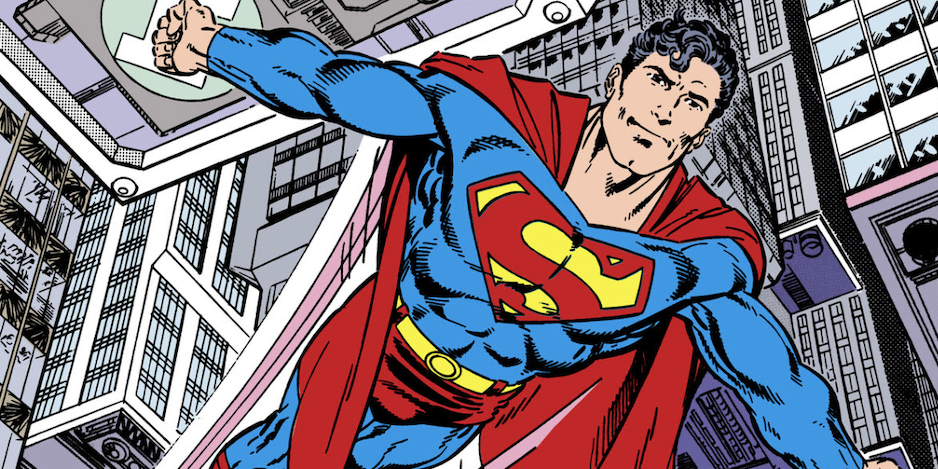
Conclusion: The plan survives only at 30,000 feet, where the statewide total covers the statewide hole and no one looks down. On the ground, it redistributes by formula, freezes construction, and hands Bruce the biggest tax cut in Gotham’s history. You could even cross universes for a second opinion — hand it to Tony Stark, Bruce Banner, Reed Richards, and Doctor Doom — and Marvel’s entire brain trust would send it back marked “insufficient facts; the numbers don’t add up, they just move.” Grade: incomplete. Even Superman couldn’t save this fact pattern — though he’s the only one who could afford the flight over all those road miles.
Abdul-Hakim Shabazz is the editor and publisher of Indy Politics. In addition to being a comic book dork, he is also an attorney, licensed in Indiana and Illinois.