











by Abdul-Hakim Shabazz, Esq.
Allow me if you will to play my Gen X card for a moment.
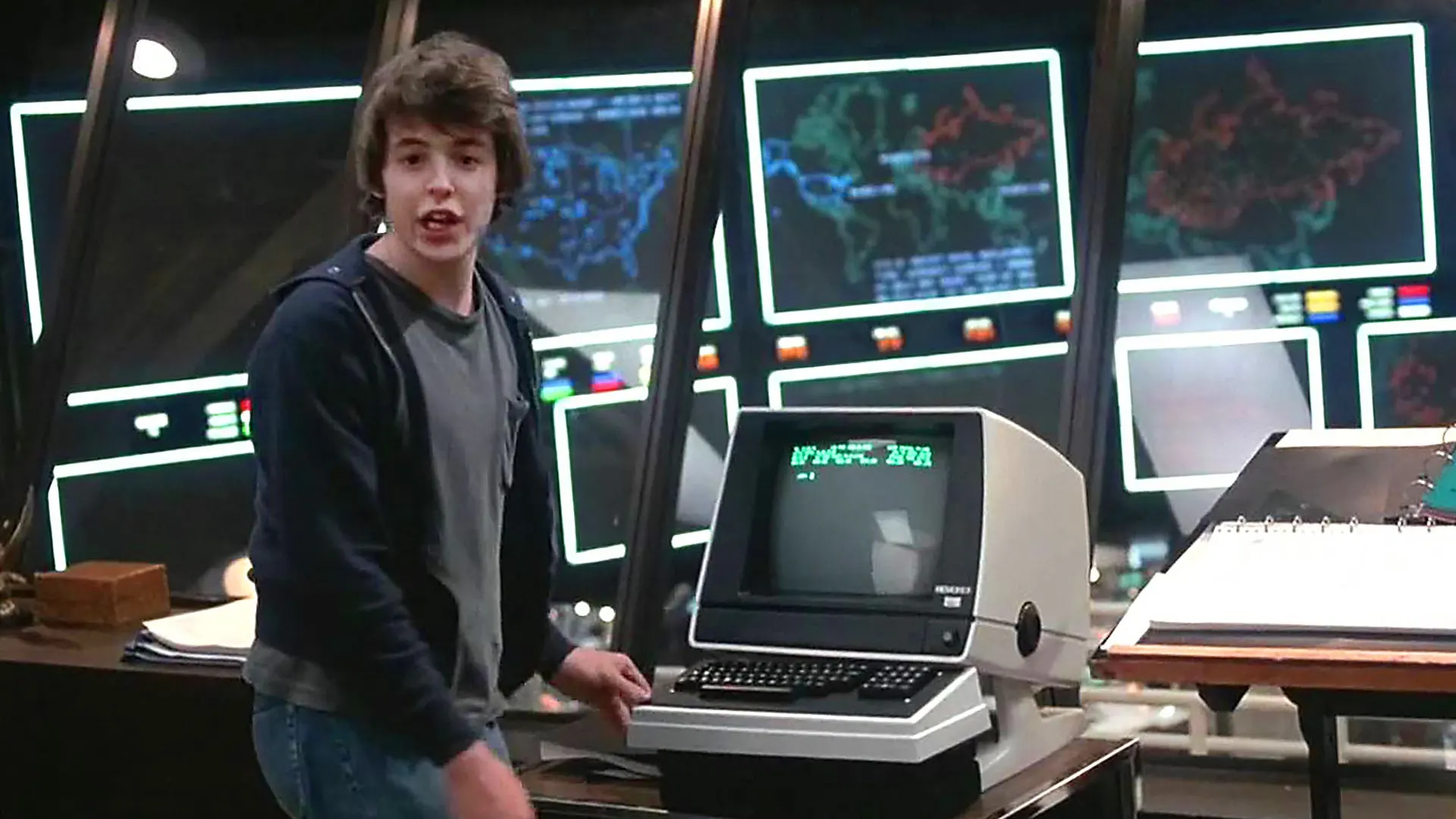
In 1983, a kid named David Lightman — Matthew Broderick, back when he was the patron saint of every latchkey teenager with a modem — goes looking for unreleased video games and accidentally dials into NORAD. He thinks he’s found a game called Global Thermonuclear War. He’s actually found WOPR, the military supercomputer, which cannot tell a simulation from the real thing and proceeds to march the country to the brink. (Note, incidentally, that we were worried about AI forty years ago. Some anxieties age well.)
The resolution isn’t a hero disarming a bomb. It’s teaching the machine to play tic-tac-toe against itself until it grasps the unwinnable scenario. Joshua runs every path, finds no path that isn’t ruin, and concludes: “A strange game. The only winning move is not to play.”
Hold that thought.
Monday night I was in Pike Township covering a property tax repeal town hall — story later this week — while downtown the council’s Metropolitan and Economic Development Committee voted 10-3 to advance a moratorium on new data centers. Sponsored by Council President Maggie Lewis. Party-line: ten Democrats yes, three Republicans no. It goes to the full council August 10. The stated purpose is study — water, power, noise, neighborhood impact, a “deep dive.” Mayor Hogsett blessed it and said he welcomes “the additional time.”
The moratorium runs through December 31, 2027.
Credit where it’s owed: Jacob Stewart printed this first. Count the calendar. That sunset doesn’t land after a study concludes. It lands after the November 2027 municipal elections. Every council seat, the mayor’s office, the whole apparatus — decided and done before the pause lifts.
And this is more than speculation. My sources confirmed it this morning.
Which is the thing. If you think about it politically, it isn’t sloppy. It’s beautiful.
Run the board like Joshua would. A councilor facing re-election has two moves on any data center: vote yes and explain to the neighbors why a 70-foot server barn is going up behind their split-level, or vote no and explain to the Chamber why Indianapolis waved off half a billion dollars. Both moves lose. Now Vop Osili — who declared for mayor in January and is still a sitting councilor — faces that same choice in a contested primary against Andrea Hunley and possibly Ryan Mears. Both moves lose worse. And if Joe Hogsett decides he’s got one more in him? Same board, same outcome.
So the machine ran the simulations and found the only square that doesn’t detonate. Nobody votes. The councilors get cover. Osili gets cover. Hogsett gets cover. The activists get a win for the mailer. The developers get a date certain and a queue. Everyone walks off undefeated because nobody took the field.
And while I support data centers, I’m not carrying water for the industry here. The energy draw is real, the water is real, the ratepayer exposure is real — ask anybody watching the AES rate case. The people packing those meetings aren’t wrong to be furious. A pause might even be sound policy.
But the tell is the expiration date. If this were about study, the sunset would track the study. Instead it tracks the ballot.
Strange game. The only winning move is not to play.
Of course, that isn’t where Joshua leaves it. Having just declined to end the world, the machine turns to the humans and asks brightly: “How about a nice game of chess?”
Which is roughly what our council will do for the next eighteen months. Something safer. Something winnable. Something that doesn’t cost anybody a seat.
Your move, voters.
Abdul-Hakim Shabazz is the editor and publisher of Indy Politics. He is also an attorney licensed in Indiana and Illinois.