











By Abdul-Hakim Shabazz, Esq.
There’s no faster way to get one of my Republican friends talking than to bring up choice and competition. They’ll quote Milton Friedman from memory. They’ll explain, slowly and with feeling, why a school voucher beats a captive ZIP-code monopoly and why a free market picks winners better than any committee of well-meaning planners ever could. Competition, they preach, is the great disciplinarian. It keeps the incumbents honest and the customer king.
Then Greg Ballard offered Hoosiers a fourth choice for Secretary of State, and some of those same free-marketeers started sounding an awful lot like a central committee.
You know the grumbling. The former two-term Indianapolis mayor — a lifelong Republican, mind you — is running as an independent under the Lincoln Party banner against Republican Max Engling, Democrat Beau Bayh and Libertarian Lauri Shillings. And the reaction from a certain wing of my own party has been less “let the market decide” and more “who authorized this?”
Here’s the uncomfortable part. A two-party system that panics at the arrival of a credible outsider is the most centrally planned thing in Indiana that doesn’t involve the BMV. My GOP friends spend election years lecturing the teachers’ unions about monopoly, then defend their own with a straight face. They tell everyone else that the answer to a bad product is more competition — right up until the competition shows up in their aisle. Protecting market share by rule instead of by winning the customer has a name, and it isn’t capitalism.
It got funnier last month. When the national champion Hoosiers went to the White House, half my party was posting from the South Lawn, gushing over IU football and Curt Cignetti — the President included. Now, I’m an Illinois man — IU football ordinarily does less than nothing for me. But credit where it’s due: it was a historic run, and I’m glad for the friends and family of mine who bleed cream and crimson. Here’s what my own party should sit with, though: Cignetti is the patron saint of the very competition they’re trying to strangle at home. His whole brand is: give us a chance, meet us on the field, even when nobody thinks we belong. Then he went 16-0, beat six top-ten teams, hung 38 on Alabama in the Rose Bowl and took down Miami for the title. He never asked for a softer schedule. You’ve got to beat the champ to be the champ.
And the same crowd toasting him wants the opposite in their own state — shrink the field to two teams, lock the gates, call it a league. Make it Indiana versus Indiana State and nobody else suits up. You can’t lionize the man who beat everyone they put in front of him, then turn around and tell Greg Ballard he can’t take the field.
Now, in fairness — and I do try — the polite objection isn’t pure hypocrisy. An election isn’t a market. When you pick Brand B, Brand A doesn’t win the office as a consolation prize; a plurality race is winner-take-all, and another candidate can split a coalition and hand the seat to the side nobody in that lane wanted. The worry that Ballard peels off center-right voters and elects a Democrat is real. It’s math, not cowardice.
But that’s the charitable version, and we both know it isn’t the whole story. The quiet part isn’t the Secretary of State’s office at all. It’s the supermajority. Republicans run the Statehouse 40-10 in the Senate and 70-30 in the House — a two-thirds grip that lets bills become law without the governor’s signature and keeps the chamber in business even if every Democrat walks out the door. That is a monopoly on power, and 2026 is a midterm, the kind that historically punishes whoever’s in charge. The real fear was never that Ballard captures the SOS office. It’s that a credible independent at the very top of the ticket wakes up exactly the voters that grip depends on staying home — independents, ticket-splitters, the Carmel and Fishers Republican who’s had enough of the circus — and that a few thousand of them, scattered across a handful of donut-county districts, are the margin between two-thirds and merely a big majority. Ballard doesn’t have to win to be a problem. He just has to bring people to the polls.
And it gets worse for the worriers. If his Lincoln Party clears 2 percent and becomes a permanent ballot line, this stops being a one-cycle scare and becomes a standing exit door for every disillusioned Republican from here forward. That’s the thing actually being defended. Not a product. The machine.
Which is why the rules suddenly matter so much. The roughly 37,000 signatures, the closed primaries, the convention where some 900 delegates handed out a statewide nomination — my own party wrote those rules and defends them, precisely because a small field keeps the grip secure. And the customer is interested anyway: Ballard’s people say they’re past 60,000 and have a shot at 70,000 by the deadline — nearly double what the law requires, but what’s a few thousand extra between friends? A signature is a heavier lift than a vote, so it doesn’t promise a November number — but the appetite for a different menu is real, and that’s what has people up at night.
So what’s the consistent position? If my friends on the right actually believe in choice and competition, they don’t slash the new entrant’s tires. They open the primaries, lower the ballot-access wall, and let voters fire whoever they please — themselves included. That’s not radical. It’s just their own sermon, finally aimed at their own pew.
Me? I say bring it on. If my GOP friends believe in the free marketplace of ideas — and they are forever telling everyone they do — then a fourth name on the ballot isn’t a threat to fear. It’s a challenge to welcome. You don’t protect a good product by keeping rivals off the shelf; you protect it by being the better product and earning the customer. So let Ballard make his case. Let Engling make his. May the best argument win. That isn’t a betrayal of conservative principle — it’s the entire point of it.
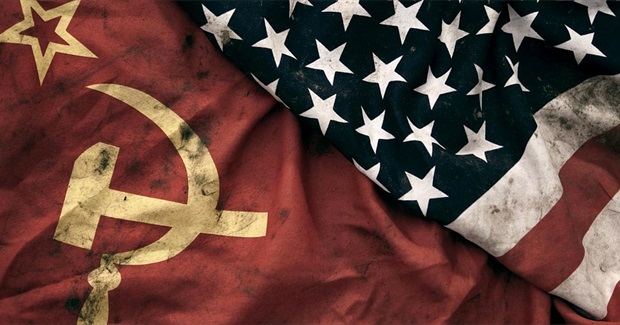
There’s an old joke I picked up as an Army brat in Europe, back when the Wall still stood and the other side was still insisting its system worked: communism is the longest road from capitalism to capitalism. You seize the means, abolish the market, plan it all from the top — and a generation later you stagger right back to the open market you torched on the way out, having gained nothing but the scenic route.
So by all means, fellas, start down the road. Wall off the ballot, ration the choices, guard the two-thirds and call it principle. Just remember how these trips tend to end. Squeeze hard enough to keep the competition out, and the competition doesn’t vanish — it walks out the exit door you were trying to bolt and sets up shop across the street. Take the long way back to capitalism if you must. Just don’t be surprised how many capitalists you find in your own ranks by the time you get there.
The hunt for a Red October is about to get a lot more interesting. Dosvedonya.
Abdul-Hakim Shabazz is the editor and publisher of Indy Politics. He is also and attorney, licensed in both Illinois and Indiana.